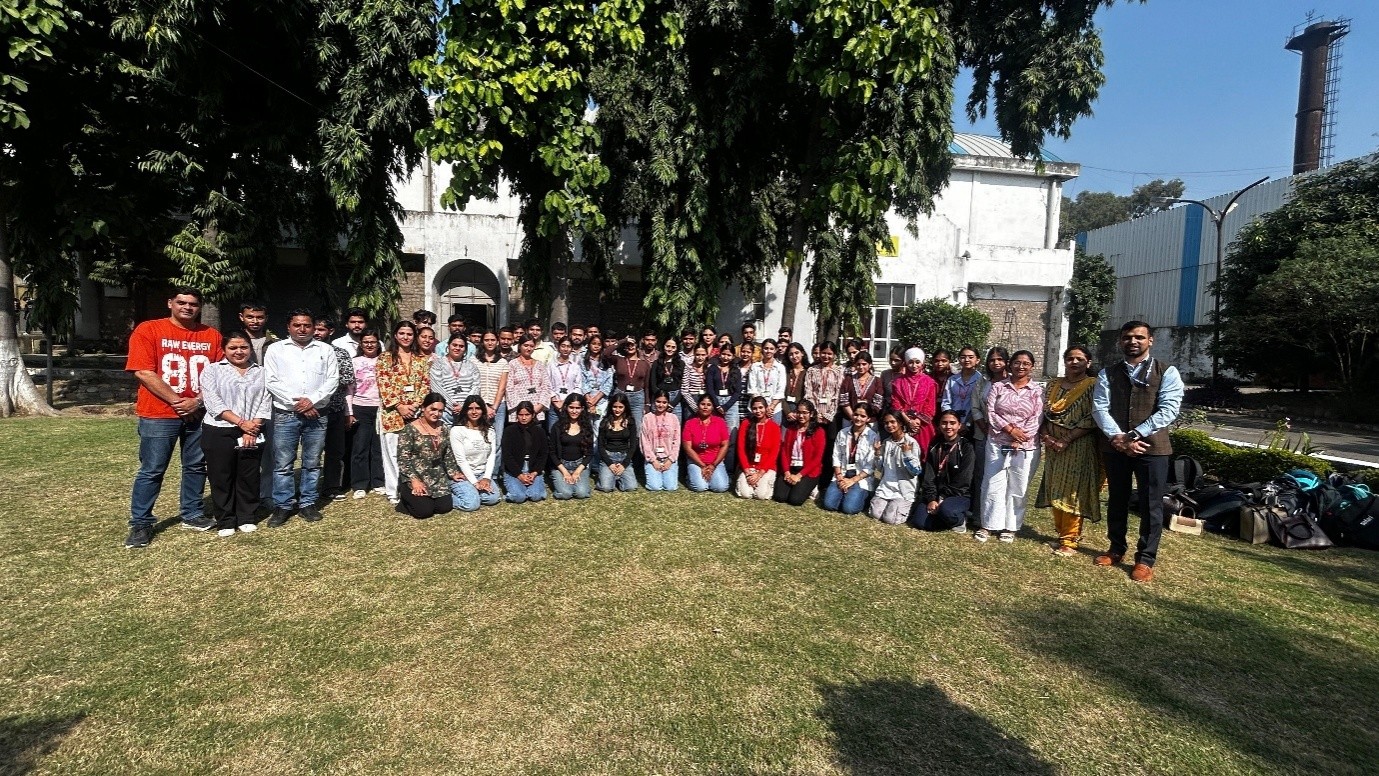
Jammu | Nov, 04: The Department of Economics at the Central University of Jammu organized an industrial visit to the Sarveshwar Group in Bari Brahmana for students enrolled in the Integrated B.Sc.–M.Sc. Economics program.
The initiative aimed to provide students with practical exposure to the operations of an agro-based food-processing enterprise, allowing them to connect theoretical concepts learned in the classroom with real-world industrial practices. During the visit, students were introduced to the rice processing stages, starting from the procurement of raw paddy to the final product. They observed critical processes such as husk removal, cleaning, sorting, and grading, and learned about the machinery involved at each stage. The experience emphasized the importance of technology and quality control in maintaining product consistency and operational efficiency. Additionally, students gained insights into packaging, branding, marketing, and distribution, which highlighted how production decisions are influenced by consumer preferences and market demands. The visit provided valuable economic insights into various aspects such as value addition, production processes, industrial organization, economies of scale, supply-chain management, and employment generation. By witnessing the transformation of paddy into processed rice, students developed a deeper understanding of the role agro-based industries play in enhancing regional economic activity and development. Dr. Shaveta Kohli, Head of the Department, expressed gratitude for the support from Professor Sanjeev Jain, Vice-Chancellor, and acknowledged the coordination efforts of Mr. Viraj Magotra, Training and Placement Officer, along with Mr. Raushan Kumar, HR Head of Sarveshwar Group, for facilitating the visit. The department also appreciated the hospitality and cooperation of the Bari Brahmana unit staff. The visit, coordinated by faculty members Ms. Preeti Gupta and Dr. Vishal, significantly enriched students’ understanding of the connections between agriculture, industry, and markets, thereby enhancing their academic learning in economics.