Mir Hasnain Iqbal
I often narrate the story of Robert the Bruce and a little spider to my students. It is a familiar story, found in school textbooks and frequently used to encourage children not to lose hope after failure. I have used it in my own classroom to remind students that one defeat or unsuccessful attempt should never decide their future. The story goes that Robert the Bruce, the Scottish king who fought for his country’s independence, had suffered repeated military defeats. According to popular legend, he was once hiding in a shelter, disappointed and uncertain about his future. There, he noticed a spider trying to climb a wall. It tried repeatedly but kept falling. Yet it refused to give up. After several attempts, it finally succeeded.
The little spider gave Bruce a new reason to fight. If such a tiny creature could continue trying despite repeated failures, why should he surrender? He returned to the struggle and eventually led his forces to victory against the English at Bannockburn in 1314. Historians have debated whether this incident actually happened, but the lesson it carries remains relevant. Failure should not destroy confidence; it should encourage another attempt. Unfortunately, our classrooms often send a different message. Students are encouraged to chase marks, secure top positions and outperform their classmates. Success is celebrated, but failure is rarely discussed in a healthy way. A child who performs poorly in an examination may face criticism from parents, disappointment from teachers and comparisons with other students.
Gradually, the fear of making mistakes begins to affect the child’s confidence.
In this race for grades, are we forgetting the real purpose of education?
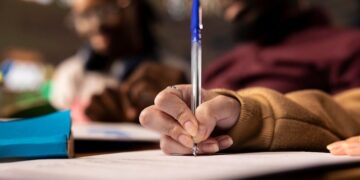
An interesting idea discussed in The Hindu in its article, “Why Every Student Needs a Failure Portfolio”, deserves attention. The concept is simple: students should maintain a record of their mistakes, unsuccessful attempts, learning difficulties and the lessons they draw from them. Such a record is called a failure portfolio. For instance, a student may record why a mathematics problem could not be solved, why a science experiment failed or why an answer in an examination was incorrect. The student can then identify the mistake, understand its cause and try again. The purpose is not to collect failures but to learn from them.
“Education should extend beyond test preparation and high marks to equip students with life skills like confidence, patience, and resilience. Instead of fearing failure, children should be encouraged to learn from their mistakes, struggles, and personal growth to better face real-world challenges.”
Imagine a child who repeatedly struggles with mathematics. Instead of being labelled weak, the child should be encouraged to identify the difficulty, seek guidance and practise another method. Even a small improvement deserves appreciation. Sometimes, a few encouraging words from a teacher can restore confidence that poor examination results have damaged. This approach is particularly relevant in Kashmir, where academic competition, examination pressure and parental expectations often weigh heavily on students. Many children become so concerned about marks that they hesitate to ask questions, express different opinions or attempt something unfamiliar.
The fear of giving a wrong answer can become stronger than the desire to learn. Parents and teachers need to understand that a poor result does not necessarily indicate a lack of ability. Children learn at different speeds and have different strengths. Comparing them constantly with others can do more harm than good. Schools can introduce failure portfolios as a simple classroom activity. Students can maintain small notebooks recording their mistakes, corrections and improvements. Teachers can review these periodically, help students identify their difficulties and appreciate their progress. Such an exercise need not involve additional examinations or complicated procedures. It simply requires a change in attitude towards mistakes.
After all, failure is part of every field. Scientists conduct experiments that do not produce the expected results. Sportspersons lose matches before returning stronger. Even successful people experience setbacks. What matters is how they respond to them. Having taught the story of Robert the Bruce to my students, I have always felt that its real value lies in the message it leaves with a young mind: never allow one failure to destroy your confidence. Our schools should prepare children not only to pass examinations but also to face life’s challenges. Marks may open certain doors, but confidence, patience and the ability to learn from mistakes help individuals move forward when those doors remain closed. Perhaps it is time to look beyond report cards. A student’s mistakes, struggles and improvements deserve attention too. A good education should not teach children to fear failure. It should give them the confidence to learn from it and try again.
(The author is a teacher and Environmental Science researcher pursuing a PhD in Environmental Science. The views, opinions and conclusions expressed in this article are those of the author and aren’t necessarily in accord with the views of “Kashmir Horizon”)
[email protected]