Operators seek court intervention, feasibility study on solar-powered boats as High Court order halts fuel-run vessels
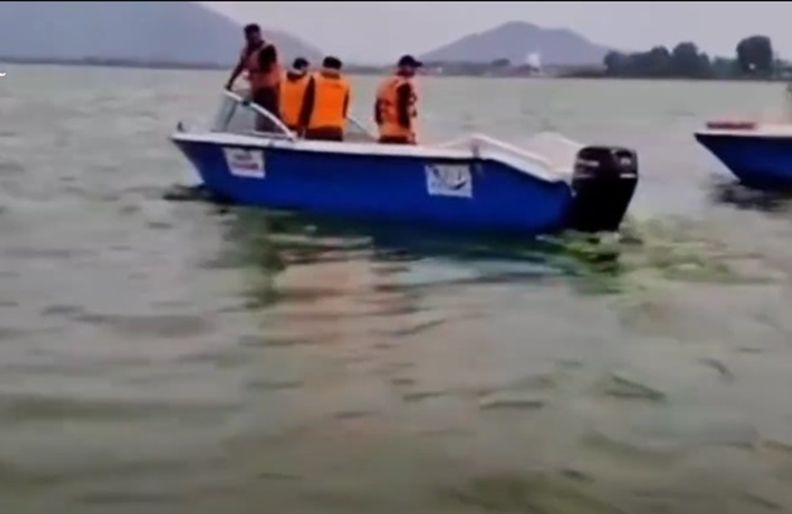
Srinagar| Oct, 29: The suspension of fuel-powered motorboats on Dal Lake has triggered uncertainty among boat operators, with livelihoods at stake and the tourism sector awaiting clarity on the future of motorised boating in one of Kashmir’s most prominent tourist destinations.
The Jammu and Kashmir and Ladakh High Court’s October 14 order prohibiting the operation of fuel-powered motorboats, including motorised shikaras and jet skis, has brought the activity to a halt, leaving operators hoping for relief at the next hearing scheduled for Friday.
While the move has brought the environmental concerns surrounding Dal Lake into sharper focus, those dependent on motorised boating say any long-term solution must also account for the financial implications of switching to cleaner alternatives.
“The court’s order was implemented immediately, affecting the livelihoods of people associated with this sector. We are waiting for the next hearing and hope that all aspects will be considered before a final decision is taken,” said Irfan Naqash, an employee of a Dal Lake motorboat operator.
The court’s intervention followed a petition questioning the transparency and consistency of the licensing process for motorboats. The petitioners alleged that licences had previously been issued by tourism authorities, but the responsibility was subsequently transferred to the Regional Transport Office (RTO), without clear criteria being made public.
The dispute has brought the licensing mechanism under scrutiny, with the petitioners raising concerns over the absence of transparent standards for granting permissions.
Operators, meanwhile, have urged the authorities to examine the feasibility of solar-powered and electric boats as alternatives to fuel-driven vessels. They have, however, cautioned that the transition could impose a substantial financial burden on those operating in the sector.
“The government should examine whether solar-powered boats are practically and financially viable for operators. Environmental protection is essential, but the cost of shifting to the new technology must also be considered,” he said.
The challenge, they say, is to reconcile the need to protect Dal Lake with the economic realities of those whose livelihoods depend on boating and tourism-related activities.
Another operator said pollution in Dal Lake could not be attributed to motorboats alone, arguing that other sources of contamination must also be addressed if conservation efforts are to produce lasting results.
Environmental experts have long stressed the importance of protecting Dal Lake, a vital ecological resource and a defining feature of Kashmir’s tourism economy. They have called for coordinated measures to curb pollution and ensure the lake’s restoration.
With the next court hearing approaching, operators are looking for clarity on the immediate restrictions and the possible roadmap for adopting cleaner boating technology. The outcome is expected to shape the future of motorised boating on Dal Lake, where environmental protection and livelihood concerns have now converged.