Islamic civilisation occupies a distinguished place in the history of human progress. Although no civilisation develops in complete isolation, Muslim societies played an exceptional role in preserving, transforming, and transmitting knowledge. Their contributions to mathematics, medicine, astronomy, optics, geography, philosophy, history, and social thought profoundly influenced later intellectual development. The claim that Islam brought humanity out of intellectual darkness expresses this historical importance, though alternative history cannot be proved with certainty. What can be established is that Islamic civilisation significantly shaped the intellectual development of Europe and the wider world. Islam’s emphasis on knowledge provided an important foundation for this achievement. The first Qur’anic revelation begins, “Read in the name of your Lord who created” (Qur’an 96:1). The Qur’an repeatedly encourages reflection upon nature, history, and creation. It presents the universe as a field of signs inviting observation and reason. The Prophet Muhammad (SAW) is reported to have said, “Whoever follows a path in pursuit of knowledge, Allah will make easy for him a path to Paradise” (Ṣaḥīḥ Muslim, no. 2699). Consequently, many Muslim scholars regarded learning as both an intellectual pursuit and a moral responsibility. Under the Abbasids, Baghdad became a major centre of scholarship. Translation movements brought Greek, Persian, Indian, Syriac, and other traditions into Arabic.
Scholars did not merely copy inherited works; they compared manuscripts, clarified concepts, corrected errors, and developed new methods. Muslim, Christian, Jewish, and other scholars participated in this shared intellectual enterprise. Arabic consequently became an international language of science and philosophy. Mathematics provides a clear example of Islamic civilisation’s influence. Muhammad ibn Musa al-Khwarizmi made foundational contributions to algebra, while the word “algorithm” derives from the Latinised form of his name. Muslim scholars also helped transmit the Hindu-Arabic numeral system and positional notation to Europe. The use of zero greatly facilitated calculation in commerce, astronomy, accounting, and science. Abu al-Wafa al-Buzjani advanced trigonometry, while mathematical techniques supported navigation, surveying, architecture, and calendrical calculation.
Medicine likewise flourished. Abu Bakr al-Razi wrote extensively on diseases and clinical observation, including the distinction between smallpox and measles. Ibn Sina’s Canon of Medicine systematically organised knowledge of anatomy, diseases, medicines, and treatment. Translated into Latin, it became influential in European medical education for centuries. Al-Zahrawi contributed significantly to surgery and described numerous instruments and procedures. Ibn al-Nafis advanced understanding of pulmonary circulation. Hospitals, dispensaries, and organised medical training further demonstrate the institutional character of Islamic medicine. Ibn al-Haytham made outstanding contributions to optics. In his Book of Optics, he examined vision, light, and reflection through mathematical reasoning and observation. His insistence on testing explanations against evidence illustrates the sophistication of medieval scientific inquiry. Astronomy also developed extensively. Scholars refined astronomical tables, constructed instruments, calculated celestial movements, and applied their knowledge to navigation, timekeeping, calendars, and determining the direction of prayer. Al-Biruni contributed to astronomy, mathematics, geography, and comparative cultural studies, while al-Idrisi produced an important world map for Roger II of Sicily.
“Islamic civilization measured true advancement by ethics, human dignity, and learning rather than power or wealth. By integrating global knowledge, driving original discovery, and establishing enduring institutions, it created a shared human legacy that contemporary societies should honor through a renewed commitment to education, intellectual openness, and scientific integrity.”
Islamic philosophy engaged deeply with existence, causation, ethics, politics, the soul, and the relationship between reason and revelation. Al-Kindi developed philosophical writing in Arabic; al-Farabi explored logic and the virtuous society; and Ibn Sina developed influential ideas concerning essence, existence, and the soul. Al-Ghazali critically examined philosophical claims without rejecting reason altogether. Ibn Rushd defended rational inquiry and produced influential commentaries on Aristotle. Their works entered Latin and Hebrew intellectual traditions and influenced medieval European philosophy. Islamic civilisation also advanced historical and social thought. Ibn Khaldun’s Muqaddimah analysed political authority, economic life, education, social solidarity, and the rise and decline of states. His concept of asabiyyah explained how collective cohesion enables communities to establish power and how weakening solidarity contributes to political decline. He also insisted that historical reports should be examined critically and judged according to social and political plausibility.
Al-Biruni’s study of Indian religion and culture similarly demonstrated the value of comparative scholarship and intellectual openness. Knowledge from the Islamic world reached Europe through translation centres such as Toledo and through exchanges in Sicily and the Mediterranean. European scholars encountered works by al-Khwarizmi, Ibn Sina, al-Razi, Ibn al-Haytham, and Ibn Rushd. These texts were translated, debated, adapted, and incorporated into European learning. Islamic civilisation therefore became one of the major intellectual foundations of the European Renaissance, although European development also depended upon Byzantine learning, local traditions, and later institutional changes. This history should not be distorted by exaggerated claims. Medieval Europe was not entirely intellectually inactive, and Muslim civilisation did not create every later scientific achievement. Nevertheless, older narratives that move directly from Greece and Rome to the Renaissance often neglect centuries of Muslim scholarship.
Correcting this imbalance is not an attempt to replace one prejudice with another; it is an effort to restore historical accuracy. The worldview of tawhid, or divine unity, encouraged many Muslim scholars to seek harmony between nature, reason, morality, and spiritual meaning. Islamic teachings also emphasised justice, human dignity, responsibility, and beneficial knowledge. Civilisation, therefore, should be measured not only by power and wealth but also by its capacity to promote learning, ethical conduct, creativity, and the common good. Islamic civilisation did not merely preserve ancient knowledge. It gathered traditions from different peoples, critically examined them, generated original discoveries, established institutions of learning, and transmitted knowledge across cultural boundaries. Its legacy belongs to humanity as a whole. Contemporary Muslim societies should honour this inheritance not through nostalgia, but through renewed commitment to education, research, intellectual openness, scientific integrity, and moral responsibility. Any complete history of world civilisation must recognise that Islamic civilisation helped preserve the light of knowledge, enlarge its reach, and transmit it to future generations
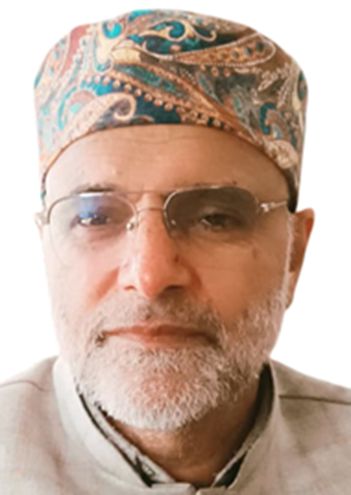
(The author a veteran academician is a former Professor and Head Department of Islamic Studies, Kashmir University. The views, opinions and conclusions expressed in this article are those of the author and aren’t necessarily in accord with the views of “Kashmir Horizon”)
[email protected]