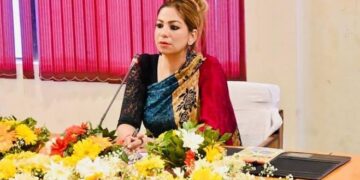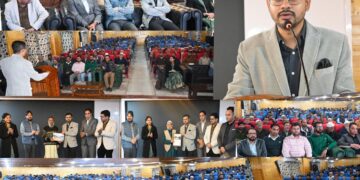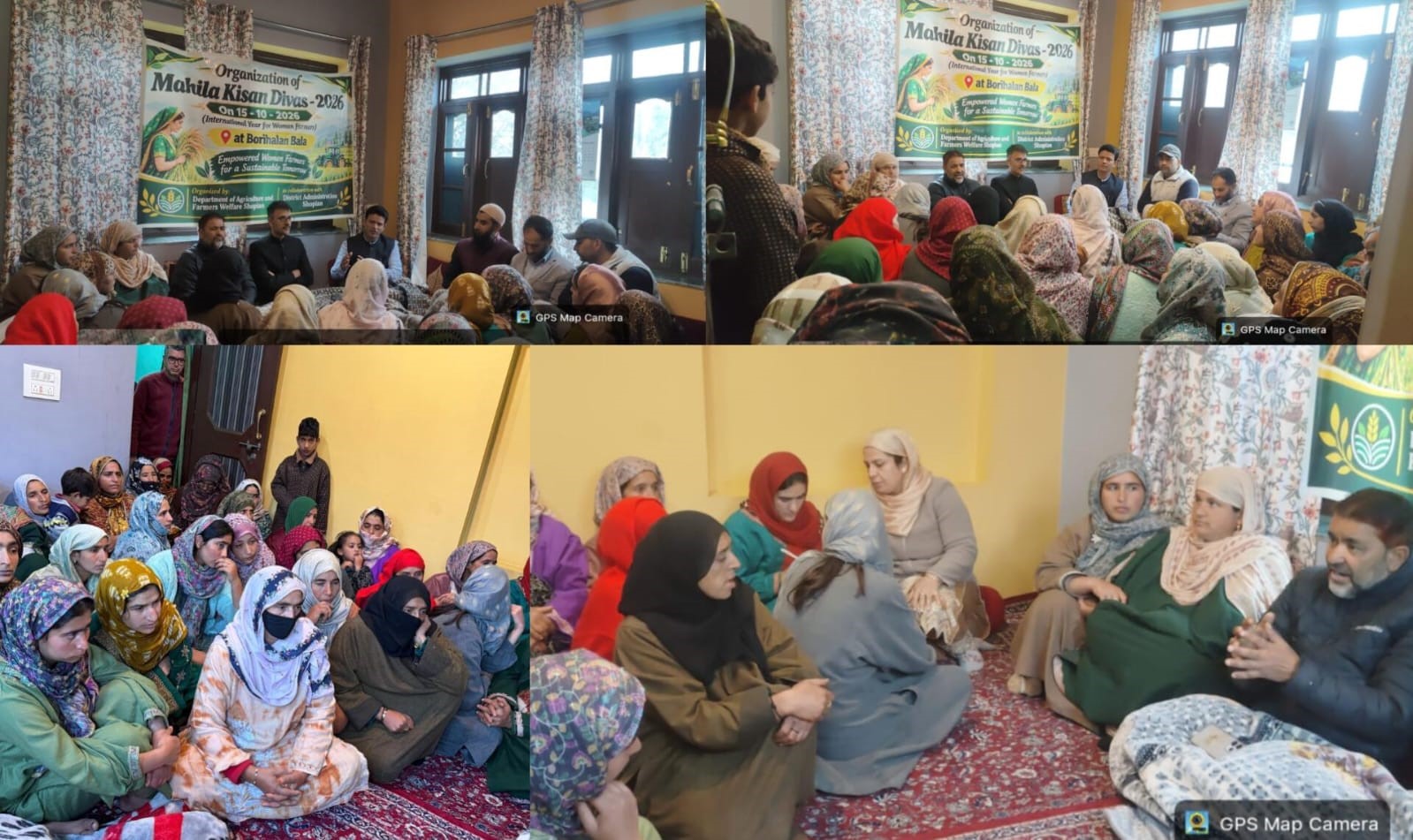
Shopian :Department of Agriculture, Shopian, celebrated Mahila Kisan Diwas at Bohrihallan, with the participation of a large number of women farmers, who attended the programme despite the snowfall in the area the previous day.
The programme highlighted the significant contribution of women farmers to the agricultural sector, particularly in crop production, farm management, post-harvest operations and the sustenance of rural livelihoods.
Their dedication and active involvement remain integral to agricultural productivity, food security and the overall development of the rural economy.
Chief Agriculture Officer Shopian, Shahnawaz Ahmad Shah, District Agriculture Officer, MudasirShafi, Sub-Divisional Agriculture Officer, Imtiyaz Ahmad, and other officers of the department participated in the event.
Addressing the gathering, the Chief Agriculture Officer emphasized the need to promote sustainable and women-oriented agricultural development. He also highlighted various schemes and programmes being implemented by the department for the empowerment of women farmers, capacity building, skill development and the adoption of improved agricultural practices.
The Department reiterated its commitment to facilitating greater access to agricultural schemes, technical guidance and capacity-building opportunities for women farmers, thereby contributing to inclusive and sustainable agricultural growth in the district.
No:-INF/DDI/K-26/3008/
SWD Srinagar organises International Day for Rural Women 2026 BBBP
SRINAGAR, OCTOBER 15: Social Welfare Department (SWD), SANKALP-HEW Srinagar, organised a programme to commemorate the International Day of Rural Women 2026 at Higher Secondary School Kothibagh, Srinagar, in collaboration with the National Rural Livelihoods Mission (NRLM), under the Beti Bachao Beti Padhao (BBBP) initiative.
The programme aimed to highlight the significant contribution of rural women to society, promote women’s empowerment, and create awareness about opportunities for their social and economic development.
The programme witnessed participation from Officials of SANKALP-HEW Srinagar, the members of National Rural Livelihoods Mission, and other stakeholders. A resource person from the Chief Agriculture Office Srinagar participated in the programme and highlighted the important role played by rural women in agriculture, allied activities, household food security, and rural economic development.
During the programme, emphasis was laid on the need to empower women through education, skill development, vocational training, entrepreneurship, and access to livelihood opportunities. Participants were sensitised about the importance of encouraging girls to pursue education, develop their skills, and become self-reliant. The programme also highlighted the significance of ensuring equal opportunities for girls and women and fostering an environment in which they can participate actively in social and economic activities.
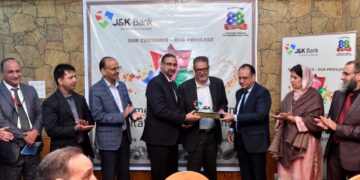
A major highlight of the programme was the distribution of certificates among women entrepreneurs and achievers from different blocks of District Srinagar in recognition of their efforts, accomplishments, and contributions towards economic empowerment and community development. The recognition was intended to appreciate the determination, initiative, and entrepreneurial spirit of women who have been making meaningful contributions to their families and communities.
The collaboration with the National Rural Livelihoods Mission underscored the importance of strengthening livelihood opportunities for women, particularly those belonging to rural and economically weaker sections of society. The programme also reinforced the objectives of Beti Bachao Beti Padhao by promoting the value of the girl child, encouraging gender equality, and creating awareness about the need to protect, educate, and empower girls.
The Department reiterated its commitment to organising awareness programmes and community-based initiatives aimed at improving the status of women and girls and ensuring that the benefits of various government schemes and welfare interventions reach eligible beneficiaries.