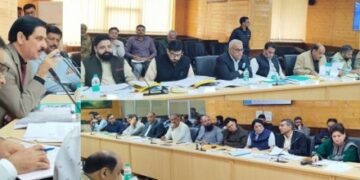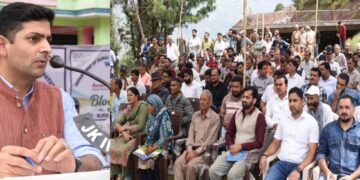
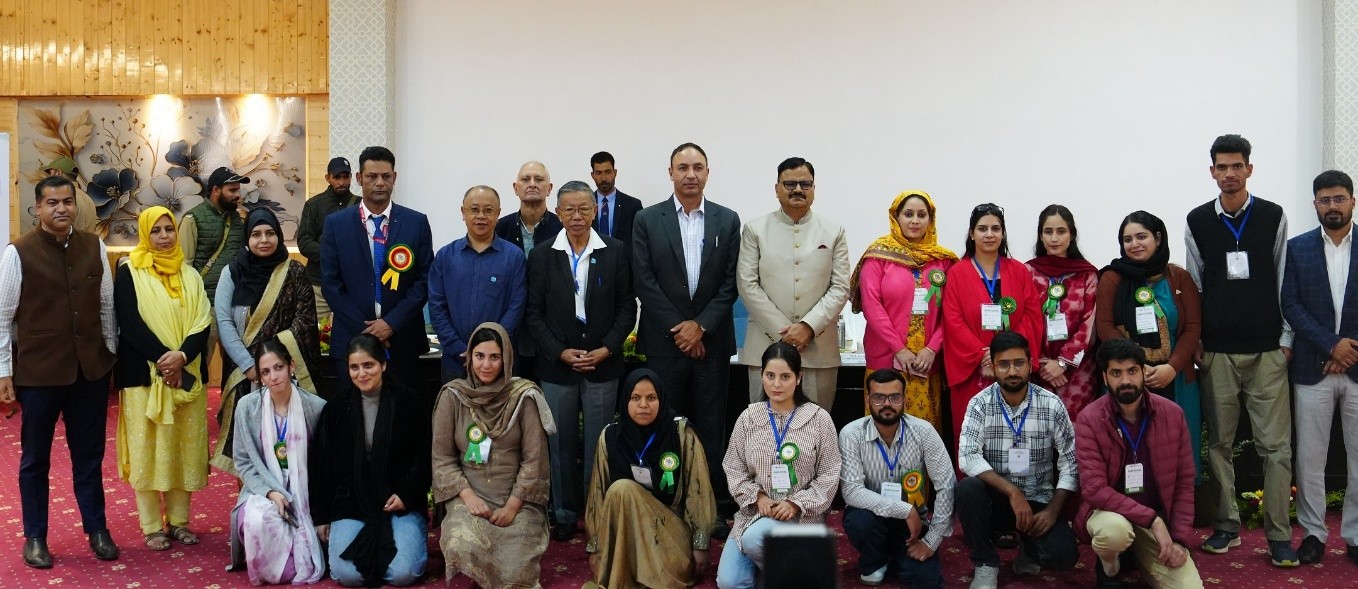
Minister calls for development model that balances growth with ecological protection
Srinagar : Minister for Jal Shakti, Forest, Ecology & Environment, and Tribal Affairs, Javed Ahmed Rana, emphasized on Wednesday that water security, forest conservation, and sustainable development are deeply intertwined, forming the essential foundation for the future of the Himalayan region.
Speaking as the Guest of Honour at the 13th Sustainable Mountain Development Summit (SMDS) 2026 held at SKUAST-Kashmir’s Shalimar campus, the Minister highlighted the significance of these issues. The three-day summit, running from October 12-14, is organized by the Sher-e-Kashmir University of Agricultural Sciences and Technology of Kashmir (SKUAST-Kashmir) in partnership with the Integrated Mountain Initiative (IMI). It has gathered scientists, policymakers, civil society members, and community leaders from various mountain regions across India. Addressing the theme “Contouring Sustainable Himalayan Landscapes for Inclusive Viksit Bharat,” the Minister described it as both timely and crucial, stressing that Jammu and Kashmir’s development model should harmonize economic growth with ecological preservation. He pointed out that the Himalayas are not just a geographical feature; they are the lifeblood for millions. He highlighted how forests, glaciers, rivers, springs, and rich biodiversity support agriculture, horticulture, tourism, and livelihoods, playing a vital role in maintaining ecological balance and ensuring water security for vast areas of the country. Reiterating the importance of water security as a cornerstone of sustainable mountain development, the Minister stated, “Water security must remain one of our foremost priorities.” He called for the protection and rejuvenation of springs, conservation of catchment areas, promotion of rainwater harvesting, enhancement of water-use efficiency, and ensuring the long-term sustainability of drinking water sources. “While we work on expanding water supply infrastructure, we must also focus equally on conserving and replenishing the natural water resources that support these systems. A sustainable approach to water management is essential for our future.”