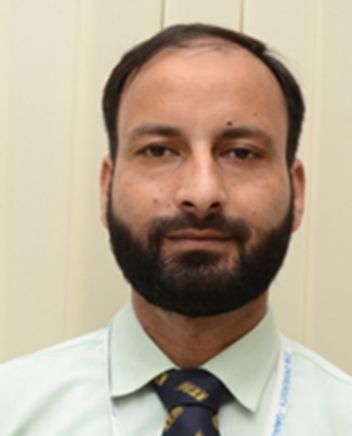
Dr. Shahid Amin
The flowerpots I received as gifts after delivering a few expert talks recently taught me an unexpected lesson about life, personal growth and the importance of the right environment. What initially appeared to be a simple gesture of appreciation eventually became a powerful reminder of how our surroundings can influence our potential.
After reaching home, I carefully placed the flowerpots inside the rooms and tried to keep the plants alive by watering them regularly. Since the plants were fresh, they remained beautiful for a few days. I assumed that providing water and keeping them safe indoors would be enough. After all, what more could a plant possibly need?
However, slowly and gradually, the plants began to lose their freshness. Their leaves started looking dull, and the flowers showed signs of decay. Despite my attempts to care for them, their condition continued to deteriorate. Eventually, my children decided to shift the pots outside. One of them was placed near a window where it could receive sunlight and fresh air. And then, something wonderful happened!
The plants began to recover. Their leaves looked healthier, and new flowers started sprouting. The same plants that had struggled inside the rooms began showing signs of life when exposed to a more suitable environment. Watching this transformation, I found myself reflecting on a simple but powerful thought: sometimes, what we need is not more care, but the right environment to grow. Perhaps the plants were not weak. Perhaps they were simply in the wrong place.
This small observation opened the doors to several bigger questions. How many individuals struggle not because they lack talent, intelligence or commitment, but because they remain confined to environments that limit their growth? How many students, professionals and aspiring entrepreneurs have the potential to flourish but are never given enough freedom, exposure or opportunity? The answers, I believe, can be found in our everyday lives.
I have been living away from my home in Tral, Kashmir, for the last 16 years. This journey has given me opportunities to interact with people from different backgrounds, understand different perspectives, experience professional challenges and learn lessons that cannot always be acquired within the familiar boundaries of home.
Living away from home is not always easy. It brings its own share of struggles, loneliness, responsibilities, disappointments and uncertainties. There are moments when we miss our families, familiar surroundings, language, local food and the comfort of being among people who understand us without requiring lengthy explanations. Sometimes, even a simple cup of tea with family feels more valuable than an expensive dinner elsewhere! However, stepping outside our familiar surroundings also teaches us independence. We learn to make decisions, manage resources, solve problems, accept differences and deal with situations that do not always go according to plan.
“I have been living away from my home in Tral, Kashmir, for the last 16 years. This journey has given me opportunities to interact with people from different backgrounds, understand different perspectives, experience professional challenges and learn lessons that cannot always be acquired within the familiar boundaries of home.”
Over the years, I have also observed friends who moved outside their hometowns and comfort zones. Many developed remarkable confidence, adaptability and resilience. They learned to face professional setbacks, celebrate achievements without becoming complacent and manage uncertainty with greater maturity.
Of course, geographical distance alone does not guarantee personal growth. A person can travel across continents and still refuse to learn anything new. Similarly, someone can remain in their hometown and continue to explore the world through ideas, relationships and experiences. The real difference lies not in how far we travel, but in how willing we are to move beyond what we already know.
When we remain confined to the same surroundings, the same people and the same routines, we may gradually begin to believe that the world is no bigger than what we already know. Stepping outside challenges these assumptions. It introduces us to different ways of thinking, working and living. Every new experience has something to teach us. Some experiences bring success and confidence; others bring disappointment and humility. Both are valuable. Success teaches us what may work, while failure often teaches us what needs to change.
Just like plants, human beings need nourishment. But our nourishment comes not only from food and shelter; it also comes from experiences, challenges, relationships, freedom and opportunities to discover our potential. Sometimes, all we need is a change of surroundings, a new responsibility, a different conversation or the courage to try something unfamiliar.
We must remember that being comfortable is not always the same as growing. A familiar environment may protect us from uncertainty, but it may also prevent us from discovering our strengths. My flowerpots reminded me that growth cannot always be forced through additional effort. Sometimes, the answer is to change the conditions in which that effort is being made.
The same plant that struggled inside a room began to flourish when it received sunlight. Perhaps we, too, need to identify the environments that nourish us and have the courage to move away from those that restrict us. Give yourself permission to explore, learn, make mistakes and grow. Sometimes, the first step towards transformation is simply stepping outside. And this lesson has another important dimension—one that extends far beyond personal life and reaches directly into our workplaces, leadership practices and organisational cultures.
(The author is Associate Professor at the Department of Management, President Institution’s Innovation Council, ITM Gwalior and an IIMA (FDP) Alumnus. He is also certified Business Consultant of AIMA. The views, opinions and conclusions expressed in this article are those of the author and aren’t necessarily in accord with the views of “Kashmir Horizon”)