• Six vehicles flagged off for regulated wildlife tourism
• Ladakh home to 477 of India’s 718 snow leopards
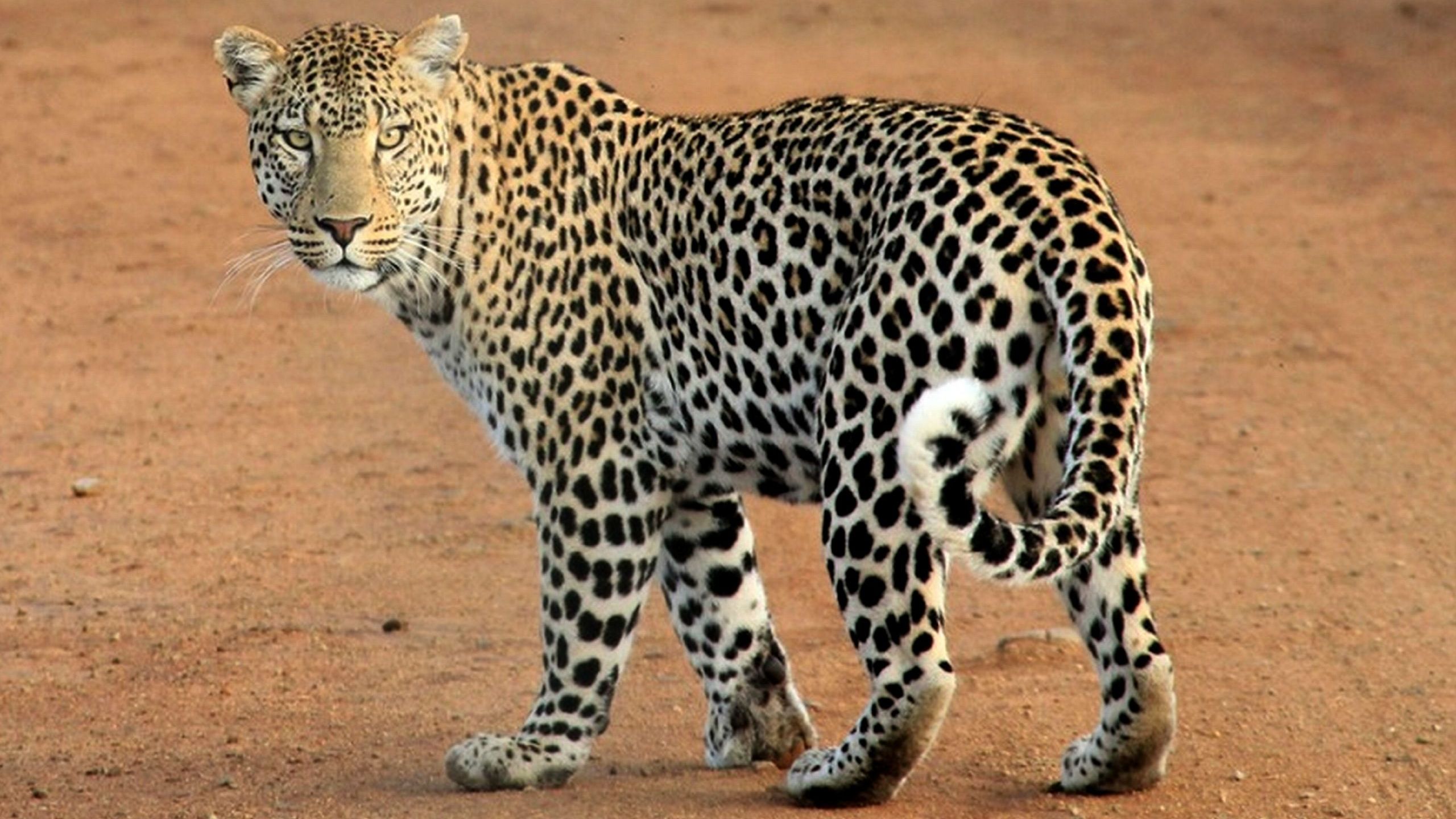
Srinagar | Oct 08: In a first for India’s high-altitude wildlife tourism, Ladakh has launched a guided snow leopard safari, opening the region’s fragile mountain landscape to regulated wildlife tourism while placing local communities at the centre of its conservation model.
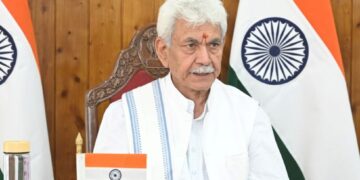
Lieutenant Governor Vinai Kumar Saxena flagged off six vehicles for the Ladakh Snow Leopard Safari during Wildlife Week 2026 celebrations at Choglamsar Protected Forest in Leh.
The initiative, being implemented by the Snow Leopard and High-Altitude Nature Conservation (SHAN) Society in collaboration with the Department of Forest, Ecology and Environment, UT Ladakh, is aimed at offering visitors guided opportunities to observe snow leopards and other high-altitude wildlife without putting additional pressure on sensitive habitats.
The decision to introduce wildlife safaris in Ladakh was announced by the administration on August 5 and has been operationalised within two months.
Initially, the safari vehicles will operate in Rumbak, Shang and Uley, areas known for frequent snow leopard sightings. Specially designed open-back vehicles, trained local drivers and wildlife guides will be deployed for the excursions.
Routes are also being identified across Hemis National Park, Changthang and Karakoram Wildlife Sanctuary, besides the Nubra, Zanskar, Sham, Kargil and Drass regions.
The move comes against the backdrop of growing concerns over unregulated tourism and activities such as illegal off-roading that can disturb wildlife in Ladakh’s ecologically fragile terrain.
Officials said designated routes, regulated visitor numbers and trained personnel would help minimise disturbance while improving the quality of wildlife viewing.
For Ladakh, however, the safari is being positioned as more than a tourism initiative.
The administration plans to make local communities active partners in conservation, creating economic incentives for residents to protect wildlife and fragile habitats.
“Wildlife should not be protected at the cost of people, nor should development come at the cost of wildlife. We must create a model in which both can thrive together,” Saxena said.
He said a local guide earning from a snow leopard sighting, women benefiting from conservation-linked handicrafts and villages gaining economically from protecting wetlands could turn conservation into a source of livelihood.
Ladakh is home to 477 snow leopards out of an estimated national population of around 718, making the Union Territory India’s most important landscape for the conservation of the elusive species.
The region also supports more than 38 mammal species, over 340 bird species and around 1,800 vascular plant species.
Saxena said protecting this biodiversity was an investment in Ladakh’s ecological security, local livelihoods and future economy.
He stressed that tourism promotion and environmental protection must go hand in hand, and said the administration would welcome visitors while taking action against activities that damage the region’s fragile ecology.
The Wildlife Week celebrations, being held under the theme “Connecting Habitats, Thriving Wildlife”, also showcased efforts to link conservation with local livelihoods.
Twenty local youths are being trained in bird identification, birdwatching and spotting. They will be provided binoculars, while birdwatching hides are planned at major hotspots. The programme aims to create opportunities for youth as wildlife guides, bird guides, nature interpreters and eco-tourism entrepreneurs.
Another initiative highlighted at the event was the Wild Animal Felting Programme, involving 50 women from Turtuk, Photoksar, Sangrah, Chushul and Shargole. The programme seeks to link traditional skills and local wool with conservation-linked enterprises.
Saxena called for greater focus on design, branding, market access and e-commerce to strengthen women-led enterprises.
He also called for a shift towards “high-value, low-impact and knowledge-based tourism”, stressing the need to regulate carrying capacity, visitor numbers, wildlife disturbance, waste management and plastic pollution.
“When habitats remain connected, wildlife thrives. When wildlife thrives, communities benefit. And when communities benefit from conservation, conservation itself becomes sustainable,” he said.
The administration also used the Wildlife Week event to showcase several other conservation initiatives.
Cheques were handed over to the Chief Education Officers of Leh and Kargil for distribution to 50 schools for conservation education through Eco Clubs supported by SHAN Society. Certificates were also presented to winners of poster painting, quiz, wildlife and nature conservation reel-making and logo designing competitions.
The Lieutenant Governor inaugurated an AI-based Human-Wildlife Conflict Mitigation Device developed by the Wildlife Division, Kargil, in technical collaboration with the University of Ladakh, Kargil Campus.
A documentary on the Himalayan Brown Bear and a brochure detailing wildlife tourism packages offered by SHAN Society were also released.
The second edition of the Ladakh Black-necked Crane Festival was announced during the event, adding another element to the administration’s effort to promote biodiversity-focused tourism.