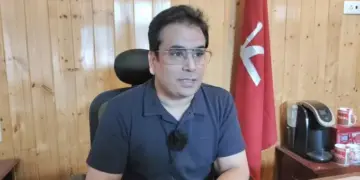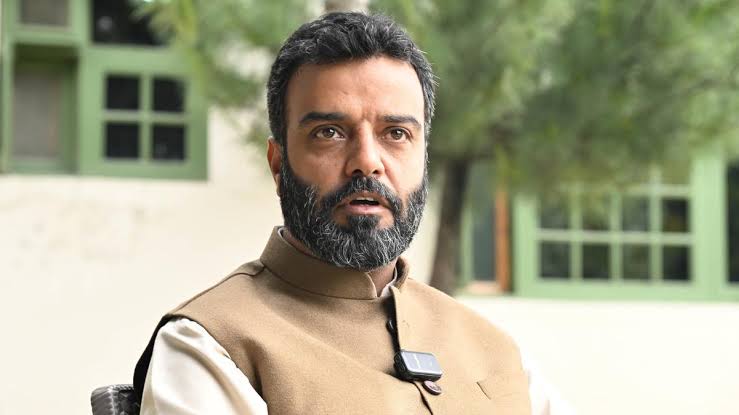
Srinagar, September 29: Srinagar Lok Sabha MP Aga Syed Ruhullah Mehdi has hit back at Apni Party president Syed Mohammad Altaf Bukhari over his recent remarks on alleged land purchases by non-locals in Jammu and Kashmir, saying concerns over land, resources, jobs and demographic change had been raised much earlier.
Bukhari had recently questioned the National Conference-led government over alleged land purchases by outsiders and said the ruling party would be responsible if any demographic change took place in Jammu and Kashmir.
Reacting to the remarks, Ruhullah said Bukhari had “realised it now” and questioned his position after August 5, 2019.
“After August 5, when he went to Delhi to negotiate and to legitimise the new situation and the status quo in Jammu and Kashmir, we were all saying the same thing,” Ruhullah said.
He said concerns over the possible sale of land, resources and jobs, besides demographic change, were among the reasons for demanding constitutional safeguards.
“Even today, we are raising the same concerns — that land would be sold, resources would be sold, there would be demographic change, and jobs would be taken away,” he said.
Ruhullah also questioned Bukhari’s earlier political position, asking why he had approached the Prime Minister at that time to support what Ruhullah described as the “status quo”.
“Why did he then come out to betray the sentiments of Jammu and Kashmir, when he was among the first to approach the Prime Minister to justify the status quo?” he said.
The Srinagar MP said the concerns surrounding Article 370 were not abstract but related to issues of land ownership, resources and the region’s demographic character.
“This struggle was never something imaginary. When we talk about constitutional protection under Article 370, we are not talking about something in the air. We are talking precisely about the possibility of land being taken over, resources being taken over, and demographic change taking place,” Ruhullah said.
He maintained that constitutional safeguards were intended to protect the interests of people across Jammu and Kashmir.
“The people of Jammu and Kashmir — whether they are Hindus, Muslims, Dogras, Kashmiris, or from any other community — would see their position and rights being undermined in this region,” he said.
“That is why we wanted those protections restored through Article 370. Those very protections were guaranteed by Article 370,” Ruhullah added.