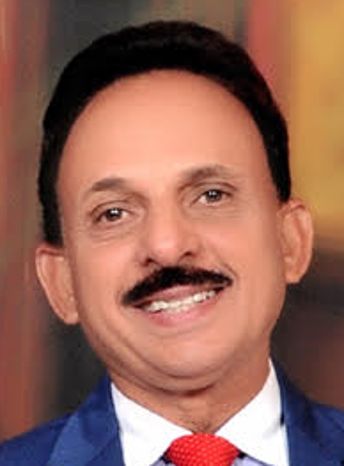
Prof R.K. Uppal
India proudly speaks of building world-class universities, becoming a knowledge economy and producing globally competitive talent. Yet behind these ambitious claims lies a disturbing contradiction: many highly qualified faculty members struggle for adequate salaries, job security and professional dignity. A Ph.D. may open the door to a teaching career, but for many teachers, it does not guarantee financial stability. In some institutions, the higher the qualification, the greater the frustration when professional expectations are not matched by fair remuneration.
The problem becomes particularly visible in sections of private higher education where faculty members may possess Ph.D., JRF, NET, D.Litt. D.Sc. and other advanced qualifications but remain inadequately compensated. Years spent pursuing higher education, conducting research, publishing papers and developing academic expertise can culminate in salaries that bear little relationship to their qualifications and responsibilities.
This is not merely a question of individual disappointment. It is a structural issue concerning the future of Indian higher education. A university cannot achieve academic excellence by treating teachers simply as a cost to be minimized. Faculty members are the primary drivers of teaching, mentoring, research, curriculum development, student guidance and institutional reputation. When qualified teachers are paid poorly or employed under highly insecure conditions, institutions may save money in the short term but risk weakening their academic foundations in the long term.
The situation becomes even more difficult when employment is temporary, contractual or subject to frequent renewal. A teacher who is uncertain about next year’s employment may hesitate to undertake long-term research projects, invest in innovative teaching or challenge outdated academic practices. Professional insecurity can gradually become intellectual insecurity.
Another serious concern is the mismatch between workload and remuneration. Faculty members are increasingly expected to perform multiple responsibilities—teaching, examinations, admissions, accreditation documentation, research, student activities, administrative assignments and institutional outreach. These responsibilities can extend far beyond classroom teaching. Yet additional duties are not always accompanied by proportionate compensation or recognition. Research-oriented faculty faces another paradox. Universities encourage publications, conferences, patents, funded projects and research supervision, while some highly qualified academics struggle to obtain the financial and institutional support necessary to pursue these activities. The system can therefore demand world-class performance without always creating world-class working conditions.
“A Ph.D. should not become a certificate of prolonged financial struggle. JRF, NET, D.Litt. and D.Sc. should represent advanced academic achievement, not qualifications that leave their holders economically vulnerable. India cannot demand excellence from its teachers while ignoring their economic dignity. World-class universities require world-class academic working conditions. If highly qualified faculty remains underpaid, insecure and undervalued, the crisis will ultimately be reflected not only in their pockets, but in the classrooms, laboratories and research centers of the nation.”
The issue also affects young researchers. A talented student who spends years completing a master’s degree, qualifying NET/JRF and earning a Ph.D. expects a meaningful academic career. If the entry-level reality is low pay, contractual employment and limited career progression, talented individuals may eventually move to industry, foreign institutions or other professions. India then loses precisely the academic talent it has spent years training.
There is also a question of dignity. Salary is not the only measure of a teacher’s worth, but fair remuneration is an important expression of institutional respect. A teacher who has invested decades in education and research should not have to continually negotiate basic financial security.
This does not mean that every private university or higher-education institution exploits its faculty. Many institutions provide competitive salaries, professional development and supportive academic environments. Conditions also differ significantly across institutions, states, disciplines and employment categories. The challenge is therefore to establish transparent and enforceable standards rather than making blanket accusations against the entire private sector.
India needs stronger transparency in faculty recruitment and compensation. Employment contracts should clearly specify salary, workload, service conditions, increments and payment schedules. Institutions should maintain transparent systems for promotion and professional advancement. Qualified faculty should receive remuneration consistent with their responsibilities and experience, while additional administrative and academic duties should be appropriately recognized.
Regulators and accreditation agencies also have an important role. Quality assessment should examine not only buildings, laboratories, student numbers and infrastructure but also faculty working conditions, salary practices, staff turnover and opportunities for professional development. A university cannot genuinely claim academic quality if the people responsible for delivering that quality remain chronically insecure.
At the same time, faculty members must continue to strengthen their own professional capabilities. Qualifications alone cannot guarantee career advancement. Contemporary academics need strong research skills, digital competence, interdisciplinary knowledge, industry engagement and the ability to adapt to emerging technologies, including artificial intelligence.
The larger question is simple: What kind of knowledge economy does India want to build? If India wants universities capable of competing globally, it must recognize that faculty are not an expenditure line to be compressed indefinitely. They are an investment in national intellectual capital.
(The author is Principal, Guru Gobind Singh College of Management and Technology, Gidderbaha, Punjab. The views, opinions and conclusions expressed in this article are those of the author and aren’t necessarily in accord with the views of “Kashmir Horizon”)
[email protected]