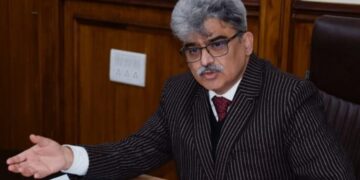

Srinagar | Sept, 25: Chief Secretary, Atal Dulloo, Friday chaired ameeting to review the proposed Carbon CreditFramework for Jammu and Kashmir, aimed at unlocking the economic potential of the Union Territory’s ecological assets and creating sustainable revenue streams through carbon markets and green financing.
The meeting besides ACS, Finance was attended by Commissioner Secretary, Science & Technology; MD, JKPDC; Commissioner, JMC/SMC; DG, Resources; DG, A&T; DG, Budget; CEO, CITaG concerned officers and technical experts from CITaG.
The framework, presented by the Centre for Innovation and Transformation in Governance (CITaG) in collaboration with the Finance Department, envisages a comprehensive strategy built around four key pillarsconstitutingCarbon Markets, Green Cess, Convergence and a dedicated Green Fund.
Addressing the meeting Chief Secretary commended the preliminary efforts of CITaG and emphasized the need for a comprehensive policy document accompanied by a well-defined Standard Operating Procedure (SOP) to facilitate effective implementation across the Union Territory. He instructed CITaG to conduct a specialized capacity-building workshop aimed at educating departmental officers on carbon accounting, data standards, and their implementation roles. The Chief Secretary also proposed a partnership with the Bhaskaracharya National Institute for Space Applications and Geo-informatics (BISAG-N) to create an integrated digital monitoring platform and carbon registry, underscoring the importance of technology-driven transparency. During the discussions, Additional Chief Secretary of Finance, Shailendra Kumar, pointed out the significant potential of Jammu and Kashmir’s agriculture, hydropower, and forestry sectors in generating carbon credits and attracting green investments. He urged CITaG to focus on these sectors while also considering emerging opportunities from rooftop solar projects under the PM Surya Ghar Yojana and the increasing adoption of electric vehicles. Furthermore, he advocated for the prompt establishment of a dedicated Green Fund to manage carbon proceeds and green revenues, ensuring their effective use for future climate-resilient development initiatives. CITaG’s presentation revealed that Jammu and Kashmir has considerable untapped ecological assets and has not yet capitalized on global carbon markets, despite significant investments in sustainable practices. The meeting highlighted successful carbon credit monetization efforts from other regions, showcasing substantial earnings from similar initiatives. A proposed framework aims to integrate carbon screening into existing development programs, such as CAMPA and MGNREGS, to enhance environmental and financial outcomes while preventing expenditure duplication. Additionally, a revenue-sharing mechanism was discussed, allocating 35 percent of net carbon proceeds to primary growers or community project owners, 30 percent to the J&K Green Fund, 15 percent to Farmer Producer Organizations and aggregators, and 10 percent each to district-level climate initiatives and sector-specific sustainability accounts. The introduction of a Green Tourism Contribution was also considered to generate resources for climate resilience and environmental conservation at key tourist sites. A 180-day implementation roadmap was proposed, which includes a comprehensive inventory of green assets, the identification and execution of priority pilot projects, and the establishment of a secure digital repository for project-related data. These initiatives aim to create a sustainable institutional and financial framework that translates Jammu and Kashmir’s environmental assets and climate-positive investments into tangible economic benefits for local communities and the Union Territory.