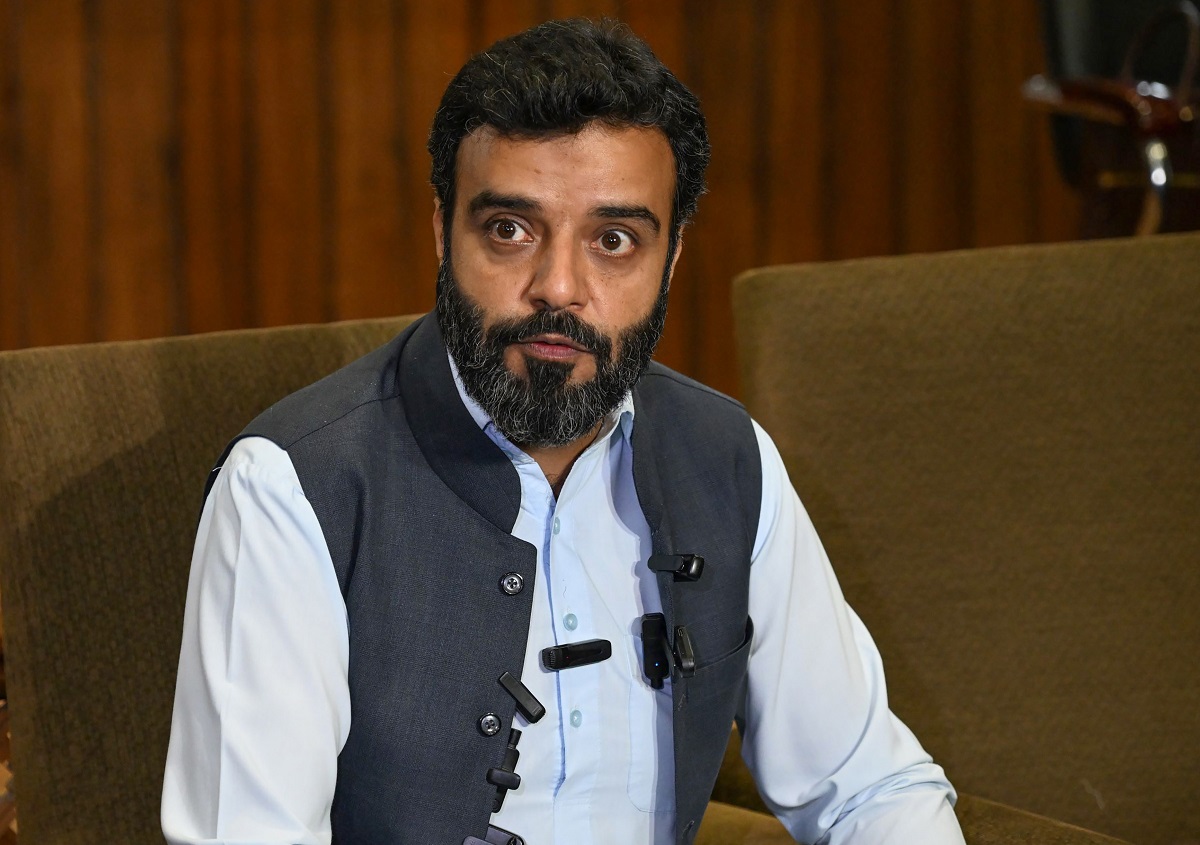
As the Srinagar MP prepares to quit the Lok Sabha and NC, public attention turns to representation, the 2024 mandate and what happens next
Srinagar Sept 25 : The proposed resignation of Srinagar Lok Sabha MP Aga Syed Ruhullah Mehdi from Parliament and the National Conference has brought questions of electoral mandate, parliamentary representation and political accountability into sharper public focus.
Ruhullah has announced that he intends to resign from the Lok Sabha and quit the primary membership of the National Conference on November 3, a date that also marks the death anniversary of his father, Aga Syed Mehdi.
His announcement came after NC president Farooq Abdullah publicly challenged him to resign and seek a fresh mandate from the electorate if he believed his political support was independent of the party. Ruhullah accepted the challenge and subsequently announced his decision to leave Parliament and the National Conference.
For the electorate of the Srinagar parliamentary constituency, the issue goes beyond the political differences between Ruhullah and the NC leadership. Ruhullah was elected from Srinagar in the 2024 Lok Sabha election on the NC ticket, and his proposed resignation has prompted wider discussion about the relationship between an elected representative, a political party and the people who voted for him.
The development has also generated discussion among people about what a possible resignation would mean for the constituency. Questions being raised include whether the people should be given another opportunity to choose their parliamentary representative, what issues would dominate a possible future election and whether the political mandate of 2024 should be viewed primarily through the candidate, the party or the issues on which the election was fought.
For many residents, the immediate concern is representation. An elected MP is expected to raise constituency issues in Parliament and remain accessible to the people. Any change in representation therefore has a direct public dimension, particularly for voters who expect continuity in addressing issues affecting the constituency.
There is also an important parliamentary distinction: an announcement of resignation does not automatically make a Lok Sabha seat vacant. Ruhullah would have to formally submit his resignation, after which it would have to be dealt with through the prescribed parliamentary process.
Until then, he remains the sitting Lok Sabha member from Srinagar.
If the resignation is formally accepted and the seat becomes vacant, the subsequent electoral process would determine how the constituency is represented. A fresh election, if required, would once again place the question of political mandate before the electorate.
The possibility of another election has naturally brought public attention to what voters may want from their next representative. Issues such as employment, development, education, tourism, infrastructure, public services and Jammu and Kashmir’s political and constitutional questions could all become part of any future electoral discussion.
Ruhullah has indicated that he intends to take his political position back to the people. Whether he contests the Srinagar seat again and under what political banner remains a matter for the future.
The disagreement between Ruhullah and the NC leadership centres largely on Jammu and Kashmir’s political and constitutional issues. Ruhullah has criticised the party leadership over what he describes as a departure from commitments made to voters, particularly concerning Article 370 and the political position of Jammu and Kashmir.
The dispute has consequently brought the National Conference’s 2024 electoral commitments back into public discussion.
For people in the Srinagar parliamentary constituency, another important question is whether the political debate should remain focused on the dispute between Ruhullah and the NC or shift towards issues directly affecting their everyday lives.
A possible electoral contest would give candidates and parties an opportunity to place their programmes before the public, while voters would ultimately decide whom they want to represent them in Parliament.
The proposed resignation has therefore created uncertainty not only about Ruhullah’s political future but also about the future representation of the constituency if his resignation is formally accepted.
At the same time, it is important to distinguish between what has been announced and what remains possible. Ruhullah has announced his intention to resign on November 3, but the seat would become vacant only through the formal parliamentary process.
For the National Conference, the episode places renewed attention on its political position and its relationship with an elected MP who has publicly disagreed with its leadership.
For Ruhullah, leaving the NC would mean separating himself from the party platform through which he contested and won the Srinagar parliamentary election.
For the electorate, however, the central question remains representation.
If the resignation is submitted and accepted, voters could eventually be asked to choose a new representative. That process would give them an opportunity to assess the candidates, their political positions and their plans for the constituency.
November 3 could therefore become significant both as the date Ruhullah has chosen for his proposed political exit and as the death anniversary of his father, Aga Syed Mehdi.
The developments that follow will determine whether the present dispute remains a disagreement between an elected MP and his political organisation or develops into a wider public and electoral debate over mandate, accountability and representation in the Srinagar parliamentary constituency.