• New avenues opened for J&K youth
• Recalls Patel’s J&K stand
• Youth key to nation-building
• Peace, development top priorities
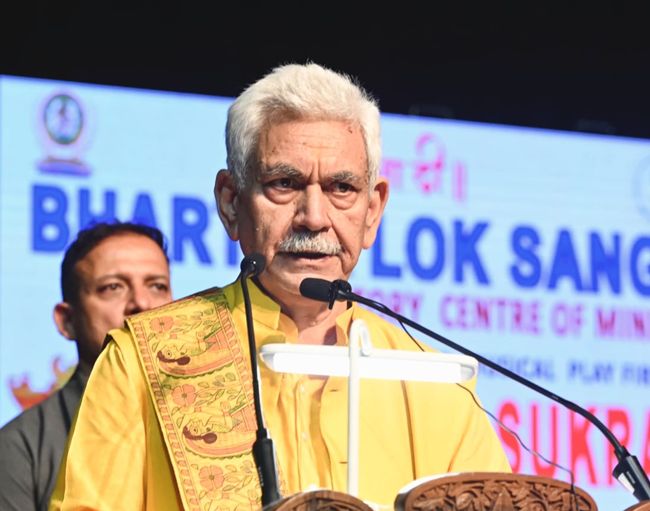
Srinagar, | Sept. 22:Lieutenant Governor Manoj Sinha on Tuesday said Jammu and Kashmir has entered a “new future” after the abrogation of Articles 370 and 35A, describing the constitutional changes of August 2019 as the fulfilment of Sardar Vallabhbhai Patel’s “unfinished dream” of a united India.
Sinha made the remarks while launching the book “Sardar Patel and Kashmir: The Untold History” in Srinagar. He said the changes made in August 2019 had opened new possibilities in education, employment, entrepreneurship and development for the youth of Jammu and Kashmir.
“In August 2019, under the leadership of Prime Minister Narendra Modi, the nation witnessed a historic constitutional change. New possibilities of education, employment, entrepreneurship and development opened up for the youth,” the LG said.
“I believe that by consigning the era of Article 370 to history, Jammu Kashmir now stands at the threshold of a new future,” he added.
The Lieutenant Governor said the abrogation of Articles 370 and 35A was not merely a legal change but, in his view, represented a step towards the “psychological and emotional integration” of Jammu and Kashmir with the rest of the country.
Recalling Sardar Patel’s role in the integration of princely states, Sinha described him as the “architect of modern India” and said his determination and administrative approach were instrumental in bringing 562 princely states into the Union of India.
“Sardar Patel’s dream of a united India lives,” Sinha said, adding that Patel’s vision of “Ek Bharat, Shreshtha Bharat” continued to shape the country’s approach to unity and diversity.
Referring specifically to Jammu and Kashmir, the LG recalled Patel’s reported position on the territory and said the former Deputy Prime Minister had a clear understanding of the issue.
“Through his indomitable willpower, clear vision, selfless diligence, and skilful organisational strength, he ensured that the dream of an undivided India became a reality. I also believe that had Sardar Patel been given the responsibility for Jammu Kashmir, perhaps the problems that the people here endured for more than six decades would not have arisen,” he said.
Sinha also called for a fresh examination of historical narratives, saying history should be studied as a record of facts rather than used for political glorification. He said the book represented an effort to bring greater attention to Patel’s contribution to nation-building and his role in the Jammu and Kashmir issue.
The Lieutenant Governor identified youth as one of Jammu and Kashmir’s most important assets and said their energy should be channelled towards nation-building.
“The most valuable asset of Jammu Kashmir is its talented youth and their energy must continue to be transformed into nation-building,” he said.
He outlined four broad priorities for Jammu and Kashmir’s future: maintaining peace through a policy of zero tolerance towards terrorism, accelerating development through infrastructure and connectivity, empowering youth through the digital economy and startup ecosystem, and promoting cultural heritage and tourism.
Sinha said Srinagar, Jammu and other cities of the Union Territory should emerge as centres of education, trade, innovation and entrepreneurship.
He also paid tribute to Sardar Patel and expressed appreciation for the Maninagar Shree Swaminarayan Gadi Sansthan for its contributions to education, humanitarian service and spiritual activities. He congratulated Dr Rizwan Kadri for editing and publishing the book.
The book launch was attended by Acharya Shree Jitendriyapriyadasji Swamiji Maharaj, National Commission for Scheduled Castes Chairperson Kishor Makwana, Dr Rizwan Kadri, Swami Bhagwat Priya Das Ji, Principal Secretary Culture Brij Mohan Sharma, senior government officials, literary personalities and office bearers of the Maninagar Shree Swaminarayan Gadi Sansthan.