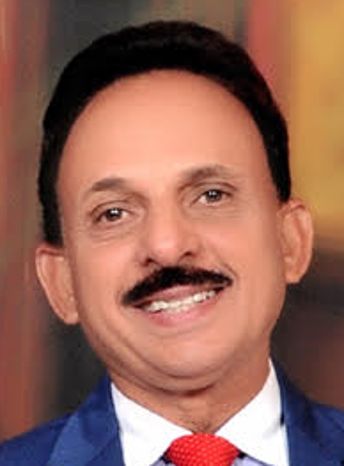
Prof R.K. Uppal
India wants world-class universities. It wants institutions that can compete with Harvard, Stanford, Oxford, Cambridge, MIT and other globally recognized centers of knowledge. It wants Indian universities to climb international rankings, attract foreign students, produce cutting-edge research, create patents, promote innovation and contribute to the country’s emergence as a knowledge economy.
But there is an uncomfortable question that India must confront: Can a country build world-class universities while treating highly qualified faculty as a cost to be controlled rather than intellectual capital to be developed? A university is not its building. It is not its campus gate, air-conditioned conference hall, ranking certificate or glossy prospectus. A university is ultimately its teachers, researchers and students. If the academic workforce is inadequately compensated, overburdened or professionally undervalued, the dream of world-class higher education remains incomplete.
India has invested substantially in expanding higher education. Universities, colleges and professional institutions have multiplied, and millions of young people now participate in higher education. But expansion has also created a fundamental challenge: quality cannot automatically follow quantity. Faculty members today are expected to perform an extraordinary range of responsibilities. They teach multiple courses, prepare lessons, evaluate students, supervise dissertations and PhD scholars, conduct research, publish papers, attend meetings, participate in accreditation exercises, complete administrative documentation, organize conferences and seminars, undertake extension activities and increasingly integrate digital technologies and artificial intelligence into teaching.
The brightest young minds may increasingly ask: Why should I enter academia? If talented graduates and researchers conclude that universities offer limited financial security, professional growth or recognition, institutions may struggle to attract the next generation of outstanding teachers and researchers. And once talented academics leave academia, rebuilding intellectual capacity is not easy.
The issue is even more complicated in parts of the private higher-education sector. Private institutions have played an important role in expanding access to higher education, but institutional models differ considerably. In some places, faculty may face heavy teaching loads, contractual uncertainty, performance pressures and limited participation in academic decision-making. This should not be generalized to every private institution. Many private universities have invested heavily in faculty development and research. But where employment conditions become excessively commercialized, academic excellence can become difficult to sustain. A university cannot demand innovation from teachers while giving them little time for research. It cannot demand international publications while imposing excessive administrative workloads. It cannot expect world-class teaching while treating professional development as an unnecessary expense.
“If teachers are treated as expenses, universities will struggle to become knowledge powerhouses. If teachers are treated as intellectual capital, universities can become engines of national transformation. India does not need merely more universities. It needs stronger universities, stronger research cultures and stronger academic professionals. The world-class university begins not with a magnificent campus but with a professor who has the time, resources, freedom, dignity and motivation to teach research and inspire. India cannot demand world-class universities while expecting world-class academics to work under second-class conditions. If the nation wants knowledge leadership, it must first invest in the people who create knowledge.”
There is another contradiction that deserves attention. India frequently celebrates the number of universities, colleges, enrolments, publications, patents and programmes. But higher education cannot be judged merely by counting outputs. The real question is whether these outputs represent genuine improvement in knowledge, teaching and research quality. A professor who produces meaningful research may require years to develop an idea, collect evidence, conduct analysis and publish credible findings. Quality scholarship cannot always be produced according to a mechanical annual target.
The same principle applies to teaching. A great teacher may influence thousands of students without appearing prominently in international rankings. A professor who spends additional hours mentoring a struggling student may produce no measurable institutional metric, but that intervention may change a young person’s entire career.
Academic work creates value that cannot always be captured by spreadsheets. India therefore needs a broader definition of investment in higher education. Faculty salaries, research grants, sabbaticals, conferences, laboratories, academic databases, faculty-development programmes and opportunities for international collaboration should be regarded as investments in national intellectual capacity.
This is particularly important as India enters an era of artificial intelligence. AI can assist teachers with lesson planning, assessment, research support and personalized learning. But technology does not eliminate the need for excellent faculty. Instead, it changes the nature of the teacher’s role. Students will increasingly need academics who can teach them how to question information, evaluate evidence, think critically and use technology responsibly.
The future university will not be teacher less; it will require better teachers. India must therefore rethink its faculty policy. Compensation should be competitive enough to attract talented people into academia. Career progression should reward genuine teaching, research, innovation and mentoring rather than paperwork alone. Institutions should provide reasonable workloads and opportunities for continuous professional development.
At the same time, accountability must remain essential. Better compensation should be accompanied by professional responsibility. Faculty members must maintain teaching standards, undertake meaningful research, mentor students and contribute constructively to institutional development.
The objective should not be simply higher salaries without accountability. It should be fair compensation with professional excellence. Universities must also distinguish between legitimate performance management and excessive managerial control. Academic institutions require administration, but excessive administrative interference can undermine the autonomy and creativity that scholarship requires.
India’s ambition to become a developed and knowledge-driven economy depends heavily on the quality of its universities. The country cannot simultaneously demand global research, innovation, employability, internationalization and technological leadership while neglecting the people responsible for delivering them. The choice before India is therefore larger than a salary question. It is a question about what kind of society India wants to build.
(The author is Principal, Guru Gobind Singh College of Management and Technology, Gidderbaha, Punjab. The views, opinions and conclusions expressed in this article are those of the author and aren’t necessarily in accord with the views of “Kashmir Horizon”)
[email protected]