IFFJK opens dialogue on building J&K into a sustainable cinematic ecosystem
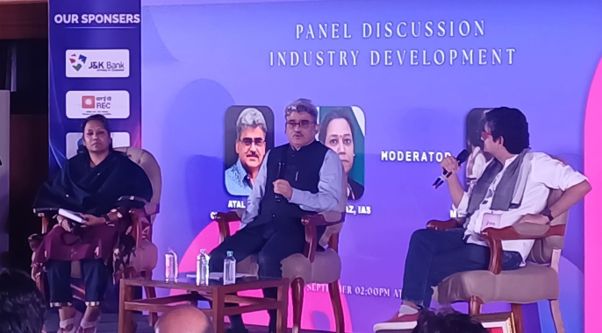
Srinagar| Sept, 06:The second day of the first International Film Festival of Jammu & Kashmir (IFFJK-2026) witnessed an engaging policy dialogue on the prospects of building a sustainable cinematic ecosystem in the Union Territory, with Chief Secretary Atal Dulloo emphasising the need to create an enabling environment for local talent, filmmaking, film education and investment.
Participating in a panel discussion on “How the J&K Film Policy, Single-Window Clearances, and Incentives Can Build a Sustainable Local Cinematic Ecosystem”, moderated by noted film critic and journalist Mayank Shekhar, the Chief Secretary, along with Commissioner Secretary, Information Department, R. Alice Vaz, dwelt upon the initiatives already undertaken by the Government and the measures being planned to give further impetus to filmmaking and film tourism in J&K.
Speaking on the occasion Chief Secretary Atal Dulloo emphasized the historical connection between Jammu and Kashmir (J&K) and the film industry, particularly during the 1970s and 1980s, and highlighted the importance of the International Film Festival of Jammu and Kashmir (IFFJK) as a means to rekindle this relationship. He articulated the festival’s role in harnessing the creative potential of the region’s youth in filmmaking and related professions, echoing Dr. APJ Abdul Kalam’s sentiment that pursuing dreams is vital. Dulloo underscored the need for a strategic roadmap to sustain the momentum generated by the festival and acknowledged the collaborative nature of cinema, which relies on a diverse range of professionals beyond just those in front of the camera. Dulloo also pointed out the government’s commitment to nurturing local talent through scholarships and partnerships with national institutions for specialized training in filmmaking. He stressed the importance of the Skill Development Mission in providing relevant training opportunities and called for the removal of procedural obstacles to filming in J&K, advocating for enhancements to the Single Window Clearance System and the proposed Ease of Doing Business Bill to create a more conducive environment for filmmakers. R. Alice Vaz, Commissioner Secretary of Information, elaborated on the J&K Film Policy, which aims to attract both external productions and support local filmmakers. She highlighted incentives for films shot predominantly in J&K and the engagement of local talent, aiming to create a cycle of increased filmmaking activity that generates employment and showcases the region’s cultural richness. Vaz noted the strong link between filmmaking and tourism, suggesting that enhanced cinematic visibility could promote local destinations and stimulate economic growth. The discussions at IFFJK-2026 encompassed various aspects of J&K’s film ecosystem, focusing on the need to establish a sustainable environment for nurturing local talent while attracting national and international productions. The festival featured a range of sessions, including masterclasses and panel discussions that explored contemporary cinema, the integration of traditional art forms with modern technology, and the evolving landscape of independent cinema. These activities reinforced IFFJK-2026’s vision of creating a comprehensive platform that connects cinema, policy, technology, education, and tourism, thereby enhancing J&K’s role in the broader cinematic landscape.