Introduction
Increasingly, the Global South is expected to adopt a common position in a time when global fault lines seem more clearly drawn than ever before. The Russian-Ukrainian crisis, the Gaza crisis, and the wider West Asian crisis point to the fact that global politics cannot simply be viewed as a binary divide between the West and the rest. Countries in Asia, Africa, Latin America, and the Middle East are taking independent decisions based on issues such as energy security, economics, food security, development, and national interest.
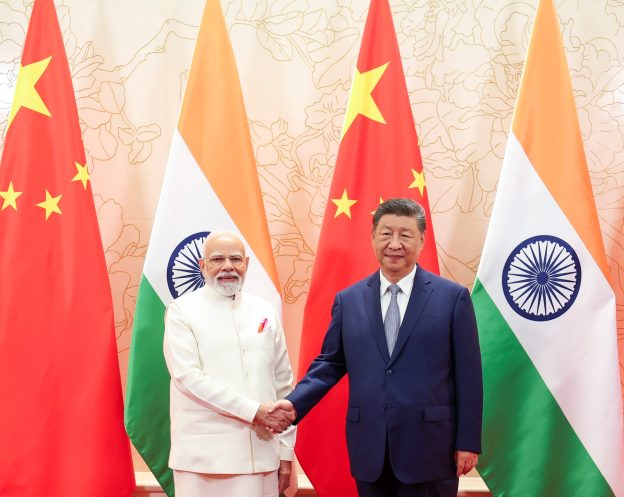
For India, this scenario poses a major problem. Along with China, India has made efforts to exercise greater influence within developing countries as well as bring about changes in an international order perceived to be imbalanced. But if both countries assert their role as voices of the Global South, then the question emerges whether such an eclectic group can speak with one voice.
The Global South Was Never One Political Community
The term ‘Global South’ still makes sense as many developing countries have been in similar situations with colonialism, economic inequalities and lack of representation in international institutions. The government of India has tried to tap into these similarities for diplomatic influences, through events such as The Voice of the Global South Summit in 2023.
But common history is not the same as common geopolitical interests.
The current disputes make this evident. The Russia-Ukraine war has forced developing countries to find a balance between the principles of sovereignty with economic and strategic relations. The conflict in Gaza raises hard issues related to humanitarian duty, security, and international law. Moreover, the situation in West Asia jeopardizes energy supply routes, sea lines of communication, and general economic equilibrium on a much larger scale.
The Global South, therefore, should not be viewed as a group waiting for a leader. It is a collection of countries pursuing their own interests in an uncertain world.
The BRICS Test
India’s 2026 BRICS chairmanship makes this contradiction particularly significant. The expansion of BRICS has brought together countries with different political systems, economic priorities and relationships with major powers. Its growing engagement with countries such as Iran also reflects the desire among several states for alternatives to existing global financial and political structures.
But greater membership does not automatically create greater unity.
India should work towards managing its differences with other BRICS countries while ensuring that its relations with nations like the USA, Russia, Europe, Iran, and other Gulf nations are not affected. This principle of balancing one’s relationship with countries is actually the reality of modern-day diplomacy which dictates that a country may work with another country regarding a particular matter but have a completely different opinion on another matter.
India’s Real Advantage: The Ability to Convene
China possesses considerable economic influence across the developing world through trade, investment and infrastructure. India cannot, and perhaps should not, attempt to replicate this model. India’s advantage may actually lie in flexibility in its diplomatic stance.
It can work with the US without formally becoming its ally, build its relations with Moscow and with the West at the same time, take part in the Quad group while being active in BRICS, and simultaneously keep relations with Iran and other Gulf nations.
This does not necessarily imply that India agrees with the stances of the above-mentioned countries, however. . It means India has relationships across geopolitical divisions. Its opportunity, therefore, may not be to become the “voice” of the Global South, but to become a bridge between its different voices.
The Counterargument
Critics may argue that a fragmented Global South needs stronger leadership and that India must compete more directly with China to establish itself as a major power. China’s growing influence certainly cannot be ignored.
However, turning the Global South into another arena of India–China rivalry could reproduce the bloc politics that many developing countries have historically resisted.
India should instead ask: Can disagreement itself be made productive?
BRICS demonstrates why this matters. Its members can cooperate on development, trade and finance while maintaining different positions on major international conflicts. Managing these differences may be more valuable than forcing artificial consensus.
Conclusion
The most important contest over the Global South may not ultimately be between India and China. It may be between the desire for collective action and the reality of diverse national interests.
India should then be careful in claiming an unquestioned leadership position. A more credible goal would be to position itself as a country bringing parties to the negotiating table and stressing common issues, without insisting on uniformity and continuing the dialogue even in difficult geopolitical times.
In a world increasingly divided into competing camps, India’s greatest contribution to the Global South may not be leading from the front, but keeping the table large enough for everyone to remain at it.

Author is Student, Department of Media and Public Affairs, Christ (Deemed to be University) Delhi NCR