

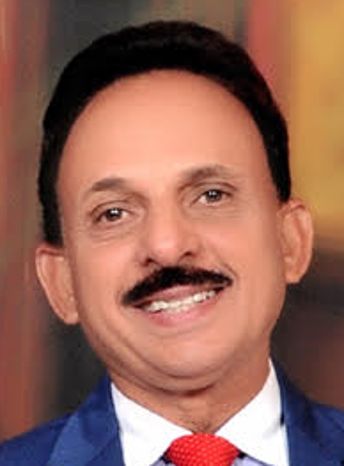
Prof R.K. Uppal
India’s higher education system is expanding rapidly, with millions of young people entering colleges and universities every year. Degrees have become increasingly common, but employment opportunities have not grown at the same pace. This growing gap between educational qualifications and meaningful employment is becoming one of the most serious challenges facing India’s youth. The country does not merely need more graduates; it needs graduates with relevant skills, practical knowledge, creativity and the ability to contribute productively to the economy.
The fundamental problem is not that India has too many educated young people. Education is always an asset. The problem is that many degree programmes remain weakly connected to the requirements of the labour market. Students often spend several years earning qualifications without acquiring the practical competencies demanded by employers. As a result, a degree may provide academic credentials but fail to provide employability.
This degree–job mismatch has several consequences. Young people and their families invest substantial amounts of money and time in higher education with the expectation of obtaining stable employment. When suitable jobs do not materialise, frustration, unemployment and underemployment increase. Many graduates are forced to accept jobs unrelated to their qualifications, while others prepare repeatedly for competitive examinations because they see limited opportunities in the private sector.
The situation also reflects weaknesses in curriculum design. In many institutions, curricula continue to emphasize theoretical knowledge, memorization and examinations rather than problem-solving, communication, digital competence, teamwork, entrepreneurship and industry-specific skills. The world of work is changing rapidly because of artificial intelligence, automation, digitalization and new business models. Higher education cannot remain disconnected from these transformations. Universities and colleges must therefore reconsider the purpose of degree programmes. A degree should not simply certify that a student has completed a prescribed number of courses. It should demonstrate that the student possesses knowledge and competencies relevant to further study, employment, entrepreneurship and society. Academic learning and practical learning must become complementary rather than separate. One of the most important reforms should be stronger academia–industry linkages. Employers should have a meaningful role in curriculum development, internships, skill training, live projects and professional certification. Universities can establish advisory boards involving industry experts and regularly review programmes according to changing employment trends. Students should receive opportunities to work on real-world problems before completing their degrees.
Internships and apprenticeships should also become an integral part of higher education. Classroom education provides the foundation, but workplace exposure teaches students how knowledge is actually applied. A student studying management, economics, commerce, engineering, computer science or any other discipline should have opportunities to understand real organizational and economic challenges.
Another major reform should be greater emphasis on multidisciplinary and skill-based education. The modern economy increasingly values individuals who can combine knowledge from different fields. A graduate may need technical knowledge along with communication skills, data analysis, financial literacy, digital capabilities and entrepreneurial thinking. Flexible education should therefore be accompanied by meaningful opportunities to acquire market-relevant competencies.
“The rapid growth of artificial intelligence makes these reforms even more urgent. Some routine jobs will change or disappear, while new occupations will emerge. Students will need capabilities that machines cannot easily replace: critical thinking, creativity, ethical judgment, communication, adaptability and the ability to solve complex problems. Universities must prepare students for jobs that may not even exist today.”
Universities must also take responsibility for tracking the outcomes of their degree programmes. Institutions should publish credible information about graduate employment, further education, internships and entrepreneurship. Students and parents deserve to know whether a particular programme actually improves career prospects. Transparency can encourage institutions to improve quality instead of focusing only on enrolment numbers.
The problem also requires a change in student mindset. Young people should not select a degree merely because it is popular or because friends and relatives are pursuing it. Career planning should begin much earlier. Students should examine employment trends, emerging sectors, required skills and their own interests before choosing a programme. Career counseling should become a serious institutional service rather than a formality.
At the same time, society must stop measuring success exclusively through conventional government jobs. India needs entrepreneurs, researchers, skilled professionals, technicians, designers, teachers, financial experts, healthcare workers and millions of other professionals. A strong economy requires diverse forms of employment and entrepreneurship. Higher education should encourage students to become job creators as well as job seekers.
Government policy also has an important role. Funding and accreditation mechanisms should increasingly reward institutions for quality, innovation, employability, and research impact and industry collaboration. Merely increasing the number of colleges, universities and degree programmes cannot solve the employment challenge. Expansion without quality and relevance can produce more qualified but unemployable graduates.
India has a tremendous demographic advantage, but a young population becomes an economic strength only when young people have productive opportunities. If education produces certificates without careers, the demographic dividend can gradually become a demographic challenge. The objective should therefore be to create an education system in which learning, skills; innovation and employment reinforce one another.
The solution is not to reduce access to higher education or discourage young people from pursuing degrees. Rather, India must make its degrees more meaningful. Every programme should answer a basic question: What knowledge, skills and opportunities will this degree provide to the student?
The era of “degree first, employment later” must give way to “education, skills and employability together.” Universities must move from producing graduates in large numbers to developing capable, adaptable and innovative professionals. India does not have a shortage of young minds. It has a shortage of strong connections between education and opportunity. Too many degrees and too few jobs is not merely an employment problem—it is a warning that higher education needs fundamental reform. The future of millions of young Indians depends on making that reform a national priority.
(The author is Principal, Guru Gobind Singh College of Management and Technology, Gidderbaha, Punjab. The views, opinions and conclusions expressed in this article are those of the author and aren’t necessarily in accord with the views of “Kashmir Horizon”)






