
• About Us
  • Contact Us
  • Our Team
  • Advertise with Us
  • Contributors
  • FAQ
  • Privacy Policy
  • Terms of Service
Friday, October 9, 2026
The Kashmir Horizon
EPAPER
  • HOME
  • Region
  • City News
    • Srinagar
    • Jammu
  • News In Focus
  • Opinion
    • Editorial
    • Ideas
    • My Idea
    • Friday Faith
    • Letter to the Editor
  • Business
  • Sports
  • India
  • World
  • Snapshots
  • ePaper
No Result
View All Result
The Kashmir Horizon
  • HOME
  • Region
  • City News
    • Srinagar
    • Jammu
  • News In Focus
  • Opinion
    • Editorial
    • Ideas
    • My Idea
    • Friday Faith
    • Letter to the Editor
  • Business
  • Sports
  • India
  • World
  • Snapshots
  • ePaper
No Result
View All Result
The Kashmir Horizon
No Result
View All Result
Home Opinion Ideas

Dress For A Changing Climate

Mir Iqbal Hussain Chattergami by Mir Iqbal Hussain Chattergami
August 31, 2026
in Ideas
A A
Climate change may make Delhi, Kolkata 2-4 degrees warmer: Study
Share on FacebookShare on TwitterWhatsappTelegramEmail

Mir Iqbal Hussain Chattergami

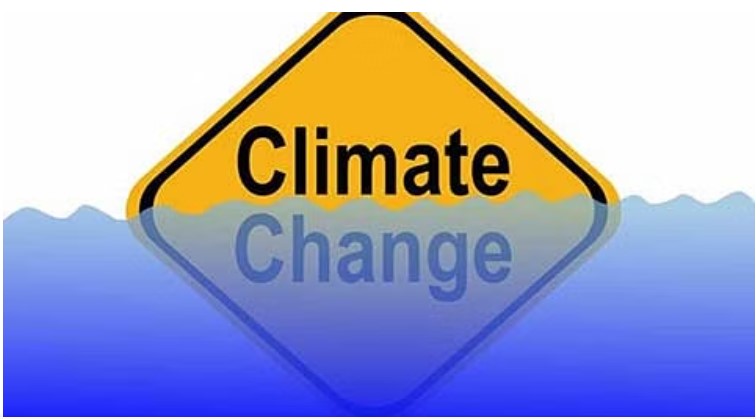
Climate Change, Time for a Dress Change
Yesterday, during my duty hours, I noticed that nearly half of our staff members were wearing white or light-coloured clothes. It was an ordinary sight, but the heat made me think about it differently. I began wondering: if our climate is changing, should our way of dressing change too? Recently, I read about Japan and some European countries changing or relaxing traditional workplace dress codes because of rising temperatures and heat waves. It made me think that when the weather becomes hotter, even the clothes we wear may have a role to play in helping us cope with the heat. It also took me back to the white clothes traditionally worn in schools, hospitals and many other professions. White has long been associated with cleanliness, purity and professionalism. But perhaps there was some practical wisdom behind it too. Light colours reflect more sunlight and generally absorb less heat than darker colours.
The fabric matters as well. Cotton remains a good choice during hot weather because it is breathable, allows air to pass through and helps sweat evaporate. Light-coloured, loose cotton clothes can therefore make us more comfortable when temperatures rise. For Kashmir, this is worth thinking about. Our summers are changing, and heatwaves are becoming a growing concern. We usually discuss climate adaptation in terms of water conservation, disaster management, infrastructure and other major measures. But adaptation can also begin with small changes in our everyday lives.

“As global temperatures rise, our wardrobe choices must evolve—shifting from traditional standards of appearance and discipline toward functional climate protection and daily comfort.”

Schools in the Valley, both government and private, should consider light-coloured, loose and breathable uniforms during summer. Students are particularly sensitive to extreme heat. A climate-friendly uniform could not only make them more comfortable during heat waves, but also encourage them to think about climate change and the small changes needed to adapt to it.
Police personnel, traffic workers, sanitation workers and others who spend long hours outdoors could also benefit from uniforms designed for hotter conditions. Hospitals and other institutions could similarly review their dress requirements during periods of extreme heat.
Of course, changing the colour of our clothes will not solve the climate crisis. But it can be a small step towards climate-change adaptation, particularly as we learn to live with increasingly frequent heatwaves in the Valley. Drinking enough water, taking breaks, providing shade and avoiding unnecessary exposure during the hottest hours remain equally important.
Yesterday’s white clothes among my colleagues may have been nothing more than a coincidence. But that simple sight made me realise that climate change is slowly influencing even the ordinary choices we make. Perhaps it is time to rethink our dress—not only for appearance, discipline or tradition, but also for our comfort and protection in a warming climate. If the climate is changing, perhaps what we wear should change with it.

(The author is a teacher and Environmental Science researcher pursuing a PhD in Environmental Science. The views, opinions and conclusions expressed in this article are those of the author and aren’t necessarily in accord with the views of “Kashmir Horizon”)


[email protected]

Mir Iqbal Hussain Chattergami

Mir Iqbal Hussain Chattergami

Related Posts

Islamic And Quantum Science

GAIS Conference: Transforming Islamic Education Works
by Mir Iqbal Hussain Chattergami
October 9, 2026

Quantum science and technology are among the most significant intellectual developments of the modern age. The declaration of 2025 as...

Read moreDetails

India’s WTO Fisheries Ratification Accord

Glaciers Met, Heat wave Induced Water Scarcity In Kashmir
by Mir Iqbal Hussain Chattergami
October 9, 2026

Dr. M. Krishnan Dr. P. Krishnan India’s decision to ratify Phase 1 of the WTO Agreement on Fisheries Subsidies marks...

Read moreDetails

The Legacy Of Sheikh-ul-Alam (RA)

The Openhandedness of Holy Prophet (SAW)
by Mir Iqbal Hussain Chattergami
October 9, 2026

Dr. Bilal A. Bhat Intizar Ahmad The spread and development of Islam in Kashmir was a gradual historical process shaped...

Read moreDetails

Kulgam’s Alpine Trails

Glaciers Met, Heat wave Induced Water Scarcity In Kashmir
by Mir Iqbal Hussain Chattergami
October 7, 2026

A journey through the natural beauty, cultural character and emerging tourism landscape of South Kashmir Ishtiyaq Hussain Bhat Kashmir's beauty...

Read moreDetails

Venerating Islamic Icons

GAIS Conference: Transforming Islamic Education Works
by Mir Iqbal Hussain Chattergami
October 7, 2026

Respect for religious personalities is one of the essential principles of peaceful coexistence, ethical communication, and meaningful interfaith dialogue. Every...

Read moreDetails

Kashmir’s Fading Green Cover

Dr. Zamir A Bhat: A Scholar, Educator, Humanist
by Mir Iqbal Hussain Chattergami
October 7, 2026

When urbanisation and industrialisation ignore the environment, development can become a threat to the landscape that sustains us Mir Iqbal...

Read moreDetails

About

The publication of “Kashmir Horizon” as an English daily was started with a modest attempt on May 19, 2008.It has been a Himalayan attempt for “The Kashmir Horizon” to survive the challenges posed to journalism in the violence fraught place like Jammu & Kashmir.

MORE

Search in Archive

DIGITAL EDITION

  • About Us
  • Contact Us
  • Our Team
  • Advertise with Us
  • Contributors
  • FAQ
  • Privacy Policy
  • Terms of Service

© The Kashmir Horizon - Designed by Gabfire

No Result
View All Result
  • HOME
  • Region
  • City News
    • Srinagar
    • Jammu
  • News In Focus
  • Opinion
    • Editorial
    • Ideas
    • My Idea
    • Friday Faith
    • Letter to the Editor
  • Business
  • Sports
  • India
  • World
  • Snapshots
  • ePaper

© The Kashmir Horizon - Designed by Gabfire

✕
The Kashmir Horizon

FREE
VIEW