Amit Shah Outlines Strategic Blueprint For Drug-Free And Secure India
Shah Sets Tight Timeline For National Security Overhaul ,Signals Tough Security Era At National Strategy Meet
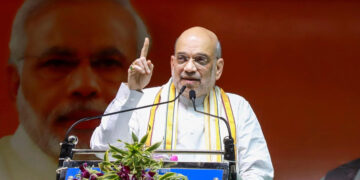
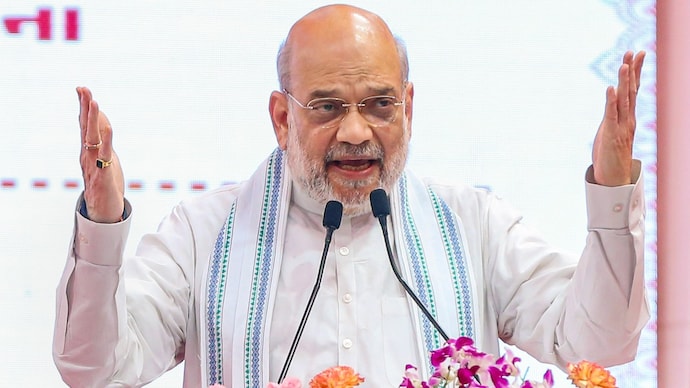
New Delhi: In a decisive call to reinforce national borders and fortify internal stability, Union Home Minister Amit Shah declared at the National Security Strategy Conference (NSSC) in New Delhi that illegal migration will no longer be tolerated under any circumstances.
Delivering a stern message during the valedictory session of the Intelligence Bureau-hosted event, Shah asserted, “This country is not a Dharamshala, and only the citizens of the country have the right to live in this country.” Unveiling a comprehensive quadrangular border security approach crafted after extensive consultations across land border states, he outlined a clear trajectory to eliminate illegal immigration rapidly.
Underscoring the multi-dimensional threats posed by unchecked border crossings, Shah warned that “infiltrators are a threat to the country’s security, economy and demographic change,” urging security institutions to project emerging trends over the next 15 to 20 years to craft proactive countermeasures.
Aligning internal security priorities with Prime Minister Narendra Modi’s vision of a fully developed nation by 2047, the Home Minister called for a total overhaul of the country’s law enforcement and intelligence apparatus. Shah announced the full implementation of three new criminal laws within the coming year to guarantee final judicial disposal up to the Supreme Court within three years and boost conviction rates by 25 percent.
Home Minister directed state police forces to roll out the Narcotics Control Vision Document 2026–2029 under the operational banner of “Detect, Disrupt and Destroy.” To support these measures, Shah urged young officers to harness Artificial Intelligence and cross-analyze unified data streams—including CCTNS, ICJS, NatGrid, and NAFIS—to anticipate evolving crime patterns. Reflecting on past successes, he noted that “the destruction of the entire cadre by striking and banning the Popular Front of India (PFI) in one night is an excellent example of Centre-State coordination.” Looking ahead, Shah advocated taking the ‘PRAHAR’ anti-terror doctrine from policy documents into daily field practices, while urging law enforcement to build robust operational frameworks against drone incursions, cyber-misinformation, supply chain disruptions, and bio-security risks.