Calls for greater community awareness, mobilisation at grass roots
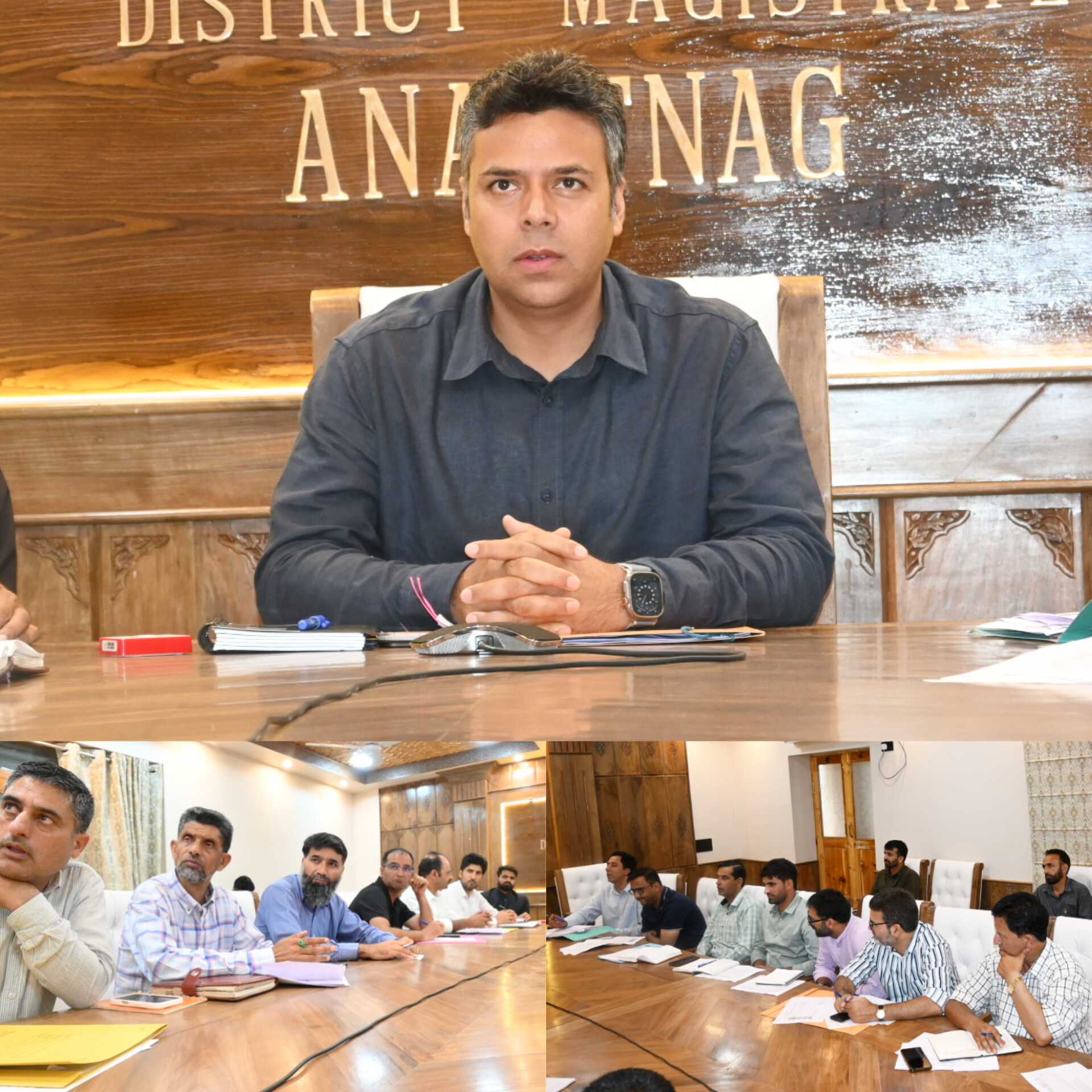
ANANTNAG, AUGUST 18: Deputy Commissioner (DC) Anantnag, Dr. Bilal Mohiuddin Bhat, today chaired a meeting at the DC Office, to review the status of Solid Waste Management and Sanitation in the district.
The meeting was attended by the Assistant Commissioner Development, Chief Planning Officer, Block Development Officers, Chief Executive Officer, Municipal Council Anantnag, Executive Officers of Municipal Committees, and other concerned officials.
During the meeting, the ACD briefed the chair about the measures being undertaken for effective waste management across rural areas. It was informed that 62 Panchayats have been covered under door-to-door waste collection, while nine functional waste segregation sites have been established in the district.
The meeting was further informed that around 10,000 individual compost pits have been created to promote decentralized waste management. Besides, various Panchayats have been outsourced for waste collection and segregation, while one Plastic Waste Management facility has been established in each block.
The Deputy Commissioner directed the concerned officers to identify suitable land for dumping and waste segregation sites in each block to strengthen the solid waste management system. He also stressed the need for proper identification and demarcation of rural and urban boundaries and formulation of Memorandums of Understanding (MoUs) between the concerned agencies for coordinated and scientific disposal and management of waste.
Dr. Bilal further directed the officers to identify sanitation gaps and critical areas requiring administrative intervention, and to formulate appropriate measures for addressing these gaps in a time-bound manner. He emphasized inter-departmental coordination, regular monitoring and effective implementation of sanitation measures to ensure a cleaner and healthier environment across the district.
Concluding the meeting, the DC called for creating greater community awareness and mobilisation both in rural and urban areas so the scientific and sustainable sanitation and waste management measures are implemented with better impact at grass roots level across the district.