RBI’s central board had recommended introduction of one billion polymer notes each in the Rs 10, Rs 20 denominations: FM Sitharaman
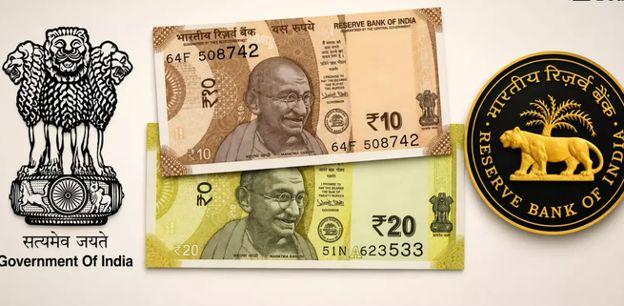
New Delhi: The Centre has approved the Reserve Bank of India’s proposal to introduce polymer banknotes in the Rs 10 and Rs 20 denominations on a trial basis, Parliament was informed on Tuesday.
Finance Minister Nirmala Sitharaman said the RBI’s central board had recommended the introduction of one billion polymer notes each in the Rs 10 and Rs 20 denominations. The proposal was submitted to the government under Section 25 of the Reserve Bank of India Act, 1934.
The polymer notes will initially be tested in the field. Subject to the outcome of the trials, the RBI plans to move towards their regular issuance in these denominations.
The new polymer currency will be circulated alongside existing paper-based banknotes, Sitharaman said in a written reply to the Rajya Sabha.
The RBI has initiated the procurement process, but it is currently at an early stage. As a result, the government is not yet in a position to specify when the polymer notes will enter circulation or estimate the overall cost of the exercise, the Finance Minister said.
In a separate response, Sitharaman said India’s average retail inflation has moderated over the past three financial years.
CPI-based inflation declined from 5.4% in 2023-24 to 4.6% in 2024-25, before falling further to 2.1% in 2025-26, according to the data cited by the Finance Minister.
Inflation, however, picked up to 3.9% in the first quarter of FY27, amid several supply-side pressures. These included higher commodity and global energy prices linked to the West Asia crisis, seasonal increases in vegetable prices and concerns over potentially adverse El Niño conditions.
Despite the increase, retail inflation remained below the RBI’s medium-term target of 4%, Sitharaman said.
The Finance Minister also highlighted the changes approved at the 56th GST Council meeting, which introduced a simplified two-rate structure.
Under the revised framework, the standard GST rate has been set at 18%, while a lower merit rate of 5% applies to specified goods and services. A special 40% demerit rate has been retained for a select group of goods and services.
Sitharaman said the revised structure incorporates the earlier compensation cess, meaning there would be no increase in the overall tax burden on the affected products and services on account of the restructuring.
The government continues to monitor price movements and is prepared to deploy fiscal, administrative and supply-side interventions depending on economic conditions, she said.
Such measures are aimed at protecting household purchasing power, particularly for low- and middle-income consumers, amid changes in domestic and global economic conditions.