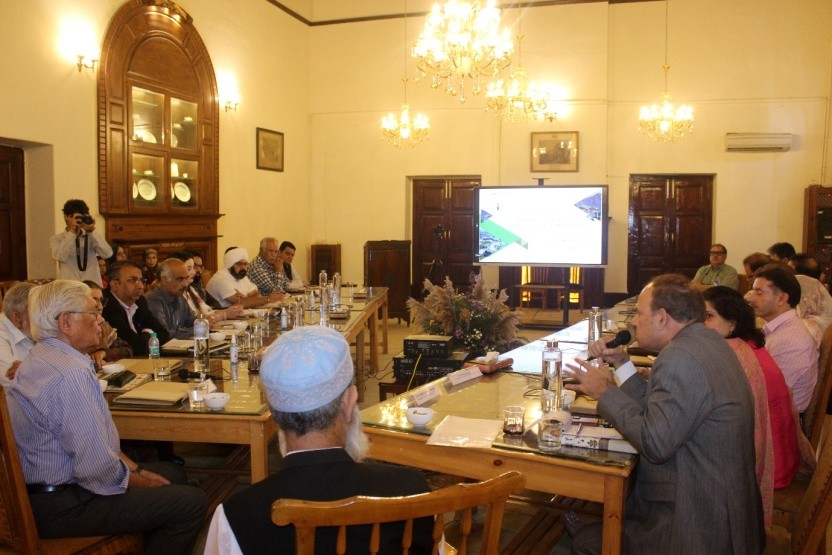
Srinagar : The four-day international conference on ‘Nature-Based Solutions (NBS) for Enhanced Climate Resilience and Livelihoods in the Himalayas,’ organized by the Islamic University of Science and Technology (IUST), concluded with a High-Level Policy Dialogue focused on leveraging NBS for fiscal diversification and resilience in Jammu and Kashmir.
The dialogue convened a diverse group of stakeholders, including government officials, academics, industry representatives, and civil society, to discuss the integration of NBS into policy and development practices. Key discussions centered on the interconnected challenges of climate risk, fiscal constraints, and youth unemployment. Participants explored how investments in natural systems could mitigate disaster risks, reduce future public expenditures, bolster economic sectors, and create new job opportunities. The need for enhanced natural-capital assessments, localized data, integrated planning, and improved financing mechanisms was emphasized to effectively implement NBS initiatives. Prof. Shakil A Romshoo, Vice Chancellor of IUST, highlighted the importance of centering nature-based solutions in inclusive and climate-resilient development. Prof. V. K. Gaur, an Emeritus Scientist, stressed the value of learning from natural systems in addressing environmental challenges. Government representatives acknowledged existing enabling policies but called for a systematic incorporation of NBS approaches, while also identifying data limitations and fragmented planning as significant barriers to progress. The dialogue included contributions from the business and financial sectors, indicating a broad interest in collaborative efforts. The session concluded with a focus on strategic research, policy, and financing priorities for the Jhelum River Basin and the broader Himalayan region, advocating for a collaborative platform that connects science, government, communities, and the private sector to advance NBS initiatives.