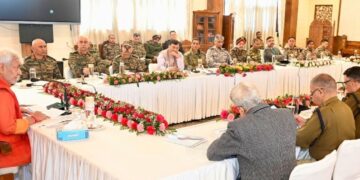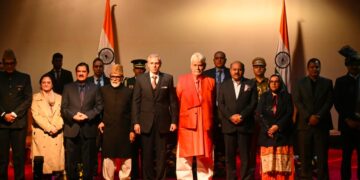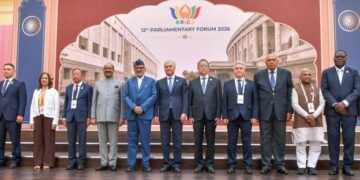

Srinagar: The two day IFAD Project Partners’ Learning Forum 2026, organised by the Mission Directorate, Jammu & Kashmir Competitiveness Improvement Project (JKCIP)/Holistic Agriculture Development Programme (HADP) under the Agriculture Production Department, commenced Thursday at the Sher-i-Kashmir International Conference Centre (SKICC), Srinagar.
The Learning Forum, centred on the theme “Celebrating the International Year of Women Farmers: Empowering Women, Transforming Agriculture,” was attended by the senior government officials, representatives of the International Fund for Agricultural Development (IFAD), Project Directors from IFAD-supported projects across India, development professionals, Farmer Producer Organisations (FPOs), entrepreneurs and other stakeholders to deliberate on innovative approaches towards inclusive and sustainable agricultural development.
The inaugural session was presided over by Chief Secretary, Atal Dulloo, who formally inaugurated the Learning Forum and addressed the gathering.
In his keynote address Chief Secretary emphasized the pivotal role of technology, innovation, and institutional collaboration in enhancing the agriculture sector. He called for increased cooperation among government bodies, development partners, and farming communities to create resilient, market-oriented agricultural systems. Atal Dulloo highlighted the significance of women farmers as key agents of rural transformation, reaffirming the government’s dedication to empowering them through technology, capacity building, and entrepreneurship. Professor Nazir Ahmad Ganie, Vice Chancellor of SKUAST-Kashmir, stressed the necessity of research and scientific interventions in boosting agricultural productivity and sustainability. He advocated for stronger connections between research institutions, extension services, and farmers to facilitate the adoption of modern technologies and improve rural livelihoods. Dr. Sagar D. Dattatray, Mission Director of HADP/JKCIP, outlined the Learning Forum’s objectives, noting the progress made under JKCIP in enhancing institutional frameworks, promoting digital agriculture, and supporting Farmer Producer Organizations and agri-startups. James Marc de Sousa-Shields, Country Director of IFAD India, reiterated IFAD’s commitment to inclusive rural transformation through partnerships and innovation, commending JKCIP’s establishment of a robust digital ecosystem. A significant highlight of the inaugural session was the launch of three key initiatives under JKCIP, including the quarterly knowledge newsletter JKCIP Pulse, the JKCIP Annual Report 2025–26, and the Krishi Mitra AI platform, which offers personalized crop advisory services to farmers. The forum also showcased an exhibition featuring ten agri-startups and five Farmer Producer Organizations, highlighting innovations in precision agriculture, agri-processing, and value addition. The Department of Agriculture Kashmir and other related departments presented thematic stalls to showcase their initiatives and farmer-centric interventions. The first day concluded with technical interactions and networking sessions aimed at fostering collaboration and knowledge exchange, setting the stage for further discussions and field visits on the second day, which will focus on thematic discussions and experiences from IFAD-assisted projects.