16 distts record full coverage; Jammu posts lowest at 96.6%, Pulwama 97.1%, Kathua 98.7%
2,408 zero-dose children vaccinated under Mission Indradhanush; 32,112 children identified through special survey
336 Tribal ASHAs deployed to ensure immunisation among Gujjar, Bakarwal families
Srinagar: Jammu and Kashmir has achieved 100 per cent Full Immunisation Coverage (FIC) under the Universal Immunisation Programme (UIP) during 2025-26, with 16 of its 20 districts reporting complete immunisation of eligible children, the Union Government informed the Rajya Sabha on Tuesday.
The data, tabled by Union Minister of State for Health and Family Welfare Anupriya Patel in response to an unstarred question by Rajya Sabha MP Sat Paul Sharma, also highlights the Union Territory’s progress in reaching zero-dose children and nomadic populations through Intensified Mission Indradhanush (IMI) and targeted outreach programmes.
According to the Ministry, the overall Full Immunisation Coverage for Jammu and Kashmir stands at 100 per cent, with Anantnag, Bandipora, Baramulla, Doda, Ganderbal, Kishtwar, Kulgam, Kupwara, Poonch, Rajouri, Ramban, Reasi, Samba, Shopian, Srinagar and Udhampur each recording 100 per cent coverage during 2025-26.
The remaining districts also recorded high vaccination rates. Budgam reported 99.9 per cent coverage, followed by Kathua (98.7 per cent) and Pulwama (97.1 per cent), while Jammu district registered the lowest Full Immunisation Coverage at 96.6 per cent.
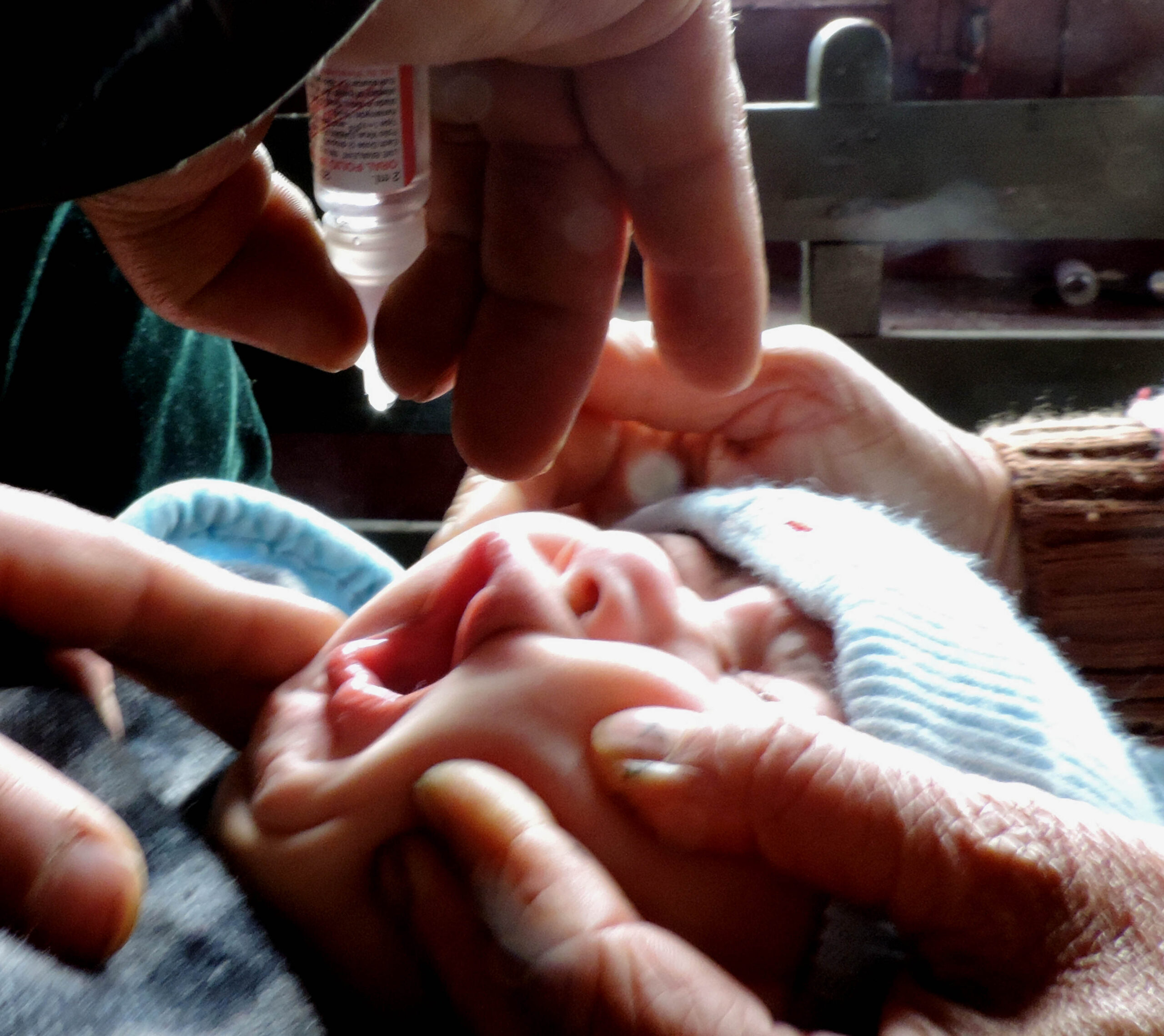
The Ministry said the high coverage reflects sustained efforts under the Universal Immunisation Programme, which provides free vaccines against several life-threatening childhood diseases.
The reply also highlighted the achievements of Intensified Mission Indradhanush (IMI) 5.0, launched to identify and vaccinate children who had either missed routine immunisation or had never received a vaccine.
As part of the campaign, health workers carried out a comprehensive household survey that identified 23,630 children in the 0-2 years age group and 8,482 children between two and five years, taking the total number of children identified for tracking and vaccination to 32,112.
The campaign resulted in 2,408 zero-dose children receiving vaccines for the first time. Among them were 1,402 infants below one year of age, 470 children aged between one and less than two years, and 536 children in the 2-5 years age group.
According to the Ministry, zero-dose and dropout children were identified through Mother and Child Protection (MCP) Cards and Reproductive and Child Health (RCH) registers, while Accredited Social Health Activists (ASHAs) conducted extensive door-to-door surveys to trace beneficiaries, mobilise families and ensure timely vaccination.
To address geographical barriers and vaccine hesitancy among nomadic populations, particularly the Gujjar and Bakarwal communities, the government has engaged 336 Tribal ASHAs under the Universal Immunisation Programme.
The Ministry said these Tribal ASHAs, who are familiar with local languages, customs and seasonal migration routes, play a crucial role in identifying eligible children and pregnant women, counselling families, tracking beneficiaries during migration and improving acceptance of immunisation services in remote habitations.
The outreach strategy also includes special vaccination sessions in remote and difficult-to-reach areas, updated micro-plans incorporating migratory routes and seasonal settlements, and inter-sectoral coordination to ensure that children are not deprived of immunisation because of migration or difficult terrain.
Besides vaccination drives, the Ministry said community awareness campaigns and inter-departmental coordination under Intensified Mission Indradhanush have significantly improved vaccine acceptance, helping the Union Territory move closer to universal immunisation coverage.