• Study reveals Thajiwas Glacier has shrunk by nearly 95% since the last Ice Age
• Locals say snow now melts by April, disrupting tourism and traditional livelihoods
Srinagar: Rapid retreat of the Thajiwas Glacier in Kashmir’s famed tourist resort Sonmarg has raised serious concerns over the growing impact of climate change on Himalayan glaciers, with experts warning of long-term consequences for tourism, water security and local livelihoods.
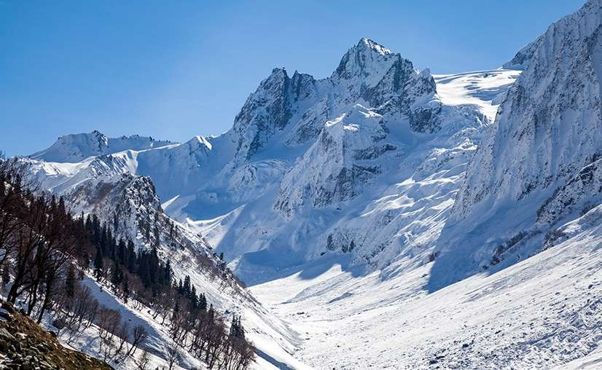
Located along the Sindh River in central Kashmir, Sonmargpopularly known as the “Meadow of Gold”has long attracted tourists for its snow-covered peaks and easy access to the Thajiwas Glacier. For decades, pony operators and guides lured visitors with the promise of witnessing what locals call “Hazarunsaal ka baraf” (snow of thousands of years), referring to ancient ice believed to date back to the Ice Age. However, locals say the glacier and surrounding snow cover are shrinking at an alarming pace.
Riyaz Ahmad (40), a pony operator from Gund village, said weather patterns in Sonmarg have changed dramatically over the past decade. He said the phrase “Hazarunsaal ka baraf” has been passed down through generations to attract tourists heading toward Thajiwas.
“We heard this term from our elders and use it to draw tourists toward the glacier,” Ahmad said.
Ahmad, who has spent nearly half his life working in tourism, said snow once remained on the lower slopes until late spring, limiting movement of ponies.
“Earlier, deep snow covered these meadows till May, making it impossible to ride horses on the slopes,” he said. “By June, tourists would be taken to the lower slopes of Thajiwas where thick snow remained. The snow usually melted by August and returned again by October.” That seasonal cycle, he said, has now changed significantly. “For the last several years, the slope starts losing snow as early as April. Ponies now begin operating in March itself,” he said.
At an altitude of over 3,500 metres, Thajiwas Glacier remains one of Kashmir’s key summer attractions for domestic and foreign tourists. But operators say visitors increasingly return disappointed.
“When tourists get off their horses, many become upset because there is no snow—only grass, rocks and exposed soil,” Ahmad said. “Some even refuse to pay after seeing the condition.”
Local guides said tourists now need to trek more than a kilometre uphill beyond the usual drop-off point to reach visible snow.
Mushtaq Ahmad Sheikh, a tourist guide with over 15 years of trekking experience, said reaching the actual glacier has become difficult and risky.
“It is nearly impossible for ordinary tourists to reach the glacier now,” he said. “Only experienced trekkers or some foreign climbers attempt the route for acclimatisation.”
Sheikh recalled a major visual change during a 2017 trek to DooriNaar beyond Thajiwas.
“Earlier, only two lakes were visible in the area, while the rest remained buried under snow,” he said. “In 2017, melting ice exposed a third lake. That showed how fast the glacier was retreating.”
A study titled “Paleo-glacial Reconstruction of the Thajiwas Glacier in the Kashmir Himalaya” by researchers from the University of Kashmir and the Inter-University Accelerator Centre found that Thajiwas Glacier has shrunk by nearly 95 percent since the last Ice Age, around 20,770 years ago.
According to the study, the glacier once spread across nearly 54 square kilometres but has now reduced to around 2.76 square kilometres.
Earth scientist Prof. Ghulam Jeelani said the retreat is directly linked to global warming and changing hydro-glaciological conditions.
“The retreat of Thajiwas provides important evidence for understanding glacier melt and associated environmental changes in the Kashmir Himalaya,” he said.
Climate experts warn that glacier retreat is not merely a tourism concern.Shrinking glaciers threaten the hydrology of river systems, including the Sindh River, which depends heavily on snowmelt and glacial runoff. Reduced ice reserves could affect long-term water availability, agriculture and ecological stability.
Environmental experts also point to increasing human pressure on Sonmarg’s fragile ecosystem.
Mohammad Yousuf, 70 who is hiker says, every visit reminds me of what we are losing,” Tramboo said. “When I visited recently, I felt deeply saddened by how far the glacier had receded.”
He said Sonmarg has immense potential for sustainable adventure tourism but unplanned development is worsening ecological stress.Concrete construction has changed the landscape. The region looks far more congested now, Yousuf added.
Locals and environmentalists say expanding tourism infrastructure, including hotels, roads and increasing vehicular movement, is adding pressure to the region.
The recently operational Z-Morh Tunnel, which has improved all-weather connectivity to Sonmarg, is expected to increase tourist inflow throughout the year.
While better connectivity boosts tourism, experts caution that year-round access could intensify ecological degradation if not managed sustainably.
Ahmad said the changing climate has already altered traditional livelihood patterns.
“Earlier, heavy snow forced us to stop work in November and remain inactive through winter,” he said. “Now winters are mostly snowless.”
He said this year pony operations were suspended for only around 20 days due to snowfall.
“For the rest of winter, horses kept running because there was barely any snow,” he said.
Experts stressed the urgent need for climate-sensitive tourism planning, glacier monitoring and stronger environmental regulation to protect Sonmarg’s fragile mountain ecosystem.
They warned that if warming trends continue unchecked, glacier retreat could severely impact tourism, local livelihoods and water security across Kashmir.
The experts said glaciers are receding and naturally when there is no sustained winter, obliviously things will change. They say that the reformation of glaciers is not happening and the problem is getting aggravated and it will have an impact.
Prof. Manoj Kumar, from University of Jammu, said climate change is affecting natural resources that are the backbone of economy for thousands of people.
As per them many glaciers, including Kolahoi Glacier, which is the largest glacier of Kashmir and it is also the fastest-depleting glacier of the Himalayas. There is another glacier Machoi glacier in Drass, its area has been lost by 29 percent from 1972 to 2019.