

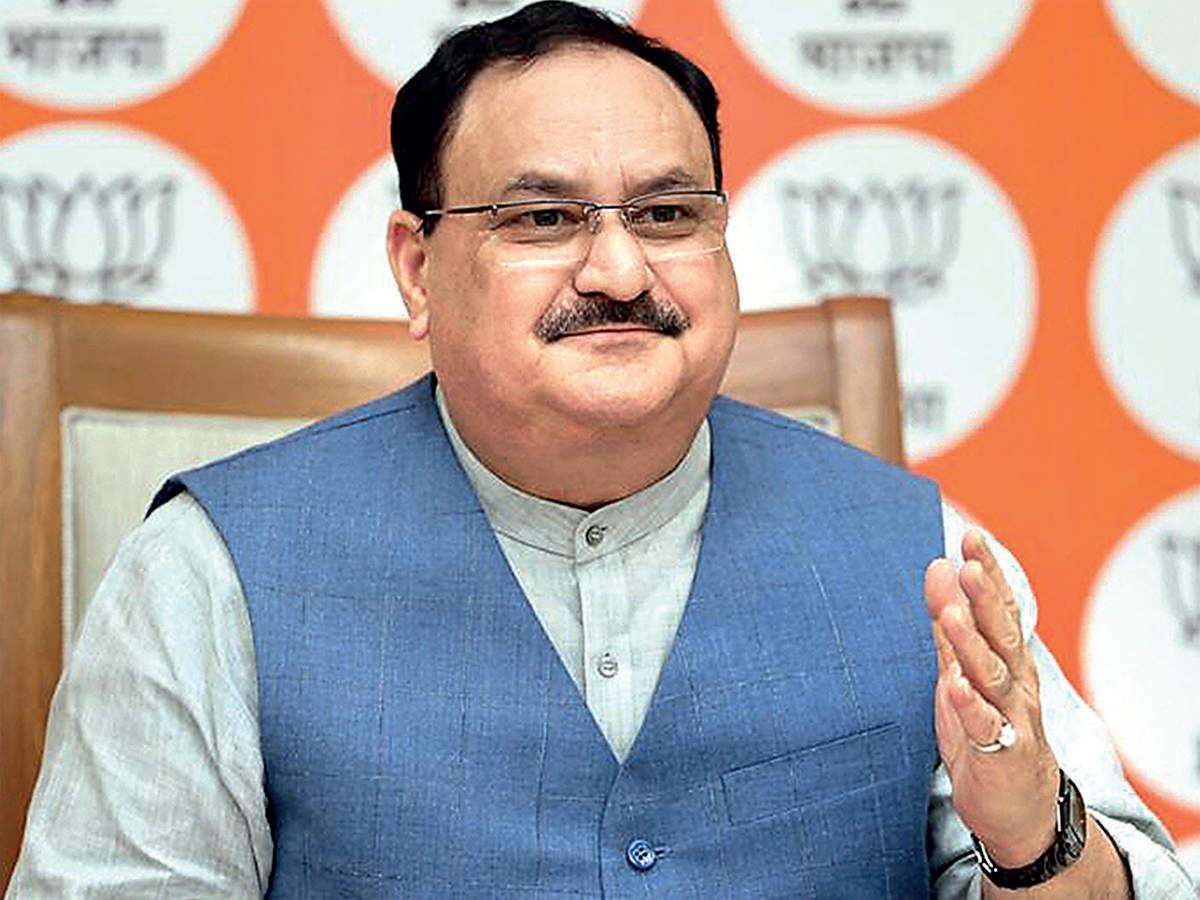
Jagat Prakash Nadda
Every safe pregnancy is a reflection of a nation’s commitment to its women. In a country which experiences nearly 2.9 crore pregnancies annually, ensuring safe motherhood at scale requires robust health systems, sustained political commitment, timely interventions, and equitable access to quality healthcare services.
The remarkable decline in maternal mortality over the past decade stands among India’s most significant public health achievements. This progress has been driven by sustained investments in maternal health, strengthened service delivery systems, community participation and a relentless commitment to ensuring that every woman has access to quality care throughout her pregnancy journey.
At the heart of this transformation is the Pradhan Mantri SurakshitMatritva Abhiyan (PMSMA), which marks ten years of advancing safer motherhood across the country.
Envisioned by the Hon’ble Prime Minister Sh Narendra Modi ji, the scheme was launched on 9th June 2016, PMSMA as a nationwide movement to provide assured, comprehensive and quality antenatal care services, free of cost, to all pregnant women on the 9th day of every month during the second and third trimesters of pregnancy.
The choice of the 9th day carries a deeper significance. Pregnancy is a journey of nine precious months, each month bringing new hope, anticipation and responsibility. By dedicating the 9th day of every month to maternal health, PMSMA serves as a reminder that every pregnancy deserves continuous care, monitoring and support throughout all nine months, until the safe arrival of a healthy newborn.
One of the most important lessons in maternal health is that no pregnancy is entirely risk-free. A pregnancy that appears normal today can develop serious complications tomorrow. Recognizing that any pregnancy can become high-risk without warning, PMSMA introduced a simple yet transformative approach by identifying risks early, monitor them closely and ensure timely referral and management. Every high-risk pregnancy identified represents an opportunity to prevent a maternal death, a stillbirth, a newborn complication or lifelong disability. By shifting the focus from treating complications to preventing them, PMSMA has strengthened India’s maternal healthcare system and made pregnancy safer for crores of women.
One of the defining strengths of PMSMA has been the institutionalization of a fixed-day, assured platform for specialist-led antenatal care, bringing predictability, accountability and continuity to maternal health services across the country. Under the programme, pregnant women are screened for nearly 25 HRP conditions, including severe anaemia, hypertension, gestational diabetes, infections and other complications that can threaten maternal and newborn survival, if left undetected.
As evidence emerged that high-risk pregnancies require continued monitoring beyond routine antenatal care visit by a Specialist/Medical Officer under PMSMA, the Government of India further strengthened the programme through the launch of the Extended PMSMA (E-PMSMA) strategy in 2022.
Under E-PMSMA, high-risk pregnant women receive additional follow-up visits over and above the regular PMSMA session to ensure timely management until safe delivery. The initiative introduced name-based tracking of high-risk pregnancies and strengthened follow-up mechanisms up to the 45th day after delivery, ensuring that vulnerable women remain under continuous care throughout pregnancy and the immediate postnatal period. Incentives for Accredited Social Health Activists (ASHAs), accompanying high-risk pregnant women for additional visits have further strengthened referral compliance and continuity of care.
To further strengthen implementation, monitoring and accountability, the Government of India has developed a centralized PMSMA digital portal that serves as the backbone of programme management across the country. The portal enables real-time reporting of service delivery, name -based tracking of high-risk pregnancies, monitoring of programme performance and evidence-based decision-making at national and state levels. Importantly, the platform also allows private-sector specialists and community volunteers to register and contribute to the programme, reinforcing the Hon’ble Prime MinisterSh Narendra Modi Ji’s vision of Jan Bhagidari that lies at the heart of PMSMA.
The success of PMSMA also highlights the importance of convergence across India’s maternal health ecosystem. Working in synergy with initiatives such as Janani Suraksha Yojana (JSY), Janani Shishu Suraksha Karyakram (JSSK), SurakshitMatritvaAashwasan (SUMAN), National Quality Assurance Standards (NQAS), POSHAN Abhiyaan, Pradhan Mantri Matru Vandana Yojana (PMMVY),Ayushman Bharat and Midwifery Services,Optimization of Post Natal Care (OPNC), PMSMA has contributed to building a stronger continuum of care for women throughout pregnancy, childbirth and the postnatal period.
“The ten-year anniversary of the Pradhan Mantri Surakshit Matritva Abhiyan (PMSMA) celebrates more than just a successful program. It stands as proof that uniting political will, empowered frontline workers, digital innovation, community involvement, and quality healthcare can effectively ensure the survival and well-being of mothers and newborns.”
At the heart of this transformation are India’s frontline healthcare workers i.e. Accredited Social Health Activist (ASHA), Anganwadi Workers (AWWs) Auxiliary Nurse Midwives (ANMs), Community Health Officers (CHOs), nurses, midwives and medical officers. Their tireless efforts in community mobilization, counselling, screening, referral and follow-up have ensured that maternal health services reach women even in the most remote and underserved areas of the country.
The impact of these collective efforts is increasingly visible in national health outcomes. According to the latest Sample Registration System (SRS) estimates for 2022–24, India’s Maternal Mortality Ratio (MMR) has declined to 87 per 100,000 live births, bringing the country significantly closer to achieving the Sustainable Development Goal target of reducing the MMR to below 70 per lakh live births by 2030.
These gains are also reflected in broader maternal health indicators. The recently released National Family Health Survey (NFHS-6, 2023-24) reports that institutional deliveries have increased to 90.6% from 88.6% in NFHS-5 (2019-21), while antenatal care coverage has improved from 92.6% in NFHS-5 to 95.9% in the NFHS-6. These achievements demonstrate that more women are accessing essential maternal health services than ever before, creating valuable opportunities for early detection of complications and timely interventions. Achieving such progress while managing one of the largest annual birth cohorts in the world underscores the scale and effectiveness of India’s maternal health programmes.
A Decade Of Impact: The scale and reach of PMSMA over the past decade have been unprecedented. Since its launch in 2016, more than 7.5 crore antenatal check-ups have been conducted under the programme across the country. Importantly, PMSMA has enabled the identification of over 1.17 crore high-risk pregnancies.
These achievements are not merely numbers. They represent millions of mothers whose complications were detected early, whose pregnancies were monitored more closely, and whose lives as well as those of their newborns were protected through timely and quality healthcare services.
For every mother, pregnancy is a journey of hope. For every family, it is the promise of a new beginning. Yet pregnancy continues to carry avoidable risks for far too many women across the world. PMSMA was built on a simple but powerful belief, that no woman should lose her life while giving life, and no family should lose a mother to a preventable pregnancy-related complication.
As India celebrates a decade of PMSMA, we celebrate much more than the success of a public health programme. We celebrate millions of safer pregnancies, healthier mothers, stronger beginnings for newborns and the collective efforts of healthcare workers, communities and families who have contributed to this transformation.
The journey ahead is clear. We must continue strengthening quality antenatal care, high-risk pregnancy tracking, midwifery-led services, digital innovations and equitable access to maternal healthcare. The experience of PMSMA has reaffirmed a simple truth: when every pregnancy is monitored, every risk is identified early and every woman receives timely, respectful and quality care, maternal deaths become preventable rather than inevitable.
Ten years of PMSMA is therefore not merely the celebration of a programme. It is a testament to what can be achieved when political commitment, empowered frontline workers, digital innovation, community participation and quality healthcare services come together with a singular purpose to ensure that every mother survives and every newborn thrives.
(The author is Union Minister of Health & Family Welfare and Chemicals & Fertilizers. Press Information Bureau-PIB Srinagar has mailed this article to “Kashmir Horizon” for publication in this newspaper. The views, opinions and conclusions expressed in this article are those of the author and aren’t necessarily in accord with the views of “Kashmir Horizon”)





