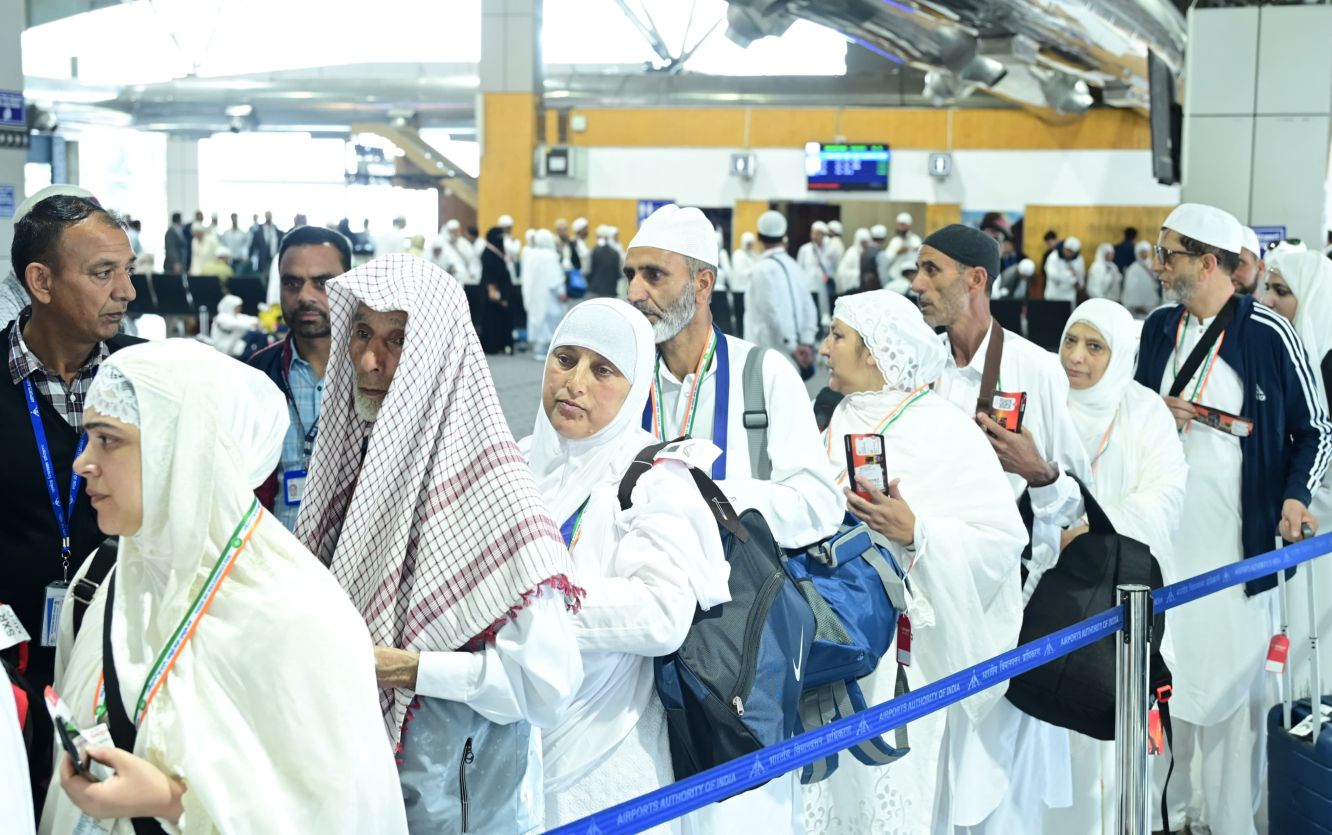
- Pilgrims seek restoration of 40-kg baggage allowance, cite fears of delays and damage.
- Runway repairs at Srinagar Airport force luggage restrictions; 30 kg baggage to arrive separately: HCI CEO
Srinagar: With the return phase of Haj 2026 set to begin next week, several pilgrims from Jammu and Kashmir have expressed concern over fresh baggage restrictions that will require a significant portion of their luggage to be transported separately by road from Ahmedabad to Srinagar.
Videos circulating among pilgrims in Mina show groups of Hajis questioning the decision and seeking restoration of the traditional 40-kilogram baggage allowance that has generally been available to pilgrims in previous years. Many said they were worried about possible delays or damage to belongings, including gifts and personal items purchased during the pilgrimage.
“We have spent weeks preparing for our return and purchased gifts for our families. Now we are being told that most of our luggage will not travel with us on the flight,” said one Abdul Ahad, a pilgrim from Kupwara. Others said the frequent changes in baggage rules create confusion, particularly for elderly pilgrims undertaking the journey.
The concerns come as return flights carrying Haj pilgrims from Jammu and Kashmir are scheduled to commence from June 2.
Responding to the issue, Jammu and Kashmir Haj Committee Chief Executive Officer Dr Shujaat Ahmad Qureshi said the restrictions were necessitated by operational limitations arising from the ongoing runway maintenance work at Srinagar Airport.
According to Qureshi, the standard Haj baggage entitlement remains 40 kilograms of check-in luggage along with seven kilograms of hand baggage. However, aviation restrictions linked to a Notice to Airmen (NOTAM) issued during the runway repair period have affected aircraft load capacities for flights operating to Srinagar.
“During the outbound Haj flights, pilgrims from the Srinagar embarkation point were permitted to carry 25 kilograms of checked baggage and seven kilograms of hand baggage. The average baggage carried during departure was significantly lower than the permissible limit,” he said.
Qureshi said Akasa Air, which is operating Haj flights from Srinagar, Ahmedabad, Kochi and Bengaluru, has reduced baggage carriage across embarkation points because of operational and technical considerations.
He said Srinagar faces an additional challenge as aircraft landing at the airport during the runway maintenance period are unable to operate with heavier payloads.
“As a result, pilgrims returning to Srinagar will be allowed to carry five kilograms of check-in baggage and seven kilograms of hand baggage on the flight, while the remaining 30 kilograms will be transported separately from Ahmedabad to Srinagar,” he said.
The Haj Committee has assured pilgrims that the baggage will be delivered to Kashmir within three to four days of arrival. Officials have also advised pilgrims to keep essential or perishable items in the baggage accompanying them on the flight.
Qureshi said the committee was aware of the concerns raised by pilgrims and was making arrangements to ensure safe and timely transportation of luggage. He added that Zamzam water consignments have already reached Srinagar and will be distributed to pilgrims upon their arrival at the airport.
The issue highlights the logistical challenges being faced during this year’s Haj operations as infrastructure work at Srinagar Airport continues, even as authorities maintain that the restrictions are temporary and driven by flight safety and operational requirements.