• Elected UT-level government proposed under Article 371 framework
• LAB, KDA term talks “historic” after years of agitation since 2019
Srinagar: In a significant political breakthrough, leaders of Ladakh and the Ministry of Home Affairs (MHA) on Thursday reached an in-principle understanding on extending constitutional safeguards to the Union Territory on the lines of Article 371 A, F and G, provisions currently applicable to the northeastern states of Nagaland, Sikkim and Mizoram.
The development marks a major step forward in the long-pending negotiations between the Centre and Ladakh-based organisations that have been demanding constitutional protections, restoration of democratic governance and statehood since the abrogation of Article 370 and bifurcation of the erstwhile Jammu and Kashmir state on August 5, 2019.
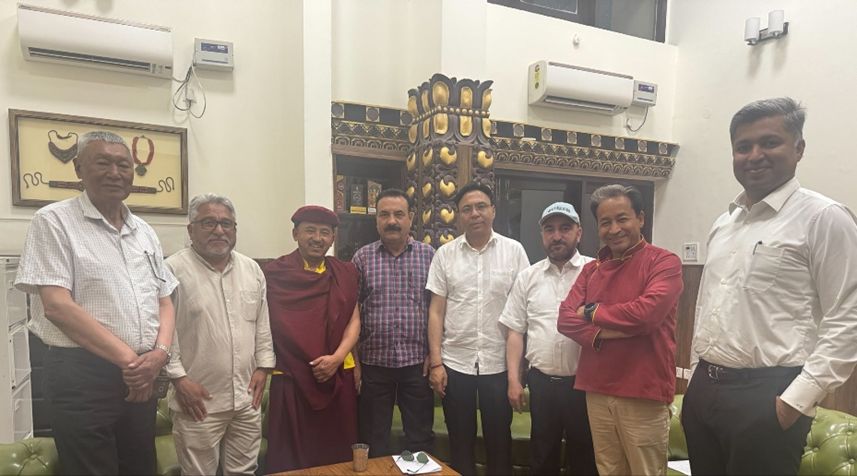
The breakthrough emerged during sub-committee level talks held in New Delhi between MHA officials and representatives of the Leh Apex Body (LAB) and the Kargil Democratic Alliance (KDA), two influential platforms representing political, religious, social, trade and student groups from Leh and Kargil districts. Ladakh MP Haji Hanifa Jan also attended the meeting.
The discussions focused on key issues concerning Ladakh’s political future, including constitutional safeguards, democratic representation and protection of the region’s cultural and economic interests.
In a joint statement issued after the meeting, LAB and KDA said both sides had arrived at an “in-principle understanding” on restoring democratic governance in Ladakh and granting constitutional protections on the pattern of Article 371 provisions applicable in select northeastern states.
The statement said the proposed framework envisages legislative, executive and financial powers being vested in an elected Union Territory-level legislative body. It added that all bureaucratic institutions, including the office of the Chief Secretary, would function under the executive authority of an elected head of government, proposed to be the Chief Minister.
LAB and KDA leaders reiterated the long-standing demand for constitutional safeguards, restoration of democracy, statehood and Sixth Schedule protections, stating that the proposed arrangement reflected a shared commitment towards an inclusive and sustainable governance structure for Ladakh.
According to the joint statement, MHA officials informed the Ladakh representatives that the primary hurdle in granting immediate statehood to the region was inadequate revenue generation to independently sustain expenditure liabilities, including salaries and administrative costs.
However, the Centre reportedly indicated that the proposed constitutional arrangement could pave the way for eventual full-fledged statehood once Ladakh meets the required financial and administrative benchmarks.
The KDA and LAB leadership said they would continue consultations with the MHA and constitutional experts to work out the finer operational and legal details of the proposed mechanism.