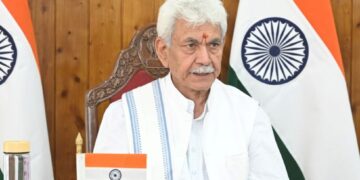
“Under the leadership of PM Narendra Modi, government is committed to both physical and emotional integration of the region. We are not only building roads, we are connecting hearts. Doors of both Delhi and the heart remain open for the people of Jammu & Kashmir.”

Mohammad Irfan
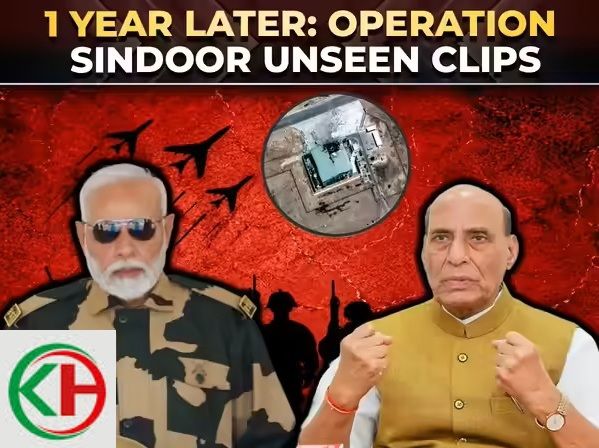
One year after India launched Operation Sindoor, the anniversary is being marked not merely as a commemoration but as a statement of intent. Across political, military, and strategic circles, the message is consistent and unmistakable: India has redrawn its red lines against terrorism, and the rules of engagement have fundamentally changed. The operation, carried out in response to the Pahalgam terror attack that killed 26 civilians, has now come to define a new paradigm—one that blends precision strikes, joint military operations, intelligence dominance, and calibrated escalation. A year later, Operation Sindoor is no longer just an event; it is a doctrine in motion.
Trigger|A Turning Point in Public, Strategic Patience: The Pahalgam attack was not the first instance of terrorism targeting civilians in Jammu and Kashmir, but it marked a critical inflection point. The deliberate targeting of tourists—symbols of normalcy and economic revival—struck a deep chord across the country. What followed was a surge in public demand for accountability and decisive action. Unlike previous instances where strategic restraint dominated decision-making, this time the political leadership faced a different national mood—one that demanded not just condemnation but consequence. This shift in public sentiment created the conditions for a more assertive response. It allowed policymakers to move beyond reactive frameworks and adopt a strategy that was proactive, punitive, and designed to impose tangible costs on terror networks and their enablers.
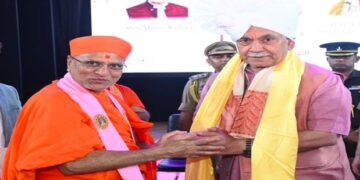
Political Leadership| From Rhetoric To Resolve: The anniversary of Operation Sindoor has seen India’s top leadership articulate a unified and uncompromising stance. Droupadi Murmu described the operation as a “defining testament” to India’s unwavering commitment to combating terrorism. Her remarks emphasised not only the success of the mission but also the broader principle that India will defend its sovereignty with determination. Prime Minister Narendra Modi framed the operation within a long-term strategic vision. By stating that India remains “steadfast in its resolve to demolish the terror ecosystem,” he signalled continuity rather than closure. This is not about a single operation—it is about sustaining pressure on networks that enable terrorism. The Prime Minister’s appeal to citizens to honour the armed forces through symbolic acts, such as changing social media display pictures, reflects an effort to align public sentiment with national security priorities. It transforms the anniversary into a collective expression of resolve. Union Home Minister Amit Shah highlighted the operational precision of the mission, describing it as a demonstration of India’s “precise striking power.” His emphasis on intelligence-led operations underscores the importance of coordination between agencies. Defence Minister Rajnath Singh added a strategic dimension by calling the operation a “symbol of national resolve and preparedness.” His remarks on jointness and indigenous capability point to structural changes within India’s defence apparatus. Jammu and Kashmir Lieutenant Governor Manoj Sinha saidOperationSindoor was a declaration that India’s brave armed forces will protect the sovereignty and integrity of the country at any cost. LG paid tributes to the armed forces on the first anniversary of Operation Sindoor, which was launched to target terror infrastructure in Pakistan following the Pahalgam attack on tourists in April last year. The LG said in a social media post, Operation Sindoor is a declaration etched in resolve those brave armed forces are committed to protect country’s sovereignty & integrity at any cost. It is a testament of India’s firm resolve and we are committed to dismantling the terror network and securing a terror-free J&K. He said he bows in reverence to the men and women in uniform whose unwavering resolve and extraordinary courage, delivered a fitting response to the enemy who targeted innocent civilians at Pahalgam.
Military Execution |A Template For Future Operations: From a military perspective, Operation Sindoor represents a benchmark in modern warfare. It showcased the ability of the Indian armed forces to plan and execute complex operations across multiple domains with speed and precision. Vice Admiral AN Pramod highlighted the strategic significance of the operation, noting that India demonstrated the capability to strike deep داخل hostile territory. This is a critical development, as it expands the operational envelope of the armed forces. Air Marshal Awadhesh Kumar Bharti emphasised the clarity of objectives and the operational freedom granted to the forces. According to him, the strikes were carefully calibrated to achieve maximum impact while minimising collateral damage. Former DGMO Rajiv Ghai provided insight into the outcome, stating that Pakistan sought a ceasefire after sustaining significant losses. His remarks that more than 100 terrorists were neutralised reinforce the narrative of operational success. What sets Operation Sindoor apart is not just the scale of the strikes but the level of integration. The Army, Air Force, and Navy operated in seamless coordination, supported by intelligence, cyber, and electronic warfare units. This multi-domain approach reflects the evolution of India’s military capabilities.
Doctrinal Shift| From Strategic Restraint to Proactive Deterrence: For decades, India’s response to cross-border terrorism was characterised by restraint. While this approach helped avoid escalation, it often failed to deter future attacks. Operation Sindoor signals a departure from this model. It reflects a shift toward proactive deterrence—one that combines the threat of force with demonstrated capability. This doctrinal evolution can be understood through three key principles:
- Precision Over Posturing: The operation targeted specific terror infrastructure linked to outlawed terror groups like Lashkar-e-Taiba, Jaish-e-Mohammed, and Hizbul Mujahideen. By focusing on high-value targets, India ensured that the response was both effective and credible.
- Jointness A Force Multiplier: The integration of different branches of the military enhanced operational efficiency and reduced response time. Jointness is no longer an aspiration—it is a reality.
- Calibrated Escalation: Despite the intensity of the strikes, the conflict was contained within a limited timeframe. This demonstrates India’s ability to manage escalation while achieving its objectives.
Challenging The Nuclear Deterrence Paradigm: One of the most significant implications of Operation Sindoor is its impact on nuclear deterrence in South Asia. For years, the presence of nuclear weapons has limited the scope of conventional military action. By conducting deep precision strikes without triggering nuclear escalation, India has challenged this assumption. Vice Admiral AN Pramod’s remarks about “calling the bluff” on nuclear threats reflect a growing confidence in India’s strategic posture. However, this development also introduces new complexities. While it expands the space for conventional action, it also increases the risk of miscalculation. Both sides may now test each other’s thresholds more frequently, making crisis management more challenging.
Indigenous Capability| Building Strategic Autonomy: Another defining feature of Operation Sindoor is the role of indigenous defence technology. A significant portion of the equipment used in the operation was domestically produced, reflecting India’s progress toward self-reliance. From missiles to surveillance systems and electronic warfare platforms, indigenous capabilities played a crucial role in ensuring operational success. This not only enhances military effectiveness but also reduces dependence on external suppliers. The emphasis on Atmanirbhar Bharat in defence is not just about economics—it is about strategic autonomy. By developing and deploying its own systems, India gains greater control over its security environment.
Information Warfare| Controlling The Narrative: In modern conflicts, controlling the narrative is as important as winning on the battlefield. Operation Sindoor was no exception. India’s approach to information warfare focused on transparency and credibility. By providing detailed briefings and emphasising factual outcomes, the government sought to counter competing narratives. Statements by military officials stressing “hard facts” over rhetoric reflect confidence in the operation’s success. At the same time, efforts to engage the public through social media campaigns helped reinforce national unity.
“Operation Sindoor reflects India’s firm resolve to protect its sovereignty, praising the armed forces for their courage and decisive response to the Pahalgam attack. He reaffirmed commitment to dismantling terror networks and ensuring a terror-free Jammu and Kashmir,” PM Modi
Regional Impact | A New Strategic Reality: The implications of Operation Sindoor extend beyond India. For Pakistan, the operation highlights vulnerabilities in both its defensive capabilities and its reliance on nuclear deterrence. It may prompt a reassessment of military strategy and resource allocation. Additionally, the operation could influence the behaviour of non-state actors, who may now face greater risks. For the broader region, the operation signals the emergence of a more assertive India—one that is willing to use force to protect its interests while maintaining escalation control.
Stability Through Strength: A key argument in favour of Operation Sindoor is that it enhances stability by strengthening deterrence. By imposing costs on terror networks and their sponsors, India is raising the threshold for future attacks. Deterrence is not built on words alone—it requires demonstrated capability. The success of the operation sends a clear message that India has both the will and the means to act. At the same time, the controlled nature of the conflict shows that strength and restraint can coexist. India has demonstrated that it can respond decisively without triggering uncontrolled escalation.
The Road Ahead| Sustaining The Momentum: As India reflects on the first anniversary of Operation Sindoor, the challenge lies in sustaining the momentum. Maintaining readiness, enhancing intelligence capabilities, and strengthening jointness will be critical. The consistent messaging from leaders like Narendra Modi, Amit Shah, and Rajnath Singh suggests that this approach is here to stay. However, it also requires careful management of risks. Escalation control, international diplomacy, and economic resilience will play important roles in shaping future outcomes.
A Defining Moment In India’s Security Evolution: One year on, Operation Sindoor stands as a defining moment in India’s security landscape. It represents a shift from reactive defence to proactive deterrence, from restraint to resolve. It is a story of a nation that refused to be intimidated, a leadership that acted with clarity, and armed forces that delivered with precision and professionalism. The message is clear: there will be no safe haven for terror. And for those who continue to challenge India’s resolve, Operation Sindoor is not just history—it is a warning of what lies ahead.
Sustaining Pressure, Preserving Control: One year after Operation Sindoor, the challenge before India is not defining its doctrine—it has already done that—but sustaining it with consistency, credibility, and control. The shift toward a war-forward, proactive counter-terror posture must now be institutionalised across military planning, intelligence coordination, and diplomatic strategy. First, intelligence dominance will remain the backbone of future operations. The success of Operation Sindoor was rooted in actionable, real-time intelligence that enabled precision strikes with minimal collateral damage. Strengthening multi-agency coordination, expanding surveillance capabilities, and integrating cyber and electronic warfare assets will be essential to maintain this edge. Without accurate intelligence, even the most advanced military capabilities lose effectiveness. Second, jointness among the armed forces must move from operational success to structural permanence. The seamless coordination between Army, Air Force, and Navy during the operation demonstrated the power of integrated warfare. Future readiness will depend on unified command structures, faster decision-making loops, and continued investment in multi-domain capabilities. Modern conflict is no longer fought in silos—it is simultaneous across land, air, sea, cyber, and space.
Kashmir Horizon View: Operation Sindoor marks a decisive moment in India’s national security evolution. It represents the transition from reactive defence to proactive deterrence, from ambiguity to clarity, and from restraint alone to strength backed by precision. The consistent messaging from leaders like Narendra Modi, Amit Shah, and Rajnath Singh underscores that this is not a temporary posture but a long-term strategic direction. Terrorism will no longer be tolerated, negotiated, or absorbed—it will be confronted and dismantled. At its core, Operation Sindoor has redefined deterrence in the Indian context. It has shown that strength, when applied with precision and purpose, can create stability rather than chaos. It has also sent a clear message to adversaries: the cost of targeting India is now immediate and severe. As India moves forward, the doctrine forged through Operation Sindoor will continue to shape its security landscape. The red lines are now firmly drawn, the intent clearly demonstrated, and the capability proven.
(“Team Kashmir Horizon” is committed to continuous improvement and invites feedback and suggestions from readers and its followers on social media sites. Reader insights are considered vital for enhancing content quality and empowering the community. The team encourages open communication and values the thoughts and ideas of its audience, believing that such input will enable them to serve the public more effectively. The initiative aims to ensure that readers have the best possible experience with “Kashmir Horizon”. Interested individuals can reach out to us via email at [email protected].)