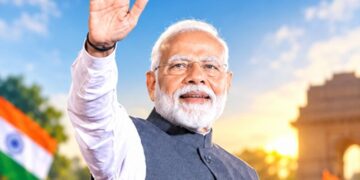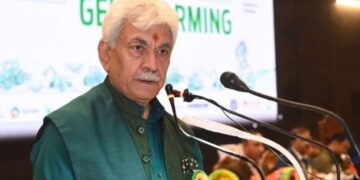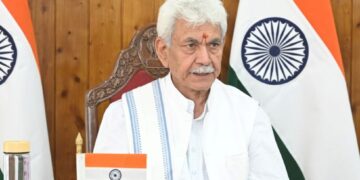
“Under the leadership of PM Narendra Modi, government is committed to both physical and emotional integration of the region. We are not only building roads, we are connecting hearts. Doors of both Delhi and the heart remain open for the people of Jammu & Kashmir.”
This week, Jammu & Kashmir witnessed a landmark moment in its development trajectory as the Union Government unveiled a massive package focused on rural connectivity, women’s empowerment, and agricultural transformation. The announcement, made during a high-profile event at the Sher-i-Kashmir International Conference Centre (SKICC) in Srinagar, marks a significant step towards bridging developmental gaps and accelerating inclusive growth in the Union Territory. At the centre of this development push was Union Minister Shivraj Singh Chouhan, who handed over the approval letter for road projects under PMGSY-IV (Batch-II) to Chief Minister Omar Abdullah. The initiative includes road projects worth ₹3,566 crore for Jammu & Kashmir, forming part of a larger ₹8,000 crore approval within a year—an unprecedented allocation for the region. Alongside infrastructure development, a “Mother Sanction” of over ₹4,568.23 crore was released under the Deendayal Antyodaya Yojana–National Rural Livelihoods Mission (DAY-NRLM) to empower women Self-Help Groups across 24 States and Union Territories.
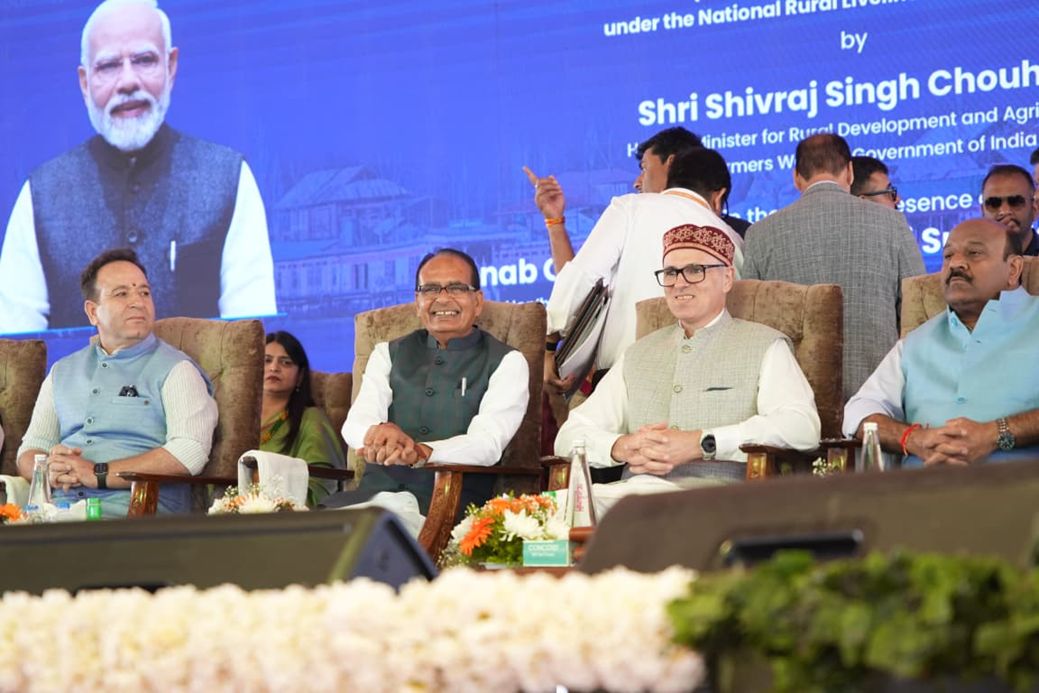
A Historic Day For Rural Development: The atmosphere at SKICC reflected both celebration and expectation. The programme was attended by senior political leaders, including Deputy Chief Minister Surinder Kumar Choudhary, Minister JavedAhmad Dar, Leader of Opposition Sunil Kumar Sharma, Members of Parliament, MLAs, and top bureaucrats. Addressing the gathering, Shivraj Singh Chouhan emphasized that his visit was not merely official but rooted in a spirit of service. He reiterated the Centre’s commitment to Jammu & Kashmir, stating that under the leadership of Prime Minister Narendra Modi, the government aims to connect not only roads but also hearts. His statement—“Dilkedwarbhikhulehain, Dilli kedwarbhikhulehain”—resonated strongly, symbolizing openness, support, and partnership. The minister highlighted that Jammu & Kashmir has been given priority under PMGSY-IV, both in its first and second phases, reflecting a focused effort to ensure that remote and underserved areas are brought into the mainstream.
Roads The Lifelines in a Challenging Terrain: Connectivity has always been a critical challenge in Jammu & Kashmir due to its mountainous terrain, harsh winters, and scattered habitations. In such a landscape, roads are more than infrastructure—they are lifelines. The ₹3,566 crore worth of road projects approved under PMGSY-IV (Batch-II) aim to connect remaining unlinked habitations, ensuring that even the most remote villages have access to essential services. Chouhan stressed that the objective is not limited to constructing roads but to transform lives. Roads enable access to education, healthcare, markets, and administrative services. They also reduce isolation, bringing communities closer to opportunities. Earlier phases of PMGSY have already shown tangible results, with improved connectivity leading to better school attendance, faster medical response times, and enhanced economic activity. Phase IV is expected to build on these gains by focusing on last-mile connectivity.
₹8,000 Crore Push | A Game-Changer For J&K: One of the most striking aspects of the announcement was the scale of funding. The approval of nearly ₹8,000 crore worth of road projects for Jammu & Kashmir within a single year is being seen as a historic milestone. Chief Minister Omar Abdullah described the allocation as “extraordinary” and assured that the Union Territory government would ensure its timely implementation. He noted that such a large sanction reflects the Centre’s confidence in Jammu & Kashmir’s development potential and its commitment to addressing long-standing infrastructural gaps. Abdullah also emphasized the transformative impact of road connectivity in a region where geography often dictates access to opportunities. He pointed out that previous PMGSY projects have already improved living conditions in rural areas, and the latest phase will extend these benefits further.
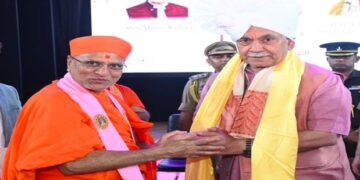
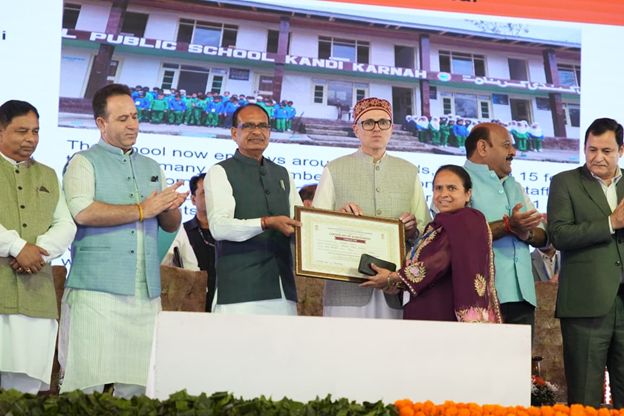
Women Empowerment| Strengthening Grassroots Economy: A key highlight of the programme was the release of over ₹4,568.23 crore under DAY-NRLM, aimed at strengthening women Self-Help Groups (SHGs). These SHGs have emerged as powerful platforms for financial inclusion and social empowerment, particularly in rural areas. By providing access to credit, training, and market linkages, they enable women to start and sustain income-generating activities. Shivraj Singh Chouhan emphasized that the goal is not just to create “LakhpatiDidis” but to nurture capable entrepreneurs who can contribute to the broader economy. During the event, several LakhpatiDidis were felicitated, showcasing success stories that serve as inspiration for others. These women have demonstrated how small initiatives, when supported by institutional frameworks, can lead to significant economic and social change. For Jammu & Kashmir, where women often face barriers to economic participation, such initiatives are particularly important. They not only enhance income levels but also empower women to take on leadership roles within their communities.
Agriculture Reforms |Towards Sustainable Prosperity: Agriculture remains a cornerstone of Jammu & Kashmir’s economy, but it faces multiple challenges, including small landholdings, difficult terrain, and climate-related risks. Recognizing these issues, the Centre has outlined a comprehensive strategy to transform the agricultural sector. A key component of this strategy is the deployment of a team from the Indian Council of Agricultural Research (ICAR) to study the region’s unique conditions and develop a tailored roadmap. Chouhan highlighted the importance of scientific agriculture, including the use of improved planting material, establishment of high-quality nurseries, and adoption of modern farming techniques. He also stressed the need for crop diversification to reduce dependency on a single source of income and enhance resilience against climate variability.
“The approval of nearly ₹8,000 crore worth of road projects in a single year as historic. The goal is to connect every village and habitation, ensuring access to schools, hospitals, and markets. Stressing women’s empowerment and agricultural transformation.”
Integrated Farming|A New Model For Income Growth: One of the most promising aspects of the agricultural strategy is the promotion of integrated farming systems. Instead of relying solely on traditional crops, farmers are encouraged to combine agriculture with allied activities such as animal husbandry, fisheries, beekeeping, and sheep rearing. This approach not only diversifies income sources but also makes farming more sustainable and less vulnerable to risks. For instance, a farmer cultivating crops can supplement income through dairy farming or honey production. Such diversification can significantly increase overall earnings while optimizing the use of available resources. Chouhan assured that the Central Government would work closely with the Jammu & Kashmir administration to design and implement integrated farming programmes tailored to the region’s needs.
Centre-State Coordination, Key to Success: The success of these initiatives will depend largely on effective coordination between the Central and Union Territory governments. Chief Minister Omar Abdullah reiterated his government’s commitment to fast-track implementation, emphasizing the importance of translating announcements into tangible outcomes. He highlighted the need for efficient utilization of funds, timely completion of projects, and continuous monitoring to ensure that benefits reach the intended beneficiaries. The presence of senior officials and policymakers at the event indicated a strong institutional framework to support implementation.
Socio-Economic Impact Beyond Infrastructure: The combined impact of road development, women empowerment, and agricultural reforms is expected to create a ripple effect across multiple sectors. Improved connectivity will facilitate trade, boost tourism, and attract investment. Women-led enterprises will contribute to local economies, creating jobs and enhancing income levels. Agricultural reforms will increase productivity and sustainability, ensuring long-term prosperity. Together, these initiatives aim to create a self-reinforcing cycle of growth, where improvements in one sector drive progress in others.
Challenges And The Road Ahead : Despite the optimism, several challenges remain. The region’s difficult terrain and weather conditions can delay infrastructure projects. Ensuring environmental sustainability is also critical, given the fragile ecosystem of the Himalayas. Additionally, capacity building will be essential to ensure that beneficiaries—particularly women and small farmers—can fully utilize the opportunities created. Addressing these challenges will require sustained effort, innovation, and collaboration between various stakeholders.
Vision For The Future: Developed J&K, Developed India: The overarching vision behind these initiatives is clear: to make Jammu & Kashmir a key contributor to India’s development story. Shivraj Singh Chouhan’s statement—“Developed J&K is key to developed India”—captures this vision succinctly. By focusing on connectivity, livelihoods, and empowerment, the government aims to create a model of inclusive and sustainable development. Chief Minister Omar Abdullah echoed this sentiment, expressing confidence that the approved projects would bring transformative changes to the region.
A Turning Point In The Making: The announcements made in Srinagar represent more than just financial allocations—they signal a comprehensive approach to development that integrates infrastructure, social empowerment, and economic growth. With ₹3,566 crore in road projects, a broader ₹8,000 crore infrastructure push, and ₹4,568 crore for women’s empowerment, Jammu & Kashmir stands at the threshold of a new phase of progress. The real challenge now lies in execution. If implemented effectively, these initiatives have the potential to transform rural landscapes, uplift communities, and redefine the region’s development trajectory. The announcements made in Srinagar mark a strong policy intent, but their true impact will depend on disciplined execution, institutional coordination, and sustained monitoring on the ground. The immediate priority for the Jammu & Kashmir administration will be to fast-track tendering, ensure transparent allocation of contracts, and maintain strict timelines for the completion of road projects under PMGSY-IV. Given the region’s difficult terrain and weather disruptions, adopting advanced construction technologies and climate-resilient infrastructure models will be essential to avoid delays and cost overruns. Equally important is the need to integrate these road projects with broader development planning. Connectivity should translate into economic activity—linking farmers to markets, artisans to buyers, and youth to employment opportunities. This calls for convergence between departments, particularly rural development, agriculture, tourism, and industries. Strengthening last-mile service delivery, including transport services, digital connectivity, and rural logistics, will determine whether the benefits of infrastructure reach the grassroots level. On the social front, the success of the ₹4,568 crore DAY-NRLM support will depend on deepening the ecosystem around women Self-Help Groups. Beyond credit access, there is a need for capacity building, skill development, branding, and market linkages. Creating district-level clusters for women-led enterprises, especially in handicrafts, food processing, and agri-based industries, can help scale up local success stories into sustainable economic models. Agriculture reforms must also move from policy announcements to field-level transformation. The proposed scientific assessment by agricultural experts should lead to actionable interventions tailored to Jammu & Kashmir’s unique agro-climatic zones. Promoting integrated farming, high-value crops, and allied sectors like dairy, fisheries, and beekeeping can diversify income streams and reduce vulnerability. Extension services, farmer training, and access to technology will be critical in ensuring adoption. Ultimately, the way forward lies in ensuring that infrastructure, livelihoods, and empowerment are not treated as isolated sectors but as interconnected pillars of development. If implemented with accountability and community participation, this initiative can redefine rural Jammu & Kashmir.
Kashmir Horizon View: The ₹3,566 crore road projects under PMGSY-IV, the broader ₹8,000 crore infrastructure push, and the ₹4,568 crore support for women under DAY-NRLM together represent a comprehensive and multi-layered development strategy for Jammu & Kashmir. More than the scale of investment, it is the integrated approach—combining connectivity, economic empowerment, and agricultural reform—that sets this initiative apart. For a region shaped by geographical challenges and developmental gaps, such targeted interventions can be transformative. Roads will reduce isolation, women-led enterprises will strengthen household incomes, and scientific agriculture will enhance productivity and sustainability. Together, these efforts can create a virtuous cycle of growth, inclusion, and resilience. However, the success of this ambitious roadmap will ultimately depend on execution. Timely implementation, transparency, and responsiveness to local needs will determine whether these announcements translate into real change on the ground. If delivered effectively, this moment could mark a turning point, positioning Jammu & Kashmir not just as a beneficiary of development, but as a contributor to India’s growth story.
(“Team Kashmir Horizon” is committed to continuous improvement and invites feedback and suggestions from readers and its followers on social media sites. Reader insights are considered vital for enhancing content quality and empowering the community. The team encourages open communication and values the thoughts and ideas of its audience, believing that such input will enable them to serve the public more effectively. The initiative aims to ensure that readers have the best possible experience with “Kashmir Horizon”. Interested individuals can reach out to us via email at [email protected].)