The history of the Muslim Ummah is not merely a record of political rise and fall; it is, more profoundly, a reflection of spiritual vitality and moral consciousness. At the heart of its ascendance stood a powerful synthesis of faith, character, knowledge, and purpose. Conversely, its decline has been marked not simply by external pressures, but by an internal erosion of values and vision. A deeply thought-provoking Prophetic tradition narrated by Thawban (RA) encapsulates this reality with remarkable clarity. The Prophet (SAW) said: “Soon the nations will call one another against you as people call one another to share their dish.” It was asked, “Will we be few in number at that time?” He (SAW) replied, “No, rather you will be many, but you will be like the foam of the flood. Allah will remove fear of you from the hearts of your enemies and will cast ‘wahn’ into your hearts.” It was asked, “What is wahn, O Messenger of Allah?” He (SAW)said, “Love of the world and hatred of death” (Abu Dawud, Hadith no. 4297).
This hadith is not merely predictive; it is diagnostic. It presents both the symptoms and the root cause of the decline of the Muslim community. It directs attention away from external enemies and toward internal decay. The central concept introduced in this hadith—wahn—is the key to understanding the crisis of faith and identity among Muslims today.
The Nature Of Crisis|Internal, Not External : One of the most striking aspects of this hadith is its emphasis on the internal nature of decline. The Prophet (SAW)did not attribute the Ummah’s weakness to the strength of its enemies. Rather, he pointed to a spiritual and moral weakness within the hearts of believers themselves. This shifts the entire framework of analysis: the problem is not what others have become, but what Muslims have ceased to be. The Qur’anic principle reinforces this reality: “Indeed, Allah does not change the condition of a people until they change what is within themselves” (Qur’an 13:11). Thus, the debacle of the Muslim Ummah is fundamentally a crisis of faith, consciousness, and identity.
From Purpose To Aimlessness|Loss Of Islamic Identity:
At its peak, the Muslim Ummah was driven by a clear worldview. Life was seen as a test, the Hereafter as the ultimate destination, and divine pleasure as the supreme goal. This worldview created a community that was united by faith, motivated by higher ideals, and disciplined by moral accountability. Today, however, this identity has been significantly diluted. The shift from an akhira-centric (Hereafter-oriented) life to a dunya-centric (world-oriented) existence has altered priorities. Material success has replaced spiritual excellence, and individual gain has overshadowed collective responsibility. This transformation lies at the heart of the current degeneration.
The Concept of “Wahn”|The Root Disease: The Prophet (SAW)defined wahn in two concise but comprehensive terms: Love of the world (ḥubb al-dunya),
Hatred of death (karāhiyat al-mawt). These two elements together constitute a complete moral and spiritual pathology.
1. Love Of The World: The love of the world does not imply the lawful enjoyment of worldly blessings. Islam does not advocate monasticism or renunciation of material life. Rather, the problem arises when the world becomes the ultimate goal instead of a means to an end. This misplaced love manifests in several ways: Compromising principles for wealth and status, Engaging in dishonesty and corruption, Measuring success purely in material terms and Neglecting religious obligations for worldly pursuits. When worldly gain becomes the central motivation, ethical boundaries begin to erode. Truth, justice, and integrity are sacrificed at the altar of self-interest. Religion becomes a formality rather than a guiding force.
2. Hatred Of Death: The second component, hatred of death, is not about the natural human fear of dying. Rather, it reflects a deeper spiritual negligence—forgetfulness of the Hereafter. This includes: Lack of preparation for accountability before Allah, Absence of concern for the grave and the Day of Judgment, Living without a sense of ultimate responsibility. When the Hereafter is removed from one’s consciousness, moral restraint weakens. Actions are no longer governed by divine accountability, leading to unchecked desires and ethical decline.
Symptoms Of Decline In The Ummah: The hadith outlines several visible consequences of this internal disease:
1. Numerical Strength Without Substance: The Prophet (SAW)described the Ummah as being “many” yet “like the foam of the flood.” Foam appears abundant but lacks substance, weight, and stability. Similarly, the Muslim world today has a vast population, yet its influence remains limited. This reflects: Lack of unity and cohesion, Weak institutional structures, Minimal impact on global intellectual and moral discourse and Quantity without quality leads to insignificance.
“The Ummah’s loss of identity stems from a preoccupation with worldly life at the expense of spiritual focus. Restoration requires a shift from external blame to internal transformation. By realigning priorities with core faith and character, Muslims can unlock divine support and regain their global dignity.”
2. Loss Of Moral Authority (Haybah): The hadith mentions that Allah will remove the haybah (awe or respect) of Muslims from the hearts of their enemies. This is not merely about military or political power; it is about moral authority.
True respect is earned through: Integrity and honesty, Justice and fairness, Knowledge and wisdom and Moral consistency. When these qualities diminish, even material strength cannot command respect. A morally compromised community loses its credibility and influence.
3. Vulnerability To External Domination: The imagery of nations gathering against Muslims like diners around a dish illustrates extreme vulnerability. This is not necessarily a result of external aggression alone but of internal weakness that invites exploitation.
Key Factors Behind The Degeneration: Building upon the hadith and its implications, several interconnected factors contribute to the current condition of the Muslim Ummah:
1. Spiritual Decline: Faith has become superficial for many. Rituals are performed, but their transformative impact is absent. The connection with Allah is weak, leading to a loss of inner strength and resilience.
2. Moral Corruption: Dishonesty, injustice, and lack of accountability have become widespread. Ethical values that once defined Muslim societies have been eroded.
3. Intellectual Stagnation: The early Muslim community excelled in knowledge and scholarship. Today, there is a noticeable gap in intellectual leadership, critical thinking, and innovation.
4. Disunity, Sectarianism: Instead of being united by faith, Muslims are divided along sectarian, ethnic, and political lines. This fragmentation weakens collective strength.
5. Materialism, Consumerism: An excessive focus on wealth, luxury, and comfort has overshadowed higher ideals. This reinforces the culture of ḥubb al-dunya.
6. Neglect Of The Hereafter: The diminishing awareness of accountability in the Hereafter leads to moral complacency and ethical compromise.
7. Weak Leadership, Vision: The absence of principled and visionary leadership has contributed to confusion and lack of direction.
Then And Now|A Stark Contrast: The early generations of Muslims (Salaf) embodied a different paradigm: They were few but powerful in conviction. They possessed limited resources but immense dignity. They lived simply but upheld strong principles. They prioritized the Hereafter over worldly gains. In contrast, today’s Muslims: Are numerous but lack unity and strength, Possess resources but lack moral direction, Are educated but often disconnected from values and Have access to information but lack wisdom. The difference lies not in external circumstances but in internal orientation.
The Way Forward| Restoring Faith, Identity: The hadith not only diagnoses the problem but also implies the solution. If wahn is the disease, its removal is the cure. This requires a comprehensive transformation at both individual and collective levels.
1. Reviving Faith, God-Consciousness (Taqwa): A strong connection with Allah is the foundation of all reform. This involves sincerity in worship, remembrance of Allah, and reliance on Him.
2. Reorienting Priorities: The world must be seen as a means, not an end. The Hereafter should once again become the central concern.
3. Strengthening Moral Character: Truthfulness, justice, trustworthiness, and compassion must be restored as defining traits of Muslim identity.
4. Seeking Knowledge: A revival of intellectual and educational excellence is essential. This includes both religious and worldly knowledge integrated within an Islamic framework.
5. Promoting Unity: Differences should not lead to division. A shared commitment to core Islamic values can foster unity.
6. Developing A Collective Vision: The Ummah must rediscover its mission: to serve as a moral and spiritual guide for humanity.
Conclusion: The crisis of faith among Muslims is not an irreversible fate but a consequence of choices and priorities. The hadith of the Prophet (SAW) serves as both a warning and a guide. It reminds us that decline begins in the heart and that renewal must also begin there. The love of the world and the neglect of the Hereafter have stripped the Ummah of its moral strength and identity. Yet, the path to restoration remains open. By returning to the core principles of faith, character, and purpose, Muslims can regain their dignity and role in the world. Ultimately, the message is clear: external reform is impossible without internal transformation. If the hearts are purified and priorities realigned, the promise of divine support can once again become a reality.
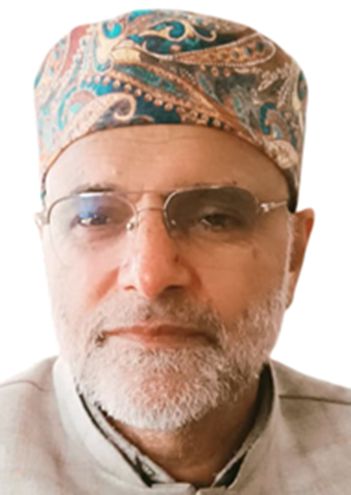
(The author a veteran academician is a former Professor and Head Department of Islamic Studies, Kashmir University. The views, opinions and conclusions expressed in this article are those of the author and aren’t necessarily in accord with the views of “Kashmir Horizon”)