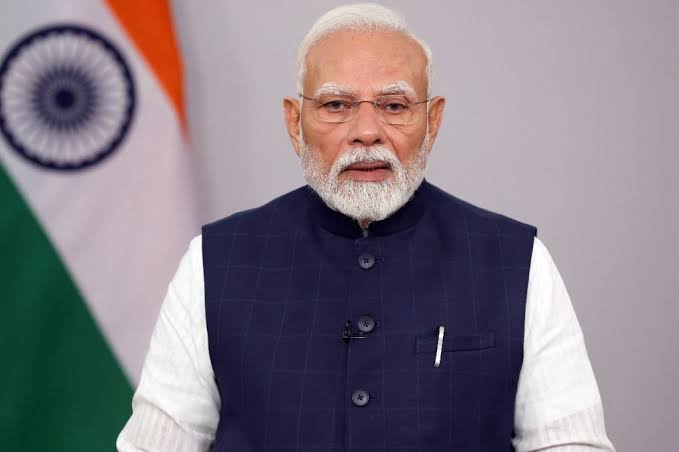
Hardoi, April 29 (UNI) A historic chapter has been added to Uttar Pradesh’s infrastructure development on Wednesday, when Prime Minister Narendra Modi inaugurated the 594-kilometer-long Ganga Expressway, marking a major leap in the state’s connectivity and economic ambitions.
The Prime Minister planted a sapling at the site and walked along the expressway with Chief Minister Yogi Adityanath, also taking time to inspect its design and features.
The occasion was attended by Governor Anandiben Patel, union Minister Jitin Prasada, Deputy Chief Ministers Keshav Prasad Maurya and Brajesh Pathak, as well as BJP state president and union Minister Pankaj Choudhury.
The foundation of the fully access-controlled greenfield Ganga Expressway was laid in December 2021 by the Prime Minister himself. Built at an estimated cost of Rs 36,230 crore, the project reflects the state’s push toward world-class infrastructure. Before the inauguration, the Prime Minister also visited an exhibition organized by Uttar Pradesh Expressways Industrial Development Authority, showcasing the state’s expanding expressway network.
Stretching from Meerut to Prayagraj, the high-speed corridor directly links western and eastern Uttar Pradesh, promising to transform connectivity, boost industrial growth, and generate employment. The expressway is expected to significantly reduce travel time, making journeys faster, safer, and more efficient.
The direct connectivity between Western Uttar Pradesh and Purvanchal will boost the state”s economy and strengthen the ease of doing business.
The Ganga Expressway will connect 12 important districts, including Meerut, Hapur, Bulandshahr, Amroha, Sambhal, Badaun, Shahjahanpur, Hardoi, Unnao, Rae Bareli, Pratapgarh, and Prayagraj. Its opening has significantly reduce travel time between these areas, making travel faster, safer, and more convenient.
The project has been developed on a public-private partnership model.
Currently, it has been constructed with six lanes and can be expanded to eight lanes in the future. With a design speed of 120 km per hour, the expressway is equipped with modern construction technology and high safety standards.
.
A key feature of this expressway is the approximately 3.2-kilometer-long airstrip near Shahjahanpur, where Air Force aircraft can land in case of emergency.
Additionally, facilities such as Intelligent Traffic Management System (ITMS), CCTV surveillance, emergency call boxes, ambulances, and patrolling have been provided along the entire route.
The Integrated Manufacturing and Logistics Cluster being developed along the Ganga Expressway is a major strength of this project. Manufacturing units, warehouses, cold storage, food processing, and logistics hubs will be established here.
Facilities such as capital subsidy, Special Goods and Services Tax (SGST) reimbursement, stamp duty exemptions, and electricity incentives offered by the government are attracting investors.
This expressway also connects to other major expressways in the state—Purvanchal, Agra-Lucknow, Bundelkhand, and Gorakhpur Link—creating the largest expressway network in the country in Uttar Pradesh.
This will not only facilitate people”s movement but also make freight transportation faster and cheaper.
The development of agriculture-based industries, mandis, cold storage, and warehouses will provide farmers with better markets for their produce and ensure they receive fair prices. Additionally, increased industrial activity in backward regions will reduce regional imbalances.
The Ganga Expressway project has provided direct and indirect employment to thousands of people, and is expected to create millions more in the future. This project will play a key role in propelling Uttar Pradesh towards a trillion-dollar economy.