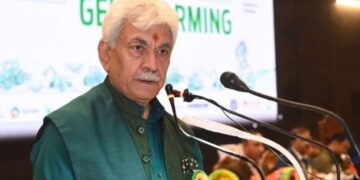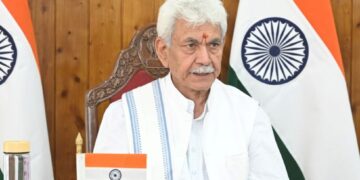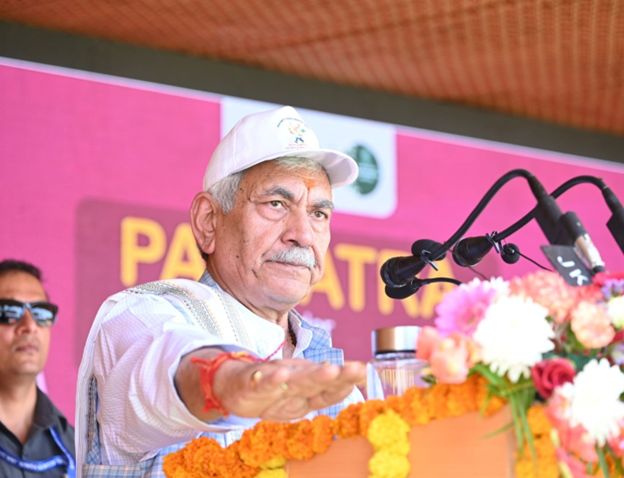
“Drug-Free J&K Campaign” is a decisive people’s movement against a growing social menace that is weakening the foundation of society. He described drug abuse as a “cancer” and said strong enforcement action is underway, including arrests of smugglers, seizure of narcotics worth crores, attachment and demolition of properties, cancellation of licenses, and financial investigations,” LG Sinha
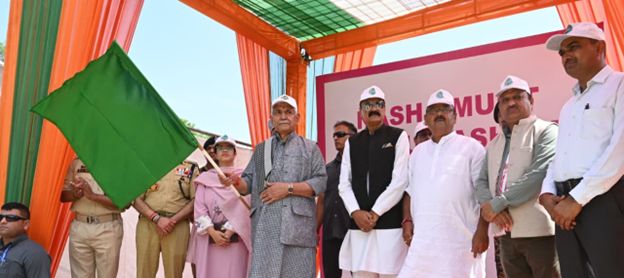
The “Drug-Free J&K Campaign,” spearheaded by Manoj Sinha, has unfolded as one of the most forceful and wide-ranging public mobilisations against drug abuse in Jammu and Kashmir in recent years. Moving beyond routine administrative measures, the Lieutenant Governor has framed the campaign as a decisive societal battleone that requires not just the power of the state, but the collective will of the people. Through a series of engagements in Reasi, Rajouri, and Samba, his message has remained consistent, urgent, and uncompromising: drug abuse is hollowing out society from within and must be confronted with unity, resolve, and sustained action. Across these addresses, Sinha has combined hard data with emotional appeal, enforcement with empathy, and governance with grassroots participation. His speeches reveal a campaign that is not merely reactive but strategic—aimed at dismantling networks, preventing new cases, and rehabilitating those already affected
Reasi Launch|Framing Drug Abuse As A Societal Crisis: Launching the campaign in Reasi, the Lieutenant Governor set a powerful tone by describing drug addiction as a “cancer in society” that is eroding its foundations. He urged communities, institutions, and individuals to come together in a broad-based movement, stressing that the fight against drugs cannot be left to enforcement agencies alone. “For the past 12 days, a collective force has risen across the Union Territory,” Sinha said, pointing to the growing public participation in the campaign. He emphasized that people are now resolutely committed to making Jammu and Kashmir free from narcotics, marking a shift from silence to active resistance. Highlighting early achievements, he noted that between April 11 and April 22, authorities in the Jammu division had registered a large number of cases, arrested several smugglers, and seized narcotics worth nearly Rs. 3 crore. In addition, properties valued at around Rs. 1 crore had been attached, with some structures demolished. “Properties of drug smugglers have been demolished. Financial investigations have been initiated, and strict legal action is being taken,” he said, underlining the administration’s zero-tolerance stance.
Crackdown With Consequences|Enforcement Measures Intensified: Sinha detailed a series of strong enforcement actions aimed at dismantling the infrastructure of drug trafficking. He revealed that 187 driving licenses and four vehicle registrations had been cancelled, while 15 drug-store licenses were revoked following inspections. These measures, he said, were not isolated actions but part of a broader strategy to disrupt the entire ecosystem supporting the drug trade. By targeting logistics, finances, and legal cover, the administration aims to weaken the networks that sustain narcotics distribution. “Those who poison the future of our youth will face the harshest consequences under the law,” Sinha declared, sending a clear message to traffickers. He also noted that financial investigations had been initiated against dozens of peddlers, indicating a shift towards tracing money trails and identifying larger networks. This approach reflects an understanding that drug trafficking is not just a street-level crime but an organized enterprise.
Women As The Moral Bedrock Of The Campaign: One of the most significant aspects of the campaign is the formation of 1,947 women’s committees across districts in the Jammu division. Sinha described mothers and sisters as the “moral bedrock” of society and expressed confidence in their ability to lead the fight against drugs at the grassroots level. “With the support of mothers and sisters, this cancer in society will be cured,” he said, calling for a movement that begins within homes and extends to neighborhoods, schools, and villages. He emphasized the need for open dialogue, urging families to break the stigma surrounding addiction. According to him, silence has allowed the problem to grow, and only honest conversations can help address it effectively.
Relentless Pursuit| Surveillance, Security Measures: The Lieutenant Governor made it clear that enforcement agencies have been instructed to act decisively. He revealed that over two dozen drug traffickers had already been identified and would be tracked down. “In the Jammu division, thousands of peddlers remain under surveillance. Each one will be relentlessly pursued,” he said. Security checks have been intensified around schools, colleges, and other vulnerable areas. Sinha stressed that protecting youth is a top priority and that no effort will be spared in ensuring their safety. He also highlighted the nexus between drug trafficking and terrorism, stating that traffickers and terrorists operate hand in hand. “They should be treated as allies in crime,” he said, calling for a coordinated response from all enforcement agencies
Rajouri| Addressing Border Vulnerabilities: In Rajouri, a border district prone to cross-border smuggling, Sinha joined a padyatra and addressed a public rally, reiterating the campaign’s urgency. He acknowledged the district’s vulnerability but expressed confidence in the administration’s ability to tackle the challenge. “Rajouri is sensitive and prone to cross-border drug smuggling. But we are determined to crush these challenges and dismantle the drug trade,” he said. Providing data, he noted that between April 11 and April 15, more than 45 FIRs had been registered and 63 smugglers arrested in the Jammu division. Massive drug seizures had also been made during this period. Regular checks, he added, are now being conducted in schools, pharmacies, and drug agencies, and this drive will continue relentlessly.
A Hidden War| Addiction Within Homes: In a deeply reflective moment, Sinha observed that not all wars are fought on borders. “Some battles brew unseen within our homes,” he said, acknowledging the silent suffering of families affected by addiction. For years, he noted, many families in Jammu and Kashmir have struggled with drug abuse in isolation, often losing loved ones without support or recognition. The campaign, he said, aims to bring this hidden crisis into the open. “On April 11, we sounded the clarion call to total war against drug addiction,” he said, describing the campaign as a 100-day crusade.
Narco-Terrorism| A Dual Threat: The Lieutenant Governor repeatedly emphasized the link between drug trafficking and terrorism. He described narcotics as an “insidious weapon” used by hostile forces to weaken society and fund militant activities. “Our terrorist neighbour deploys it to erode our nation’s strength from within,” he said, underscoring the need for a strong and coordinated response. This framing elevates the campaign beyond a social initiative, positioning it as part of a broader security strategy. By targeting drug networks, the administration aims not only to protect society but also to cut off funding channels for terrorism.
Prevention First|Reaching Youth Before Drugs Do: A central theme in Sinha’s addresses has been the importance of prevention. He stressed that awareness and early intervention are more effective than treatment after addiction sets in. “We must reach our children before drugs do,” he said, calling for awareness campaigns in schools, colleges, and community spaces. He urged teachers, parents, and community leaders to actively engage with young people, instilling values of self-respect and discipline. According to him, prevention is not just a government responsibility but a societal duty.
“Fight against drugs cannot be won by government alone but requires collective participation from society, especially women’s committees, which he called the “moral strength” of the movement. Warning about the nexus between drug trafficking and terrorism, he called for dismantling entire networks and financial chains. He urged youth to stay away from drugs,” LG Sinha
Rehabilitation, Promise Of Recovery: While emphasizing strict enforcement, Sinha also highlighted the importance of rehabilitation. He assured that the administration is committed to providing comprehensive support to those affected by addiction. “From detection and counseling to detox and aftercare, our pledge is total rehabilitation,” he said. He directed officials to maintain weekly records of rehabilitated individuals and ensure that fake de-addiction centres are shut down. The goal, he said, is to restore dignity and reintegrate individuals into society.
Samba|Measuring Success Through Outcomes: At Samba, the Lieutenant Governor reiterated that the campaign’s success would be judged by tangible results rather than symbolic gestures. “Success will not be measured by marches or slogans, but by how deeply the drug menace is cleaned out,” he said. He called for clear weekly metrics, including the number of rehabilitated individuals, arrested smugglers, registered cases, and seized contraband. Continuous auditing, he emphasized, is essential to ensure accountability. Deputy Commissioners and SSPs have been directed to review progress regularly and ensure that the campaign builds a complete chain of care.
Youth As The Key To Change: Sinha placed strong emphasis on the role of youth in overcoming the crisis. “The solution lies in the hands of our youth. Their dreams are powerful, their potential limitless,” he said. He urged young people to stay on the right path and called on society to support them in achieving their aspirations. Sports events, rallies, and community programs are being used to engage youth positively.
A Movement Beyond Government: Throughout his addresses, the Lieutenant Governor has consistently stressed that the campaign cannot succeed through government action alone. He has called on NGOs, social workers, spiritual leaders, and educators to join the movement. “This is not a government order; it is a public resolve,” he said, highlighting the growing participation of citizens. He described the campaign as a “flame of hope” that is illuminating Jammu and Kashmir with a new resolve against drugs. “When people rise together, they can change history,” he said.
Kashmir Horizon View: The “Drug-Free J&K Campaign” represents a defining moment in the region’s fight against substance abuse. Through his speeches, Manoj Sinha has articulated a vision that combines strict enforcement with social mobilisation, prevention with rehabilitation, and urgency with hope. His message is clear: the fight against drugs is not just a policy priority but a societal imperative. It must be fought in homes, schools, communities, and institutions alike. As the campaign moves forward, its success will depend on sustained participation and collective resolve. But one thing is certain—the silence has been broken, and a powerful movement has begun.
(“Team Kashmir Horizon” is committed to continuous improvement and invites feedback and suggestions from readers and its followers on social media sites. Reader insights are considered vital for enhancing content quality and empowering the community. The team encourages open communication and values the thoughts and ideas of its audience, believing that such input will enable them to serve the public more effectively. The initiative aims to ensure that readers have the best possible experience with “Kashmir Horizon”. Interested individuals can reach out to us via email at [email protected].)