“Free bus rides cost 2 Cr rupees loss per month admits minister Satish Sharma. J&K government must rethink its freebies policy in transport sector to save entire transport system, both private and government owned.”
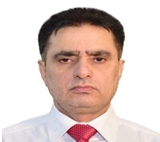
Dr. Ashraf Zainabi
In Jammu & Kashmir, the idea of free bus services has been presented as a welfare measure, something that helps people, reduces daily expenses, and makes life a little easier. On the surface, it sounds right. In a place where many families struggle, even saving a small daily fare matters. But public policy cannot stop at intention. It must also face a simple question: At what cost, and at whose expense?
Recently, a minister admitted that the transport department is losing around ₹2 Crore every month because of free ridership. That is nearly ₹24 crore a year. This is not a small subsidy. This is a serious financial drain on a system that is already under pressure. And this is where the real concern begins.A government department cannot keep absorbing losses like this forever. If the trend continues, the transport system will either become financially weak or completely unsustainable. We have seen this before. There was a time when government-run transport in J&K declined badly. Services weakened, and employees, drivers, conductors, helpers, were the first to suffer.
When that system failed, the public stepped in.Ordinary people invested in vehicles, metadors, Sumo taxis, and other modes of transport, to fill the gap. This informal but strong network kept J&K moving when the state could not.Today, we are moving towards another imbalance.
The government is expanding its bus services across district and tehsil routes while also offering free rides to large sections of passengers. At the same time, private transporters are reporting fewer passengers and declining income. The reason is obvious: when a free option is available, many people will choose it.This creates a double problem.
The government transport system is losing money because it is not earning enough. Private transporters are losing income because passengers are shifting away. Both sides are under pressure.If this continues, both systems may weaken.And when both weaken, the public will again be left with fewer reliable options.This is not how a healthy transport system works. Public and private transport should support each other, not pull each other down.
At the same time, there is another side to this issue, one that raises serious questions about fairness.While ₹2 crore is being lost every month on free rides, thousands of daily wagers and contractual workers continue to earn very low wages. Among them are contractual lecturers, many with PhDs, who teach in colleges but struggle to meet basic living costs.This is not about comparing jobs. It is about balance.
“Jammu & Kashmir faces a critical fiscal challenge, spending ₹2 Crore monthly on welfare measures that may inadvertently compromise its transport infrastructure and workforce. The core argument is that deferred maintenance is more costly than proactive management. Rather than abolishing welfare, the region must transition to a targeted, data-driven model to ensure long-term systemic stability and economic value.”
When a system can absorb heavy losses for free services but cannot ensure fair wages for its own workers, something is clearly misplaced.That ₹2 crore per month could make a real difference if used differently. Even partial redirection of this amount towards improving wages would bring relief to thousands of families. It would not be charity, it would be fairness for work already being done.
There is also a basic economic truth here. When people earn better, they live better and spend better. They support local markets, improve their conditions, and reduce long-term dependence. Poor wages, on the other hand, keep people stuck in survival mode.So this is not just a moral issue, it is also a practical one.Welfare is important, but it must be designed carefully. When benefits are given too broadly, without clear targeting, they become expensive and difficult to sustain.
A more sensible approach would be to limit free bus services to those who truly need them, such as senior citizens above 70 years. This group has limited income and genuine need. Supporting them is both justified and manageable.But extending free services widely, without limits, puts pressure on the entire system.
Governance is about choices. Not easy choices, but necessary ones.
Free bus rides are visible. People notice them every day. They create immediate satisfaction. But strong systems, fair wages, sustainable services, balanced policies, are less visible, yet far more important.
Jammu & Kashmir cannot afford to weaken both its transport system and its workforce at the same time. Because once systems start failing, rebuilding them is always more expensive than maintaining them wisely. The goal should not be to remove welfare, but to refine it. Limit it where needed. Target it better. Use resources where they create long-term value. Because a system that tries to help everyone without planning may end up hurting everyone in the long run. And ₹2 Crore a month is too big a price to ignore.
(The author is a teacher and a researcher based in Gowhar Pora Chadoora of Central Kashmir’s Budgam district. The views, opinions and conclusions expressed in this article are those of the author and aren’t necessarily in accord with the views of “Kashmir Horizon”)
[email protected]