• Vows continued push for women’s empowerment after bill setback
• Says setback hurts “mothers and sisters,” assures continued commitment.
• Bill aimed to expand Lok Sabha and ensure one-third representation for women.
• Govt reiterates no state would lose representation; proportional increase assured.
• Calls women’s leadership central to India’s future growth and democracy
• PM signals renewed efforts; says “women of India are watching closely.”
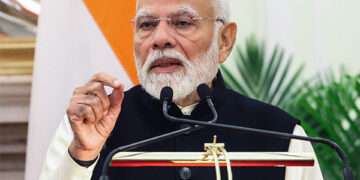
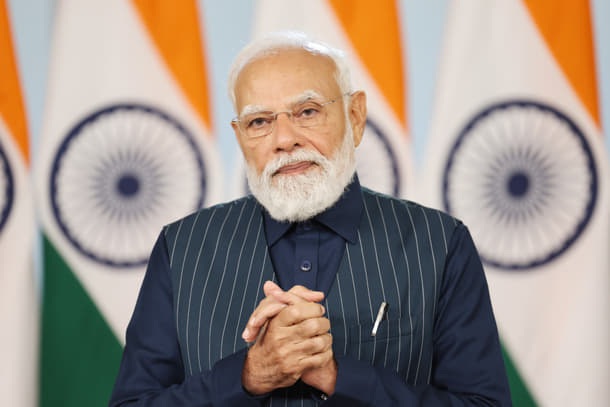
New Delhi: Prime Minister Narendra Modi on Saturday reaffirmed his government’s unwavering commitment to women’s empowerment, even as the Constitution (One Hundred and Thirty-First Amendment) Bill—aimed at providing 33 per cent reservation for women in the Lok Sabha—fell short of passage in Parliament.
In a deeply emotional and strongly worded address to the nation, the Prime Minister described the development as a painful moment for the country, particularly for millions of women who had pinned their hopes on what he termed a “historic step” towards equitable representation.
The proposed legislation, which sought to increase the strength of the Lok Sabha from 543 to 816 seats while reserving one-third of them for women, failed to secure the constitutionally required two-thirds majority during voting in the Lower House. In the division, 298 members supported the bill while 230 opposed it, leading to its defeat.
Despite the setback, Modi struck a resolute tone, asserting that the larger goal of ensuring greater participation of women in governance remains non-negotiable.
“This was not just a legislative exercise—it was a mission to give rightful representation to India’s women. It was about empowering mothers, sisters, daughters and ensuring their voices are heard in the highest decision-making bodies of the country,” he said.
The Prime Minister also expressed regret over the inability to secure the bill’s passage, offering an apology to women across the nation. “I bow my head and apologise to the mothers and sisters of the country. Despite our sincere efforts, we could not succeed this time. But our resolve remains stronger than ever,” he stated.
Modi emphasised that the proposed amendment, often referred to as the Nari Shakti Vandan initiative, was designed to correct a long-standing imbalance in political representation. For decades, women’s participation in legislative bodies has remained disproportionately low, despite their growing role in every sphere of national life.
“The empowerment of women is not just a slogan for us—it is a guiding principle of governance. From financial inclusion to education, from health to entrepreneurship, we have consistently worked to ensure that women are at the centre of India’s development journey,” he said.
The Prime Minister reiterated that the bill was structured in a manner that would ensure inclusive growth without disadvantaging any region or state. Addressing concerns related to delimitation, he clarified that the proposed exercise was aimed solely at rationalising representation in line with population changes and would not reduce the share of any state.
“From the very beginning, we made it clear that no state would lose representation. The increase in seats was to be done in a fair and proportionate manner. Unfortunately, misunderstandings were created around this issue,” he said, underlining that the government’s intent was to strengthen, not disrupt, the federal structure.
He further explained that linking women’s reservation with delimitation was part of a comprehensive approach to ensure balanced and sustainable implementation. “We wanted to ensure that the reform stands the test of time and benefits every part of the country equally,” he added.
Highlighting the broader significance of the bill, Modi said it represented a transformative moment in India’s democratic evolution. “This was an opportunity to script history—to ensure that women, who constitute nearly half of our population, have a commensurate voice in shaping the nation’s future,” he said.
The Prime Minister also reflected on the emotional expectations surrounding the legislation, noting that millions of women across the country were closely following the developments in Parliament.
“Crores of women had their eyes on Parliament. Their hopes, their aspirations were tied to this moment. That is why this setback is not just political—it is deeply emotional,” he remarked.
However, Modi made it clear that the journey towards women’s empowerment would not be derailed by a single legislative defeat. He asserted that the government would continue to explore all possible avenues to realise the vision of enhanced representation for women.
“Our commitment to Nari Shakti is unwavering. We will continue to work, continue to strive, and continue to push forward until this vision becomes a reality,” he said.
The Prime Minister also highlighted the broader achievements of his government in promoting women-led development. He pointed to initiatives such as increased access to education, expansion of self-help groups, financial inclusion through banking schemes, and targeted welfare programmes that have empowered women at the grassroots level.
“Today, women are not just participants but leaders in India’s growth story. From villages to cities, from startups to science, from governance to grassroots movements—women are shaping the future of this nation,” he said.
He stressed that political representation is the next crucial step in this journey. “True empowerment means having a seat at the table where decisions are made. It means having the power to influence policies, to shape laws, and to lead from the front,” he added.
Looking ahead, Modi signalled that the issue of women’s reservation would remain a priority for his government and a central theme in the national discourse. “This is not the end of the road. This is a moment to reflect, regroup, and move forward with even greater determination,” he said.
He also expressed confidence in the awareness and resolve of women voters, noting that they are increasingly playing a decisive role in shaping electoral outcomes.
“The women of India are aware, alert and aspirational. They understand the importance of empowerment and representation. They are watching every development closely,” he said.
In his concluding remarks, the Prime Minister struck a tone of hope and determination. “Women may face obstacles, but they do not stop. Their strength, their resilience, their spirit—these are the pillars on which a strong India will be built. We will continue this journey together,” he said.