“Bridging tariff gaps, ensuring market access, and setting clear timelines will be key to strengthening economic engagement. Simultaneously, India’s emphasis on securing the Strait of Hormuz highlights its proactive role in safeguarding global energy routes, likely driving deeper maritime cooperation and coordination with international partners,” LG Sinha
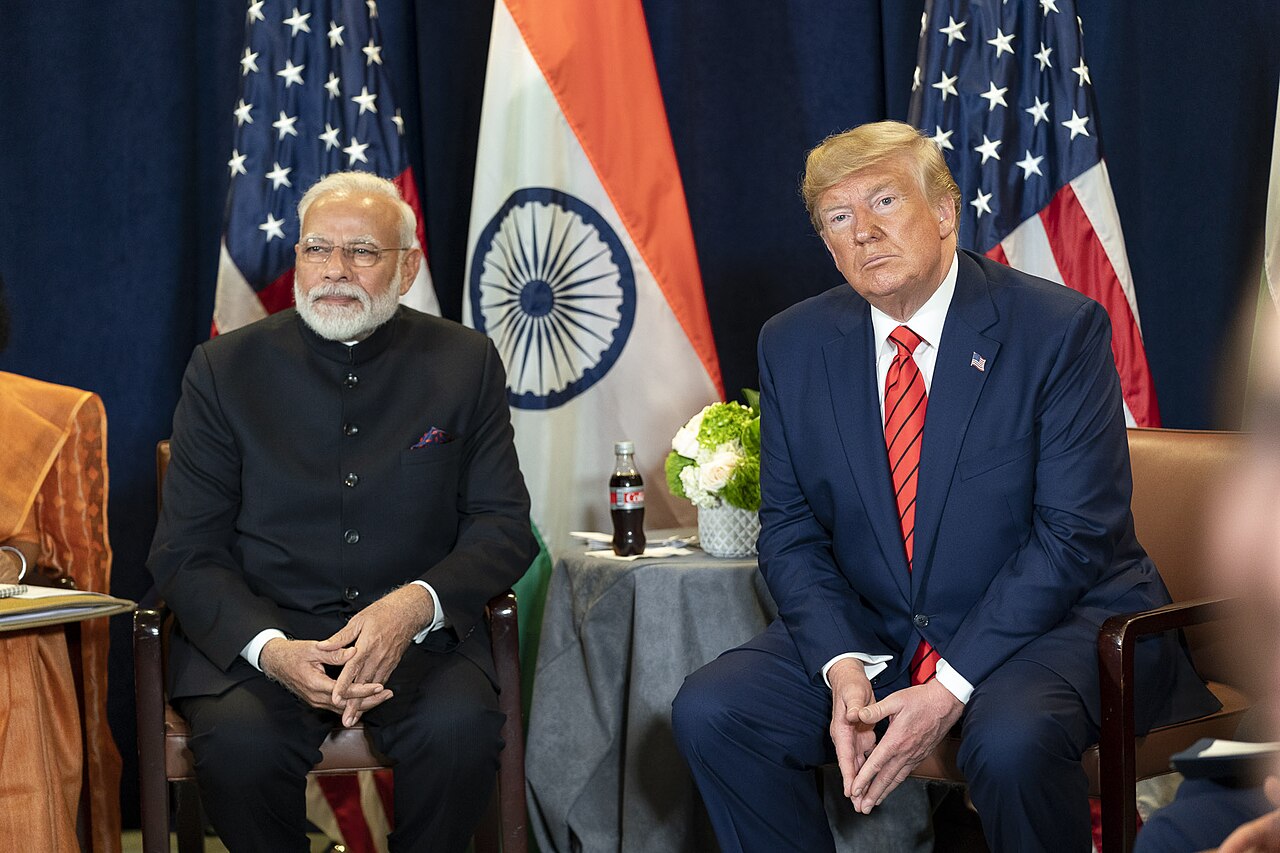
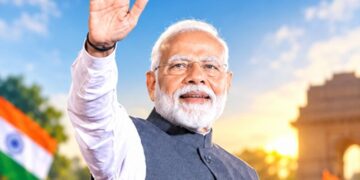
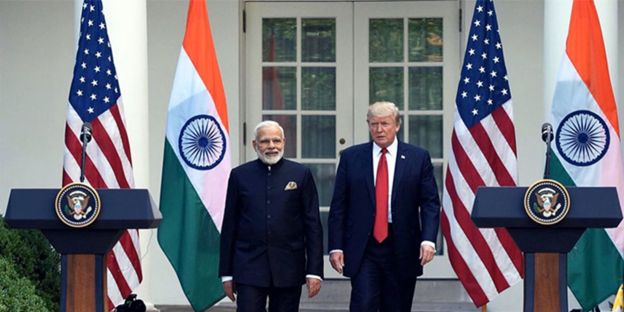
:This week in a major diplomatic and economic development reflecting India’s expanding global footprint, Prime Minister Narendra Modi on Thursday said he received a call from United States President Donald Trump, during which the two leaders reviewed “substantial progress” in bilateral ties, reaffirmed their Comprehensive Global Strategic Partnership, and discussed the escalating situation in West Asia with a particular focus on keeping the Strait of Hormuz “open and secure.” The 40-minute telephonic conversation comes at a time of heightened geopolitical tensions and evolving global trade dynamics, placing India at the centre of both strategic and economic negotiations with Washington. “Received a call from my friend President Donald Trump. We reviewed the substantial progress achieved in our bilateral cooperation in various sectors. We are committed to further strengthening our Comprehensive Global Strategic Partnership in all areas. We also discussed the situation in West Asia and stressed the importance of keeping the Strait of Hormuz open and secure,” Prime Minister Modi said.
India Emerges As Key Global Stakeholder: The direct outreach from the US President amid a volatile West Asia crisis signals India’s growing stature as a decisive voice in global affairs. From maritime security to energy stability and trade negotiations, New Delhi is increasingly being seen as an indispensable partner in shaping international responses. The emphasis on the Strait of Hormuz—a critical global oil transit chokepoint—highlights India’s strategic concerns as well as its willingness to play a proactive role in safeguarding global supply chains. A significant portion of India’s crude oil imports passes through this route, making its stability vital for the country’s economic security. Diplomatic observers noted that India’s articulation of such concerns at the highest level reflects a confident foreign policy that is assertive, interest-driven, and globally engaged.
Strategic Alignment On West Asia Crisis: The Trump-Modi conversation gains added significance as tensions in West Asia begin to impact global trade, energy markets, and regional stability. Both leaders are understood to have exchanged views on de-escalation, protection of maritime routes, and coordination among key partners. India’s balanced approach in the region—maintaining ties with multiple stakeholders while advocating peace—continues to define its diplomatic stance. The call also reflects convergence between New Delhi and Washington on ensuring freedom of navigation and stability in international waters.
Trade Talks Gain Momentum Amid Crisis: Parallel to strategic discussions, India-US economic engagement is entering a crucial phase. India will send a high-level trade delegation to Washington on April 20 to advance negotiations on a proposed bilateral trade agreement, marking a renewed push despite global supply disruptions. The delegation will be led by chief negotiator Darpan Jain, with in-person talks set to resume after a gap of nearly three to four months. Officials confirmed that negotiations had continued virtually during this period. Commerce Secretary Rajesh Agarwal said, “The Indian team, led by the chief negotiator, will be visiting the US from the 20th of this month. The negotiating teams will be meeting in person after a gap of about 3-4 months. They have been engaging virtually in the meantime.” He added, “We are looking at finalising the legal agreement, which is a logical follow-up of the joint statement released on 7th February. There is a need for further discussions and follow-up engagement to take this forward.” Officials indicated that both sides would work to finalise timelines and next steps as part of the ongoing engagement. While tariffs linked to India’s purchase of Russian oil have reportedly been rolled back, duties under Section 232 remain unchanged, leaving key issues unresolved. India has reiterated its commitment to continued engagement with Washington to address outstanding concerns and move towards a mutually beneficial trade framework.
West Asia Crisis Begins To Impact Trade: Even as negotiations gather pace, the fallout of geopolitical tensions is already visible in trade data. Government figures show that India’s exports to West Asia in March 2026 dropped sharply by 57.95 percent, amounting to a decline of $3.5 billion. Imports from the region also fell significantly by 51.6 percent, or $8.7 billion, reflecting disruptions in both demand and supply chains. Officials described the trend as a matter of concern, noting that prolonged instability in the region could further impact trade flows, energy supplies, and economic growth.
Exports Grow, Deficit Widens: Despite global headwinds, India’s overall export performance remains resilient. According to official data, total exports for the financial year 2025 crossed $860.09 billion, marking an increase of $35 billion from the previous year. When services are included, total exports reached $974.9 billion, registering a growth of 4.22 percent. However, rising imports—up 6.4 percent to $979.4 billion—have widened the trade deficit to $119 billion, compared to $94.6 billion last year. The increase has been largely attributed to record-high prices of gold and silver. India’s merchandise exports recorded a marginal growth of 1 percent, reaching $441.78 billion. Key sectors driving export growth include electronic goods, engineering products, marine exports, and agricultural segments such as meat and dairy. Notably, exports to China rose by $5 billion, while shipments to Spain increased by $2 billion. For March 2026, merchandise exports stood at $38.92 billion, lower than the $42.05 billion recorded in the same month last year. Commerce Secretary Agarwal expressed optimism that global challenges would ease in the coming months, allowing for stronger export recovery.
Expanding Trade Partnerships, FTAs: India is simultaneously accelerating efforts to diversify and expand its global trade partnerships. The India-UK free trade agreement is expected to come into force by May 2026, while an agreement with New Zealand is scheduled to be signed on April 27. Negotiations are also underway to conclude trade deals with Oman and the European Union within the year, reflecting a multi-pronged strategy to strengthen economic resilience. Officials said that broadening trade ties is essential to insulating the Indian economy from regional disruptions such as those currently unfolding in West Asia.
Digital Push To Strengthen Trade Governance: In a parallel development, the Commerce Ministry has launched a new digital platform aimed at improving trade governance and transparency. The website will integrate real-time trade data, link with parliamentary systems, and provide a grievance redressal mechanism for exporters. The initiative is expected to enhance efficiency, reduce bottlenecks, and provide better support to businesses navigating global uncertainties.
Tariff Negotiations, Policy Clarity: The ongoing trade talks with the United States come amid evolving tariff regimes in Washington. Officials подчеркнули the need for clarity on US trade policy before a final agreement can be reached. Earlier this year, India and the US had agreed on an interim arrangement to reduce tariffs on Indian exports to 18 percent. The agreement followed a ruling by the US Supreme Court that struck down sweeping reciprocal tariffs imposed by the Trump administration on multiple countries. While this provided temporary relief, negotiators on both sides are now working towards a more comprehensive and legally binding framework.
Defence, Energy, Technology Pillars: Beyond trade, India-US cooperation continues to deepen across defence, energy, and technology sectors. Joint military exercises, intelligence sharing, and maritime coordination have strengthened security ties, while collaboration in emerging technologies is opening new avenues for growth. Energy cooperation, particularly in the context of global supply disruptions, remains a key pillar of the partnership. The focus on securing the Strait of Hormuz reflects the shared priority of ensuring stable energy flows
“The recent telephonic conversation between Prime Minister Narendra Modi and US President Donald Trump signals a decisive moment in India-US ties, with both leaders aligning strategic and economic priorities amid the West Asia crisis. Going forward, the focus will be on converting diplomatic momentum into concrete outcomes, particularly through the upcoming trade delegation visit to Washington aimed at finalising a bilateral agreement.”
A Defining Moment In India-US Relations: The Trump-Modi conversation, combined with the renewed push for a trade agreement, marks a defining moment in India-US relations. It reflects not only the depth of bilateral engagement but also India’s evolution as a global power capable of influencing both strategic and economic outcomes. By simultaneously addressing security concerns, advancing trade negotiations, and expanding global partnerships, India is positioning itself as a central player in an increasingly complex international landscape. The 40-minute exchange between President Donald Trump and Prime Minister Narendra Modi goes beyond routine diplomatic engagement, symbolising India’s growing prominence on the world stage. With discussions spanning West Asia security, the Strait of Hormuz, bilateral trade negotiations, and global economic challenges, the interaction highlights the breadth and depth of India-US cooperation. As New Delhi prepares to send its trade delegation to Washington and continues to engage on multiple global fronts, the message is clear: India is not just participating in global conversations—it is helping shape them.
Kashmir Horizon View: The recent high-level engagement between Prime Minister Narendra Modi and US President Donald Trump marks not just a continuation of strong bilateral ties, but a decisive moment that calls for calibrated, forward-looking action on multiple fronts—strategic, economic, and geopolitical. Going forward, the immediate priority for both nations will be to translate diplomatic intent into tangible outcomes. The upcoming visit of India’s trade delegation to Washington assumes critical importance in this regard. Led by chief negotiator Darpan Jain, the talks are expected to bridge gaps on pending tariff issues, finalise legal frameworks, and establish clear timelines for the proposed bilateral trade agreement. For India, securing predictable market access while protecting domestic interests will remain key, whereas the United States will seek greater reciprocity and regulatory clarity. A balanced, mutually beneficial agreement could significantly enhance trade volumes and provide long-term stability to economic relations. Equally important is the need to address vulnerabilities exposed by the ongoing West Asia crisis. India’s emphasis on keeping the Strait of Hormuz open and secure reflects a broader strategic imperative—ensuring uninterrupted energy flows and safeguarding maritime trade routes. In the coming months, India is likely to deepen coordination not only with the United States but also with regional and global partners to maintain stability in critical sea lanes. This may include enhanced naval cooperation, intelligence sharing, and participation in multilateral maritime security frameworks. At the same time, India must continue diversifying its energy sources and trade routes to reduce overdependence on any single region. Expanding strategic petroleum reserves, increasing renewable energy capacity, and strengthening ties with alternative suppliers will be crucial steps in building long-term resilience. On the trade front, the sharp decline in exports and imports linked to West Asia underscores the urgency of diversifying markets. India’s parallel push for free trade agreements with the UK, New Zealand, the European Union, and others is a step in the right direction. These agreements, coupled with domestic reforms and digital trade facilitation measures, can help cushion the impact of global disruptions and sustain export growth. Another key area for future focus is technology and supply chain resilience. As global economic uncertainties persist, India and the United States have an opportunity to collaborate more closely in sectors such as semiconductors, artificial intelligence, and critical minerals. Strengthening these partnerships will not only drive innovation but also reduce exposure to external shocks. From a geopolitical standpoint, sustained high-level communication will remain essential. Regular interactions between leaders, supported by institutional dialogues, can ensure alignment on key issues and enable swift responses to emerging challenges. India’s balanced approach in West Asiaengaging all stakeholders while advocating peace—will continue to enhance its credibility as a stabilising force.
(“Team Kashmir Horizon” is committed to continuous improvement and invites feedback and suggestions from readers and its followers on social media sites. Reader insights are considered vital for enhancing content quality and empowering the community. The team encourages open communication and values the thoughts and ideas of its audience, believing that such input will enable them to serve the public more effectively. The initiative aims to ensure that readers have the best possible experience with “Kashmir Horizon”. Interested individuals can reach out to us via email at [email protected].)