The contemporary condition of the Muslim world presents a complex and often paradoxical reality. Many nations possess significant economic resources, strategic geographic positions, and a distinguished intellectual heritage, yet they continue to face varying degrees of dependence in critical domains such as science, technology, and security. This situation invites a careful and balanced reflection on priorities and long-term developmental strategies. The discussion is not merely political; it is civilizational in scope, calling for a thoughtful reassessment of how resources, energies, and aspirations are directed.
At the center of this reflection lies an important distinction between societies that prioritize sustained investment in scientific and technological advancement and those that focus predominantly on economic expansion and visible modernization. This distinction should not be overstated or simplified, yet it does reveal structural differences in developmental approaches. Understanding these differences can help in identifying areas where recalibration may be beneficial.
Over the past few decades, several Muslim-majority countries have experienced rapid economic growth and infrastructural transformation. Large-scale projects, urban development, and diversification initiatives have contributed to modernization and global integration. These efforts reflect ambition and a desire to secure economic stability in an evolving world. At the same time, they raise a pertinent question: can long-term civilizational strength be achieved without a proportional emphasis on knowledge production, scientific research, and technological innovation?
The issue is not one of rejecting modernization or economic development. Rather, it concerns the balance and direction of such development. When greater emphasis is placed on visible economic achievements without a corresponding investment in intellectual and scientific capacity, certain vulnerabilities may emerge over time. Historical experience suggests that enduring strength is often built upon a foundation of knowledge, research, and innovation rather than economic wealth alone.
In this context, the experience of countries that have focused on developing indigenous technological capabilities—despite facing economic or political constraints—offers a useful point of reflection. By prioritizing education, research, and self-reliance, such societies have demonstrated resilience and a degree of strategic autonomy. This observation is not intended to idealize any particular model but to highlight the broader principle that investment in knowledge systems can yield long-term benefits. The question of security further illustrates the importance of this issue. Dependence on external sources for critical technologies, including defense systems, can create structural limitations. While international cooperation and procurement are often necessary, long-term stability is more effectively supported by domestic capacity in research, design, and production. The capacity to innovate and sustain technological systems contributes not only to security but also to broader economic and scientific development.
This leads to a broader civilizational inquiry: should societies primarily function as consumers of knowledge and technology, or should they strive to be producers and contributors? While integration into global systems is essential, the ability to generate knowledge independently remains a key marker of intellectual and strategic maturity. To better understand this, it is valuable to revisit the intellectual history of the Muslim world. During earlier periods, particularly under the Umayyad and Abbasid civilizations, there was a strong emphasis on learning, translation, and original research. The well-known scholarly environment of Baghdad, often associated with institutions like the Bayt al-Hikmah, facilitated engagement with diverse intellectual traditions and encouraged the development of new ideas. Prominent scholars such as Ibn Sina, Al-Farabi, Ibn al-Haytham, Al-Razi, Al-Biruni, Jabir ibn Hayyan, and Nasir al-Din al-Tusi made significant contributions across fields such as medicine, philosophy, mathematics, chemistry, and astronomy. Their work illustrates how intellectual curiosity, institutional support, and openness to diverse sources of knowledge can collectively foster innovation. What characterized that period was not only the presence of distinguished individuals but also a broader ecosystem that supported scholarship. Educational institutions, libraries, and scholarly networks encouraged inquiry and debate. Importantly, there was a degree of integration between various branches of knowledge, allowing for a more holistic intellectual environment. In contrast, some contemporary contexts reveal a more segmented approach to education. The separation between different streams of knowledge, particularly between traditional and modern disciplines, can limit interdisciplinary engagement. Addressing this fragmentation may help in fostering a more cohesive and dynamic intellectual culture.
“True progress is not defined by speed alone, but by the refinement of our priorities through knowledge systems and intellectual independence. By merging historical lessons with modern innovation, societies can build a resilient, balanced future. Ultimately, investing in thoughtful development and scientific inquiry enables a nation to better navigate global challenges and contribute to the world at large.”
Another aspect worth considering is the role of critical thinking. Scientific and technological progress often depends on the ability to question assumptions, test hypotheses, and engage in open inquiry. Encouraging such intellectual practices within educational and social frameworks can contribute significantly to innovation and problem-solving.
Additionally, development strategies benefit from being context-sensitive. While global models can offer valuable insights, their adaptation requires careful consideration of local needs, cultural contexts, and long-term objectives. A balanced approach that combines global engagement with local relevance can enhance both effectiveness and sustainability.
Education remains central to this entire discussion. Strengthening educational systems—particularly in science, technology, engineering, and mathematics—can provide the foundation for future advancement. This includes not only expanding access but also improving quality, supporting research, and fostering collaboration across institutions and countries.
Equally important is the broader cultural attitude toward knowledge. Societies that value learning, research, and intellectual achievement tend to create environments where innovation can flourish. Recognizing and supporting scholars, scientists, and educators can contribute to shaping such an environment.
The discussion of priorities does not imply the exclusion of cultural, social, or recreational development. These aspects are important for overall well-being and social cohesion. However, maintaining a balance between these domains and foundational areas such as education and research is essential for long-term progress.
From an ethical and philosophical perspective, the emphasis on knowledge has deep roots within Islamic intellectual tradition. The encouragement of learning, reflection, and inquiry forms a significant part of this heritage. Revisiting and revitalizing these principles can provide both inspiration and direction for contemporary efforts.
It is also helpful to approach these issues from a broad, inclusive perspective rather than through narrow or divisive frameworks. The challenges involved are shared across different regions and communities, and addressing them collectively can lead to more constructive outcomes.
The distinction between reliance on external sources and the development of internal capabilities remains a key consideration. Building capacity in research, innovation, and production can enhance resilience and reduce vulnerability. This applies not only to technology but to various sectors of development.
At the same time, long-term planning should take precedence over short-term gains. While immediate economic achievements are important, sustainable progress often depends on consistent investment in foundational areas such as education and research. Balancing immediate needs with future goals is therefore essential.
Moving forward, a coordinated effort involving policymakers, educators, researchers, and communities can help in realigning priorities. Policies that support innovation, encourage research, and facilitate knowledge exchange can contribute to building a more robust intellectual and technological base.
At the individual level, the cultivation of curiosity, critical thinking, and a commitment to learning remains vital. Societal transformation is closely linked to individual engagement with knowledge and ideas.
In conclusion, the call to rethink priorities is not a rejection of progress but an invitation to deepen and refine it. Sustainable advancement is closely tied to the development of knowledge systems, scientific inquiry, and intellectual independence. By drawing upon both historical experience and contemporary insights, it is possible to envision a future that is balanced, resilient, and forward-looking. Ultimately, societies that invest in knowledge, innovation, and thoughtful development are better positioned to navigate challenges and contribute meaningfully to the broader global community
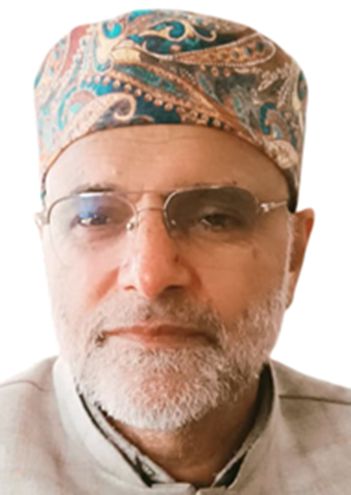
(The author a veteran academician is a former Professor and Head Department of Islamic Studies, Kashmir University. The views, opinions and conclusions expressed in this article are those of the author and aren’t necessarily in accord with the views of “Kashmir Horizon”)
[email protected]