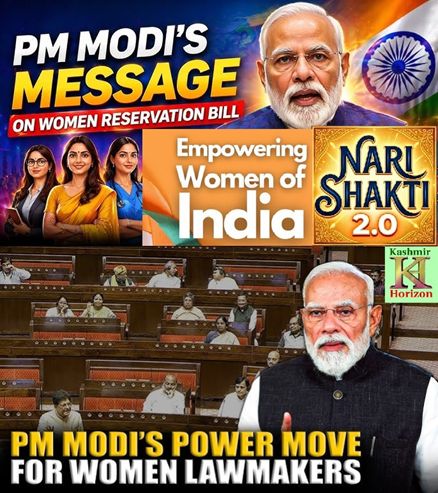
“PM Modi called for implementation before the 2029 elections and urged cross-party support for the reform. The proposal, including expansion of Lok Sabha seats and reservation for women, aims to enhance representation and give women a stronger role in governance.
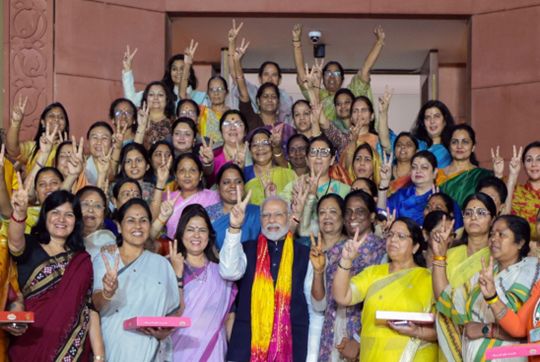
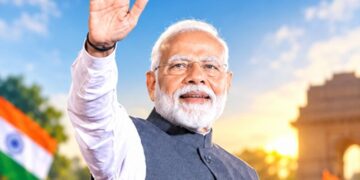
In a significant political and constitutional development, Prime Minister Narendra Modi has framed the proposed amendments to the Women’s Reservation framework as far more than a procedural legislative exercise. In his signed article, he presents the move as a historic opportunity to align India’s democratic institutions with the aspirations of millions of women. This articulation is not merely rhetorical. It reflects a broader attempt to reposition women’s political representation at the centre of India’s governance discourse. With a special three-day parliamentary session scheduled from April 16 to 18, the stage is set for a crucial debate that could reshape the composition and functioning of legislative bodies in the country. The proposed changes to the Nari Shakti VandanAdhiniyam popularly known as the Women Reservation Act carry implications that extend beyond electoral arithmetic. They signal a shift in how representation, inclusion, and democratic participation are conceptualised in contemporary India.
Historical Context| A Long-Standing Legislative Gap: The demand for reservation for women in legislative bodies has a long and complex history in India. While women have played a critical role in the country’s political and social movements, their representation in Parliament and state assemblies has remained disproportionately low. Successive governments have attempted to address this imbalance through legislative proposals, committee recommendations, and political commitments. However, these efforts often stalled due to lack of consensus or competing political priorities. The passage of the Women Reservation Act in 2023 marked a breakthrough moment. By providing for 33 percent reservation for women in the Lok Sabha and state assemblies, it created a constitutional framework for greater inclusion. Yet, the delay in its implementation linked to delimitation and census processes meant that its transformative potential remained deferred. The current push for amendments must therefore be understood as an effort to bridge this gap between legislative intent and practical execution.
The Proposed Amendments| Key Structural Changes: At the heart of the current proposal lies a significant restructuring of India’s parliamentary representation. The plan to increase the number of Lok Sabha seats from 543 to 816 is a major institutional reform in itself. Out of these, 273 seats are proposed to be reserved for women. This expansion is not merely about accommodating reservation; it also reflects demographic realities and the need for more representative governance. By linking the redrawing of constituencies to the 2011 Census instead of waiting for the 2027 Census, the government appears to be attempting to fast-track implementation. Additionally, the reservation framework will follow a vertical model, ensuring that seats reserved for Scheduled Castes and Scheduled Tribes also include a proportion for women. This layered approach aims to address intersectional inequalities within representation. If implemented as proposed, these changes could bring women’s representation in Parliament to one of the highest levels globally, marking a structural transformation in India’s legislative landscape.
Timing, Political Significance| Why 2029 Matters: A key aspect of the Prime Minister’s appeal is the emphasis on implementing women’s reservation in time for the 2029 Lok Sabha elections and subsequent state assembly polls. This timeline is politically and administratively significant. Under the current legal framework, the reservation would likely come into effect only after delimitation based on the 2027 Census, potentially delaying implementation until 2034. The proposed amendments seek to advance this timeline, thereby accelerating the process of inclusion. From a political standpoint, this move carries multiple implications. It signals a proactive approach to reform, positions the government as a champion of women’s empowerment, and creates a new axis of political mobilisationcentred on gender representation. However, it also raises questions about feasibility, given the logistical and legal complexities involved in delimitation and seat expansion.
Democratic Deepening| Representation A Core Principle: At a conceptual level, the proposed amendments underscore a fundamental principle: democracy is not merely about elections but about equitable representation. When large sections of society are underrepresented, the legitimacy and effectiveness of democratic institutions are compromised. Prime Minister Narendra Modi has argued that women’s participation enriches governance by bringing diverse perspectives and lived experiences into decision-making processes. This argument is supported by global evidence, which suggests that higher representation of women in legislatures often leads to more inclusive policies, particularly in areas such as health, education, and social welfare. In the Indian context, where women constitute nearly half the population, increasing their representation is both a democratic necessity and a moral imperative.
“Prime Minister Narendra Modi has termed the proposed amendments to the Women’s Reservation framework a historic step to strengthen inclusion in India’s democracy. Ahead of a special Parliament session from April 16 to 18, he said the move reflects the aspirations of millions of women and goes beyond a routine legislative exercise.”
Socio-Economic Foundations Of Women’s Empowerment: The push for political representation is closely linked to broader socio-economic changes. Over the past decade, India has witnessed improvements in areas such as female literacy, healthcare access, financial inclusion, and entrepreneurship. Government initiatives aimed at empowering women ranging from self-help groups to digital inclusion have created a more enabling environment for participation in public life. Women are increasingly visible in sectors such as science, technology, sports, and the armed forces. Yet, this progress has not been adequately reflected in political representation. The proposed amendments aim to correct this imbalance by creating institutional pathways for women to enter legislative bodies.
Challenges In Implementation | Beyond Legislative Approval: While the political and moral case for women’s reservation is strong, its implementation presents several challenges. Expanding the Lok Sabha to 816 seats will require significant logistical adjustments, including infrastructure, constituency management, and administrative coordination. The process of delimitation itself is complex and often contentious, as it involves redrawing constituency boundaries based on population data. Ensuring fairness and transparency in this process will be critical to maintaining public trust. There are also concerns about the rotation of reserved seats, which could affect political continuity and accountability. Additionally, political parties will need to adapt their candidate selection processes to accommodate a larger number of women candidates.
Test Of Democratic Maturity: One of the most striking aspects of the Prime Minister’s appeal is the call for cross-party consensus. He has urged Members of Parliament to rise above political differences and support the proposed amendments in the spirit of national interest. This appeal reflects an understanding that transformative reforms require broad-based support. The passage of the Women Reservation Act in 2023 demonstrated that consensus is possible on issues of national importance. However, sustaining this consensus during the amendment process will be a test of India’s democratic maturity. Political parties may have differing views on the specifics of implementation, including seat allocation, timelines, and procedural aspects.
Impact On Electoral Politics| Redefining Power Structures: The introduction of large-scale reservation for women is likely to have a profound impact on electoral politics. It will reshape candidate selection, alter campaign dynamics, and potentially change the nature of political discourse. Women leaders often bring different priorities and approaches to governance, focusing more on issues such as social welfare, education, and community development. Their increased presence could lead to a shift in policy priorities and legislative debates. At the same time, there is a risk that reservation could lead to tokenism if not accompanied by genuine empowerment. Ensuring that women representatives have the resources, support, and autonomy to perform effectively will be crucial.
Intersectionality, Inclusive Representation: The vertical reservation model proposed in the amendments is an important step toward addressing intersectionality. By ensuring that women from Scheduled Castes and Scheduled Tribes are also represented, the framework seeks to create a more inclusive and equitable system. However, questions remain about representation for other marginalised groups, including women from minority communities and economically weaker sections. A comprehensive approach to inclusion will require continuous evaluation and refinement of policies.
Global Perspective| India In The International Context: Globally, several countries have implemented quotas or reservation systems to increase women’s representation in legislatures. Countries such as Rwanda, Sweden, and Mexico have achieved high levels of representation through various models. If India successfully implements the proposed amendments, it could emerge as a global leader in gender-inclusive governance. Given the size and diversity of its population, India’s experience could provide valuable lessons for other democracies. Prime Minister Narendra Modi has positioned the proposed amendments to the Women’s Reservation framework as a landmark reform that reflects both visionary leadership and a deep commitment to inclusive governance. His articulation of the Bill as an embodiment of the aspirations of millions of women underscores its transformative potential in reshaping India’s democratic landscape.
Transformational Reform Anchored In Vision, Leadership:
The Prime Minister’s emphasis on implementing the reservation ahead of the 2029 elections highlights a sense of urgency and political will that has often been missing in past efforts. By seeking to accelerate the timeline, the government is signaling that women’s empowerment is not a distant goal but an immediate priority. This proactive approach reinforces confidence in the system’s ability to respond to long-standing demands for equitable representation. Importantly, the Bill aligns with a broader governance philosophy that places women at the centre of national development. Over the years, policy initiatives have focused on improving access to education, healthcare, sanitation, and financial inclusion for women. The proposed amendments build upon these foundations by ensuring that women also have a stronger voice in decision-making processes at the highest levels. The Prime Minister’s appeal for consensus across party lines further elevates the significance of the reform. By framing it as a national mission rather than a partisan issue, he has sought to create a unifying moment in Indian politics. Such an approach not only strengthens democratic traditions but also sets a precedent for collaborative policymaking on issues of critical importance. Ultimately, the Bill represents more than a numerical increase in representation; it is a step toward redefining governance itself. By enabling greater participation of women in legislative institutions, it promises to bring new perspectives, enhance policy responsiveness, and foster a more balanced and inclusive democracy.
Kashmir Horizon View: The proposed amendments to the Women Reservation Act represent a pivotal moment in India’s democratic journey. By seeking to align legislative structures with the aspirations of women, the initiative has the potential to redefine representation and participation. Prime Minister Narendra Modi has framed this as a historic opportunity one that cannot be deferred without compromising the quality and inclusiveness of democracy. The success of this initiative will depend on political will, administrative efficiency, and societal support. If implemented effectively, the reform could usher in a new era of governance one that is more inclusive, responsive, and reflective of India’s diverse population. It would not only empower women but also strengthen the foundations of democracy itself, ensuring that every citizen has a meaningful stake in shaping the nation’s future.
(“Team Kashmir Horizon” is committed to continuous improvement and invites feedback and suggestions from readers and its followers on social media sites. Reader insights are considered vital for enhancing content quality and empowering the community. The team encourages open communication and values the thoughts and ideas of its audience, believing that such input will enable them to serve the public more effectively. The initiative aims to ensure that readers have the best possible experience with “Kashmir Horizon”. Interested individuals can reach out to us via email at [email protected].)