Aqzar Raheel
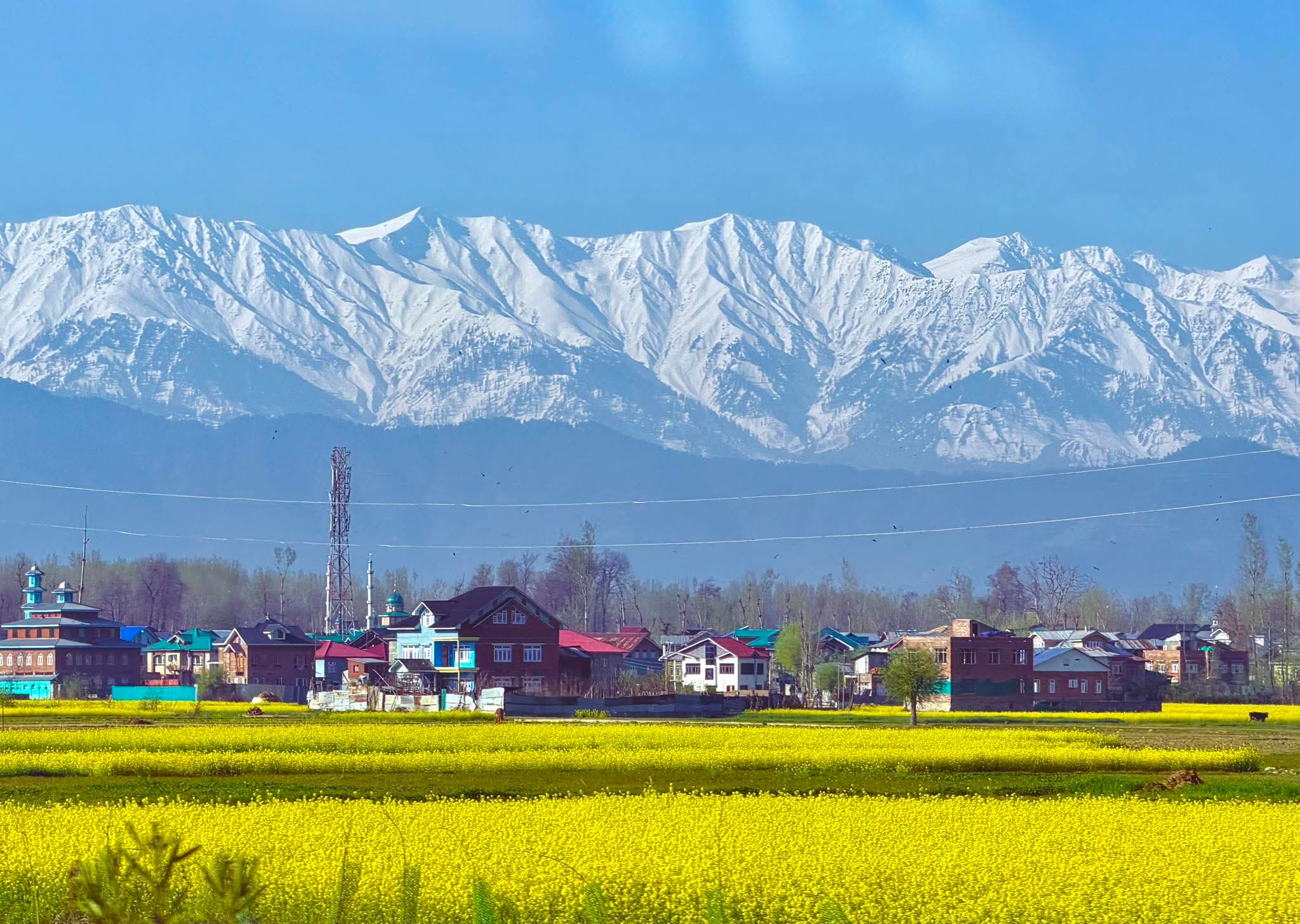
Srinagar Mar 28 :As spring breathes fresh life into the Kashmir Valley, vast stretches of mustard fields have transformed into a glowing expanse of gold, captivating tourists and nature lovers from across the country. The bright yellow blossoms, spread across fertile lands and set against the backdrop of snow-covered mountains and clear blue skies, create a striking contrast that defines the beauty of the season in the region.
Visitors from different states are stopping along highways and village paths to take in the scenery, often pausing to capture photographs and videos. The mustard fields, shimmering under the soft spring sunlight, have become a key attraction for travelers exploring Kashmir during this time. Aman Khanna, a tourist from Jaipur, described the experience as visually overwhelming, noting that the endless stretch of yellow fields against the towering white peaks created a scene that felt almost dreamlike. Similarly, Nida Farooq, visiting from Lucknow, shared that the peaceful environment offered a sense of calm that is difficult to find in crowded urban spaces.
For many travelers, the attraction goes beyond photography. The fields provide an immersive natural experience, where the gentle rustling of flowers in the breeze and the cool mountain air create a soothing atmosphere. The openness of the landscape allows visitors to slow down, reflect, and reconnect with nature. Some tourists spend extended periods simply walking along the edges of the fields, appreciating the simplicity and quiet beauty that the valley offers during spring.
At the same time, the increasing number of visitors has drawn attention from local farmers who cultivate mustard primarily for its oil-rich seeds. While they welcome the interest and recognize the economic benefits brought by tourism, they also express concern about the potential damage to crops. Abdul Rashid, a farmer from the area, emphasized that maintaining discipline among visitors is essential, as even slight trampling can harm the plants and affect the harvest. He urged tourists to respect boundaries and avoid entering cultivated sections unnecessarily.
The surge in tourism has positively impacted the local economy. Small vendors and farmers are witnessing increased sales of locally produced mustard oil, organic honey, and traditional Kashmiri handicrafts. Roadside tea stalls and food outlets have also seen a rise in customers, with travelers stopping to enjoy local snacks while taking in the scenic views. These interactions not only support livelihoods but also provide visitors with a more authentic connection to the region’s culture and traditions.
In recent years, photographers, travel bloggers, and social media influencers have played a significant role in bringing attention to these mustard fields. Images and videos shared online have helped showcase the valley’s springtime charm to a wider audience, encouraging more people to visit. However, this growing popularity also highlights the importance of promoting responsible and sustainable tourism to ensure that the natural beauty and agricultural integrity of the fields are preserved.
As the season continues, the mustard fields remain one of Kashmir’s most remarkable spring highlights. Their golden bloom stands as a symbol of renewal, natural beauty, and agricultural heritage. The fields not only enchant visitors with their visual appeal but also reflect the deep connection between the land and the people who depend on it. Preserving this balance will be crucial in ensuring that future generations can continue to witness and appreciate the same breathtaking spectacle.