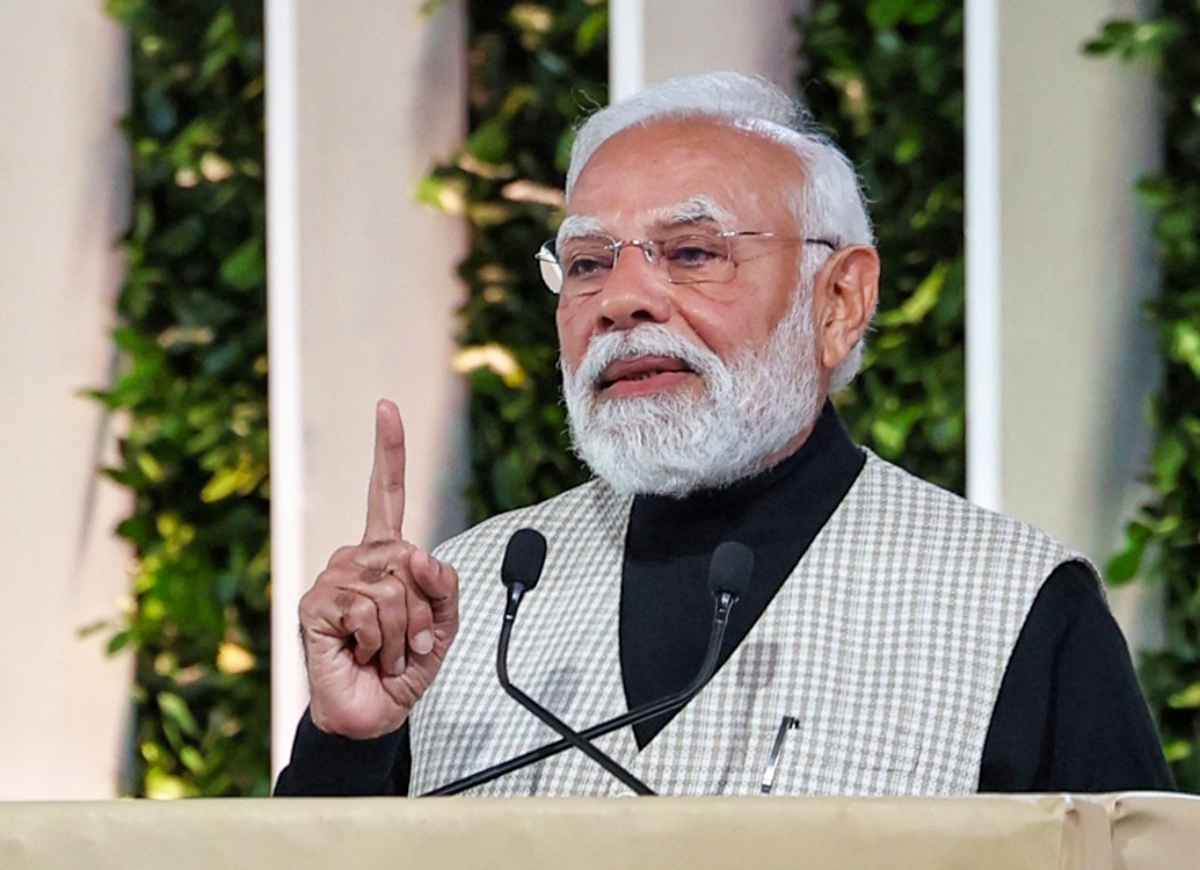
New Delhi, Mar 27 (UNI) Prime Minister Narendra Modi on Friday directed states to take strict action against hoarding and profiteering while ensuring uninterrupted supply of essential commodities, as he chaired a high-level meeting via video conferencing with Chief Ministers to review India’s preparedness in the wake of the escalating West Asia crisis.
The directive comes amid growing global uncertainty triggered by tensions involving Iran and disruptions around the Strait of Hormuz, a critical route for global oil supplies, raising concerns over energy security and supply chain stability. Emphasising vigilance and coordinated governance, Modi said states must ensure the smooth functioning of supply chains and maintain administrative alertness at all levels. “Strict measures against hoarding and profiteering are essential to prevent artificial shortages and protect citizens,” he said, calling for the activation of control rooms at state and district levels for real-time monitoring..
Reiterating the importance of cooperative federalism, the Prime Minister invoked the “Team India” approach, recalling the Centre-state coordination during the Covid-19 pandemic.
“Our experience shows that when the Centre and states work together, we can effectively manage even the most challenging global disruptions,” he said, expressing confidence that India would overcome the current situation through collective effort. The Prime Minister underlined that the situation remains dynamic and requires. constant monitoring and adaptive strategies. He noted that an inter-ministerial group has been operational since early March, reviewing developments daily.
“Our priorities are to maintain economic and trade stability, ensure energy security, safeguard the interests of citizens, and strengthen industry and supply chains,” he said.
Highlighting sector-specific preparedness, Modi stressed the need for advance planning in the agriculture sector, particularly in monitoring fertiliser availability ahead of the Kharif season.
He also called for special attention in border and coastal states to address challenges related to shipping, essential supplies, and maritime operations. Cautioning against misinformation, the Prime Minister said the timely dissemination of accurate and credible information is critical to prevent panic.
He also advised vigilance against online frauds and fake agents, especially in states with citizens residing in West Asia, urging the creation of helplines and nodal support systems.
Senior leaders including Defence Minister Rajnath Singh and Home Minister Amit Shah attended the virtual meeting, along with Chief Ministers such as N. Chandrababu Naidu, Yogi Adityanath, Omar Abdullah, Bhagwant Mann, Hemant Soren, Devendra Fadnavis and Revanth Reddy, among others.
Chief Ministers from poll-bound states did not attend due to the Model Code of Conduct, with officials indicating that a separate meeting would be held for their Chief Secretaries.
During the meeting, Singh said the government had taken proactive steps such as ensuring timely availability of LPG and reducing excise duties on petrol and diesel, while calling for coordinated action across all states and union Territories. Chief Ministers broadly endorsed the Centre’s measures, expressing confidence that the
situation remains stable with adequate availability of petrol, diesel, and L.PG. They welcomed the decision to cut excise duty on fuel and increase commercial LPG allocation to 70% of pre-crisis levels, saying these steps would provide relief to citizens and help maintain supply stability.
They also reaffirmed their commitment to working closely with the Centre to manage the evolving situation, while appreciating the Prime Minister’s diplomatic outreach to multiple countries to safeguard India’s interests,
Modi stressed that maintaining public confidence and ensuring seartless coordination would be key to navigating the ongoing global uncertainty.