Over 3,800 participants to compete across Chhattisgarh; 106 gold medals at stake
Irfan Yattoo
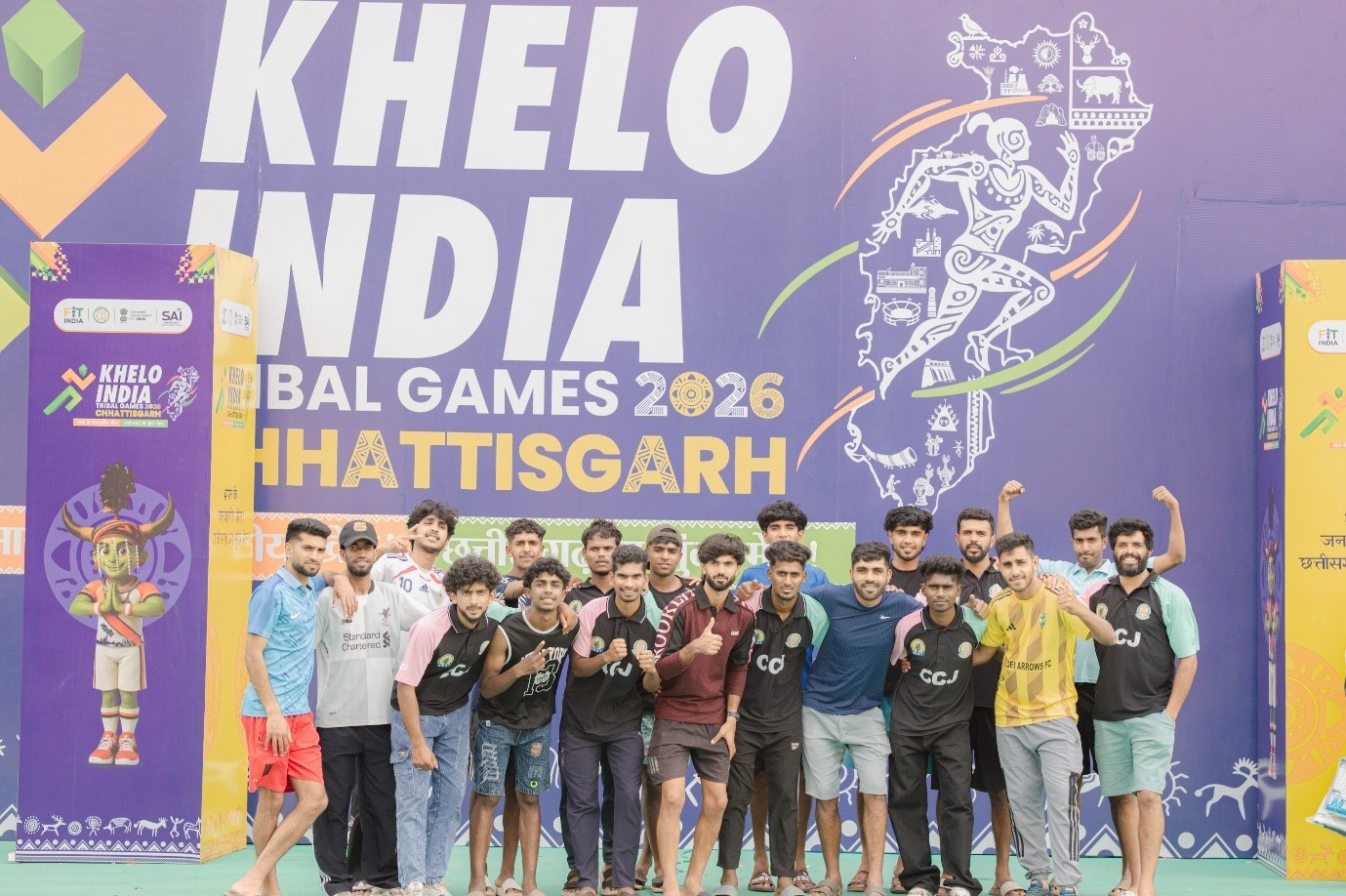
Raipuri : The inaugural Khelo India Tribal Games will begin on Wednesday across three cities in Chhattisgarh, with leading Indian athletes backing the initiative as a significant push to bring tribal talent into the national sporting mainstream.
Former hockey Olympian and president of Hockey India DilipTirkey, India international Salima Tete and national sprint record holder AnimeshKujur have endorsed the Games, describing them as a “great platform” for athletes from tribal communities to build careers and emulate established icons.
The multi-discipline event will see participation from 30 States and Union Territories, with close to 3,800 athletes set to compete. Competitions will be spread across Raipur, Jagdalpur and Sarguja, marking a large-scale mobilisation of athletes from tribal regions.
The Games will feature seven medal sports—archery, athletics, football, hockey, swimming, weightlifting and wrestling—alongside two demonstration disciplines, mallakhamb and kabaddi.
A total of 106 gold medals will be on offer, with athletics accounting for the highest tally at 34, followed by swimming (24), wrestling (18), weightlifting (16) and archery (10). Hockey and football, the two team events, will be staged in Raipur, while athletics will be held in Jagdalpur and wrestling in Sarguja.
Host state Chhattisgarh, along with Odisha, Jharkhand and Assam, will field the largest contingents, each sending over 100 athletes. Officials said the gender split among participants is nearly 50:50, in line with efforts to maintain parity.
Speaking ahead of the Games, Tirkey said the initiative aligns with Prime Minister Narendra Modi’s vision of transforming India into a sporting nation by expanding access and participation. He added that the platform would allow tribal youth to showcase their abilities, pursue professional pathways and aspire to represent the country.
Union Sports Minister Mansukh Mandaviya has also emphasised the role of sports in improving livelihoods and creating opportunities, particularly for athletes from underrepresented regions.
Kujur said the Games assume significance as several parts of the country still lack access to structured sporting platforms. Bringing together athletes from tribal areas across States and Union Territories, he said, would help identify and nurture untapped talent.
All participants have been selected through trials conducted by respective national sports federations, with performances to be monitored by coaches appointed by the Sports Authority of India, officials said.
The Games will conclude on April 3, with expectations that the event will serve as a feeder system for spotting talent from tribal belts and integrating them into the national sports framework.