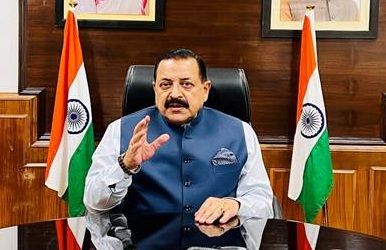
New Delhi, Mar 17 (UNI) India’s size and development trajectory will significantly influence the success of the global shift towards a greener economy, Minister of State for Science and Technology Jitendra Singh said on Tuesday.
Speaking at the Sustainable Business Futures Summit 2026 in New Delhi, Singh said that with a population of 1.4 billion, India occupies a “decisive stage” in the transition to a green future and is positioned to play a larger role in shaping it.
He said the country’s progress would be critical in determining the pace and direction of the global green transition, describing it as both a responsibility and an opportunity for India to emerge as a key driver of sustainable development.
The minister said green infrastructure is expected to form a central pillar of India’s future economic growth, as global economies increasingly move towards recycling, regeneration and environmentally sustainable technologies. He added that India is aligning its development strategy with these priorities.
Highlighting economic trends, Singh said India’s innovation ecosystem has expanded rapidly over the past decade, with more than two lakh startups, nearly half of them based in Tier-II and Tier-III cities. This, he said, reflects a broader shift in entrepreneurial activity beyond major urban centres.
On the energy front, he said India is strengthening its clean energy systems to support emerging sectors such as data centres and artificial intelligence, which require an uninterrupted power supply. He referred to the SHANTI Act, aimed at opening up the nuclear energy sector to wider participation, as a step towards enabling more reliable and low-carbon energy generation.
Singh said India’s green transition strategy integrates technological innovation, economic growth and environmental sustainability. This includes investments in advanced energy storage, digitally enabled power grids, and the integration of multiple energy sources such as solar, wind, nuclear and hydrogen.
The minister reiterated India’s commitment to achieving net-zero emissions by 2070 and promoting the Lifestyle for Environment (LiFE) initiative, which encourages sustainable consumption practices.
He also pointed to the growing emphasis on circular economy practices, with waste-to-wealth initiatives being implemented across sectors to generate economic value while reducing environmental impact.
The minister said future infrastructure development must prioritise climate resilience, sustainable urban systems, clean mobility and water security. He stressed that achieving these goals would require coordinated efforts among government, industry and research institutions.
Emphasising the need for collaboration, Singh said addressing sustainability challenges would require moving beyond isolated efforts, with collective action playing a key role in long-term outcomes.
UNI
Keep the human compassion at the heart of healthcare: LG Sinha

• Congratulates GMC Srinagar on Advancing Internal Medicine Conference • Highlighted vital role of physicians in delivering holistic • Medical...
Read moreDetails