Anantnag : Government skill development initiatives aimed at tackling unemployment and promoting self-reliance among rural youth have expanded across south Kashmir in recent years. Programs such as the Pradhan Mantri Kaushal Vikas Yojana (PMKVY) promise structured training, certification and pathways to employment. Official records highlight growing enrollment numbers and training targets across districts, but a series of field visits and interactions in villages across South Kashmir suggest that the impact on long-term employment remains uneven.
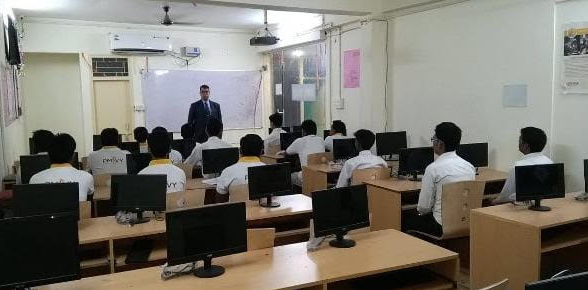
Across the districts of Anantnag, Kulgam and Shopian, many young people have enrolled in short-term skill courses over the past few years. Training programs typically include computer applications, tailoring, electrical work, beauty and wellness and other trades intended to prepare candidates either for entry-level jobs or small businesses. While most trainees receive completion certificates, only a limited number report finding stable employment linked directly to their training.
A 23-year-old graduate from a village in Anantnag said he completed a three-month computer training program and received certification, but has yet to secure work. “We attended classes regularly and got certificates, but there was no placement support afterward,” he said. “Most of us are still preparing for government exams because private jobs are scarce.”
Certificates Without Careers
Skill development schemes are designed to bridge the gap between formal education and marketable skills, especially in rural areas where employment options are limited. Training partners are assigned to conduct courses, and the programs are often promoted as pathways to quick employment.
However, several trainees said the duration of courses was too short to develop professional-level skills. Some reported irregular class schedules and limited hands-on practice. A trainee from Kulgam who attended a tailoring course said that practical exposure was insufficient. “We learned basic stitching, but there were only a few machines for many students,” she said. “Without enough practice, it is difficult to take orders confidently.”
Others pointed out that while certificates were distributed promptly, job placement assistance was minimal. “We were told there would be help finding jobs, but after the training ended, no one contacted us,” said another trainee.
Infrastructure and Resource Gaps
In some villages, residents said skill centers operate inconsistently. A few buildings designated as training facilities were found closed during visits, with locals claiming they open only during specific training cycles.
In one village in Shopian district, a shopkeeper recalled the inauguration of a training center. “There was a function and officials came for photos,” he said. “For some time classes were held, but later the activity slowed down.”
Some trainees also reported shortages of equipment and learning materials. In computer training centers, participants said multiple students often had to share a single system, limiting practice time. Others mentioned power outages and internet connectivity issues that disrupted classes.
Women and Home-Based Work
Despite challenges, skill programs have seen significant participation from women, particularly in tailoring and handicraft-related courses. In conservative rural settings, home-based work is often the most practical option for women seeking income opportunities.
A young woman from Anantnag said the tailoring course she attended helped her begin stitching clothes for neighbors. “I earn a little money now, especially during wedding seasons,” she said. “It helps with household expenses, but it is not enough to stand on my own financially.”
Several women echoed similar experiences, saying the training provided useful skills but limited income opportunities. Many expressed interest in advanced training or financial assistance to expand their work.
Lack of Market Linkages
Experts say one of the biggest gaps in skill development programs is the absence of strong market connections. Without access to buyers, employers or financial support, trainees often struggle to convert skills into sustainable livelihoods.
A local economist noted that certification alone does not guarantee employment. “Training programs need to be linked with actual market demand,” he said. “Without industry tie-ups or access to credit, many trainees cannot move beyond the learning stage.”
For those interested in starting small businesses, lack of capital remains a major barrier. Several trainees said they could not afford sewing machines, toolkits or shop rentals after completing their courses.
Official Response
Officials associated with skill development programs say the schemes are gradually expanding and improving. They argue that self-employment is a key objective and that not all trainees seek wage-based jobs.
A district official said enrollment numbers have increased in recent years and that many beneficiaries have benefited indirectly. “Skill development is a long-term process,” the official said. “Some trainees start small ventures from home, and others use these skills later in life.”
Authorities also maintain that monitoring and placement tracking mechanisms are part of the system, though they acknowledge that implementation challenges exist in remote areas.
Youth Unemployment and Expectations
South Kashmir continues to face high levels of youth unemployment, making skill development programs particularly significant. For many young people, these schemes represent one of the few structured opportunities for career development outside traditional education.
However, the gap between expectations and outcomes remains a concern. Many trainees enroll hoping for stable jobs but find limited opportunities after completing courses.
A graduate from Kulgam said the experience left him uncertain about the value of such programs. “The training was useful, but without a job it feels incomplete,” he said. “We need opportunities, not just certificates.”
A Mixed Picture
It would be inaccurate to describe all skill programs as ineffective. Some trainees report positive experiences and say they gained useful knowledge. A small number have managed to secure jobs or start micro-enterprises.
However, field interactions suggest that the overall impact varies widely depending on the quality of training, availability of resources and level of follow-up support.
The Road Ahead
As governments continue to invest in skill development initiatives, experts stress the importance of improving training quality and ensuring accountability. Stronger industry partnerships, better infrastructure and easier access to financial support are often cited as key priorities.
For rural youth in south Kashmir, skill development remains both a promise and a challenge — a pathway that offers opportunity but not always certainty.
Ultimately, the success of these schemes may not be measured by enrollment figures or certificates issued, but by the number of young people who are able to turn newly acquired skills into stable and sustainable livelihoods.