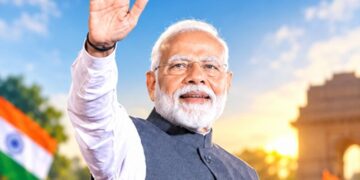
“There is a need to promote export-oriented and technology-driven agriculture, highlighting opportunities in high-value crops, fisheries and animal husbandry. Initiatives like e-NAM, AgriStack, and the Lakhpati Didi campaign will further strengthen rural prosperity and help connect farmers to larger markets,” PM Modi.
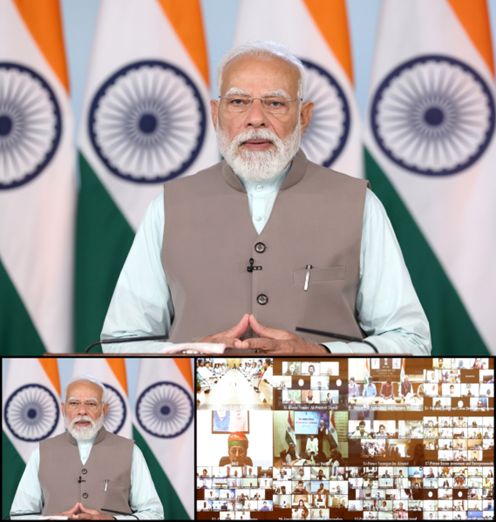
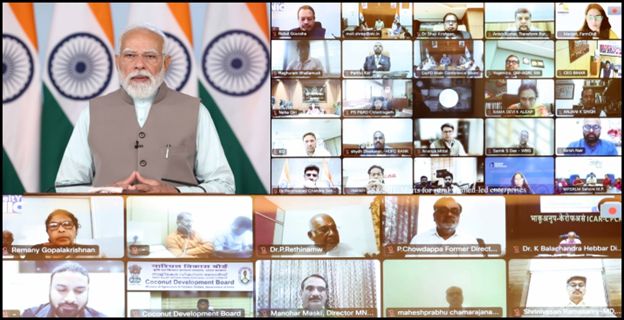
This week, Prime Minister Narendra Modi emphasized the need to accelerate the transformation of India’s rural economy by combining policy reforms, technology adoption and export-oriented agriculture. Addressing the third webinar in the Budget Webinar Series, the Prime Minister said that agriculture and the rural economy remain central pillars of India’s development journey and that effective implementation of budget provisions will determine the extent to which farmers and rural communities’ benefit. The webinar, which focused on agriculture and the rural economy, was part of a series of discussions aimed at gathering feedback from stakeholders after the presentation of the Union Budget. Earlier sessions had examined topics such as technology, reforms and economic growth. Speaking to policymakers, industry experts, agricultural scientists and farmers’ representatives, the Prime Minister said the purpose of these consultations is to ensure that the government’s policies translate into real benefits for the people.
From Budget Announcements To Ground Implementation: Prime Minister Modi highlighted that while the formulation of the budget is an important process, its success ultimately depends on effective execution at the grassroots level. He said the inputs and suggestions received from stakeholders during the pre-budget consultations had already influenced several policy decisions reflected in the Union Budget. However, he stressed that the focus must now shift towards ensuring that the allocated funds are used efficiently and that the benefits reach the maximum number of people. Prime Minister said every stakeholder—from policymakers to local administrators—has a role in ensuring that budget provisions are implemented swiftly and effectively. He impressed upon the participants in the webinar to provide practical suggestions on how each rupee allocated in the budget can be utilized fully and quickly to improve the lives of farmers and rural communities.
Agriculture Remains Central to India’s Development: The Prime Minister reiterated that agriculture, farming and traditional rural craftsmanship continue to form the backbone of India’s economy. Over the past decade, the government has introduced several initiatives aimed at strengthening the agricultural sector and reducing risks for farmers. Modi highlighted the role of PM Kisan Samman Nidhi, which has provided direct income support to nearly 100 million farmers. Through this scheme, more than ₹4 lakh crore has been transferred directly to farmers’ bank accounts, helping them meet agricultural expenses and maintain financial stability. The Prime Minister also noted that reforms in the Minimum Support Price (MSP) system have ensured that farmers receive returns up to one and a half times the cost of production, thereby improving their income security.
Risk Protection, Financial Security For Farmers: Another major reform highlighted during the address was the Pradhan Mantri FasalBima Yojana (PMFBY), which provides insurance coverage to farmers against crop losses. Modi said that claims worth nearly ₹2 lakh crore have already been settled under the scheme, helping farmers cope with losses caused by natural disasters, pests or adverse weather conditions. Institutional credit for farmers has also expanded significantly, with coverage crossing 75 percent. This has enabled farmers to access loans at affordable rates and invest in better seeds, equipment and technologies. These initiatives, the Prime Minister said, have collectively strengthened the economic security of farmers and boosted confidence within the agricultural sector.
Record Agricultural Production: As a result of sustained policy support and technological improvements, India has witnessed record production levels in several agricultural commodities. The Prime Minister said the country is achieving record output in food grains, pulses and oilseeds, demonstrating the growing resilience of the agricultural sector. However, he emphasized that the coming decades will require new approaches to sustain this growth and make agriculture more profitable for farmers. With the world entering the second quarter of the 21st century, Modi said it is essential to inject new energy into the sector and prepare Indian agriculture to compete in global markets.
Promoting High-Value Agriculture: A key focus of the Union Budget, according to the Prime Minister, is the promotion of high-value agriculture. India’s diverse agro-climatic conditions allow farmers to grow a wide range of crops, from tropical produce in the southern states to temperate crops in the Himalayan region. The budget has proposed targeted support for crops such as coconut, cashew, cocoa and sandalwood, which have strong market demand. Modi noted that states like Kerala and Tamil Nadu have traditionally been major coconut producers, but aging plantations have reduced productivity in recent years. The Government is therefore planning interventions to rejuvenate these plantations and improve yields, which will benefit farmers in these regions.
Opportunities In North-East, Himalayan Regions: The Prime Minister also highlighted the potential of the North-East and Himalayan states in specialized agriculture. He pointed out that the term “agarbatti” originates from agarwood, a product found in the region, indicating the historical significance of these crops. The budget proposes the promotion of temperate nut crops and other high-value agricultural products in these regions, which can help farmers tap into international markets. Such region-specific initiatives, he said, will not only increase farm incomes but also create employment opportunities in rural areas through processing and value addition.
Linking Farmers To Global Markets: Global demand for agricultural products is changing rapidly, and the Prime Minister stressed the importance of making Indian farming more export-oriented. He said farmers must be connected to global markets through better logistics, improved quality standards and stronger branding. To achieve this, collaboration between agricultural experts, industry stakeholders and farmers is essential. Setting clear goals for quality, certification and global standards will help Indian agricultural products compete effectively in international markets.
Growing Demand For Organic, Natural Farming: Another major theme of the Prime Minister’s address was the increasing global demand for organic and chemical-free food products. Consumers around the world are becoming more health-conscious, leading to greater interest in sustainable farming practices. Modi said India must take advantage of this trend by promoting natural farming and chemical-free agriculture. The government is planning to establish certification systems and laboratory facilities to support farmers who wish to adopt organic methods. Prime Minister said natural farming could become a gateway for Indian agricultural products to enter premium global markets.
“There is importance of agriculture and the rural economy in India’s development, for effective implementation of budget provisions at the grassroots level. Schemes such as PM Kisan Samman Nidhi, MSP reforms and the Pradhan Mantri FasalBima Yojana have strengthened farmers’ financial security and contributed to record agricultural production,” PM Modi
Fisheries The Major Growth Sector: The Prime Minister also highlighted the enormous potential of the fisheries sector, which he described as a key driver of rural economic growth. India is already the second-largest fish producer in the world, but there remains significant scope for expanding production. Reservoirs, ponds and other water bodies currently produce around four lakh tonnes of fish, but experts estimate that an additional twenty lakh tonnes could be produced with better planning and investment. Increasing fish production could significantly improve incomes for fishermen and create new opportunities for exports. The Prime Minister called for practical suggestions such as better mapping of reservoir potential, cluster development and improved coordination between fisheries departments and local communities.
Animal Husbandry, Livestock Development : The animal husbandry sector was also identified as a major pillar of rural prosperity. India is the largest milk producer in the world and ranks second globally in egg production. To strengthen this sector further, the government is focusing on improving breeding quality, preventing diseases and adopting scientific livestock management practices. A nationwide vaccination campaign has been launched to protect animals from diseases such as foot-and-mouth disease, with more than 125 crore doses administered. Initiatives such as the National Gokul Mission and the Animal Husbandry Infrastructure Development Fund aim to modernize the dairy and livestock sectors.
Gobardhan Scheme, Rural Energy: Another innovative initiative highlighted by the Prime Minister was the Gobardhan scheme, which promotes the use of animal waste and organic waste to produce energy and fertilizers. This initiative helps keep villages clean while also generating additional income for farmers. By converting waste into biogas and other resources, the scheme contributes to energy security and environmental sustainability. PM Modi said the Gobardhan initiative demonstrates how rural resources can be utilized for multiple benefits, including clean energy production.
Technology Driving Agricultural Transformation: The Prime Minister emphasized that technology will play a crucial role in the future of agriculture. Through the e-NAM platform, farmers are now able to access a national agricultural market and sell their produce beyond local mandis. The government is also developing a digital public infrastructure for agriculture, known as AgriStack. This system includes digital farmer identities, with nearly nine crore farmer IDs already created. In addition, around 30 crore land parcels have been digitally surveyed, creating a comprehensive database that can help deliver government services more efficiently. Artificial intelligence and digital platforms are also helping bridge the gap between research institutions and farmers.
Empowering Women In Rural Economy: The Prime Minister also highlighted the success of the Lakhpati Didi initiative, which aims to empower rural women through entrepreneurship and self-help groups. So far, three crore women in villages have become LakhpatiDidis, earning more than ₹1 lakh annually. The government aims to double this number to six crore by 2029, strengthening women’s financial independence and boosting rural economic growth.
Building Storage, Supply Chains : Another major priority for the government is expanding storage infrastructure across the country. A nationwide campaign is underway to build modern warehouses and storage facilities to reduce post-harvest losses. Beyond storage, the Prime Minister encouraged entrepreneurs to invest in food processing, supply chains, agri-tech innovation and agricultural exports. Such investments can create new economic opportunities and strengthen the overall agricultural ecosystem.
Kashmir Horizon View : Concluding his address, Prime Minister Modi expressed confidence that the discussions during the webinar would generate valuable ideas for strengthening the rural economy. He said that grassroots suggestions and collaborative efforts between government institutions, industry experts and farmers will play a crucial role in making the Union Budget successful. By combining policy support, technology and entrepreneurship, the government aims to create a prosperous rural economy that contributes significantly to India’s long-term development. The Prime Minister expressed hope that the deliberations will help ensure that the benefits of the budget reach every village and every farmer across the country.
(“Team Kashmir Horizon” is committed to continuous improvement and invites feedback and suggestions from readers and its followers on social media sites. Reader insights are considered vital for enhancing content quality and empowering the community. The team encourages open communication and values the thoughts and ideas of its audience, believing that such input will enable them to serve the public more effectively. The initiative aims to ensure that readers have the best possible experience with “Kashmir Horizon”. Interested individuals can reach out to us via email at [email protected].)