

Haris Mashooq Zia
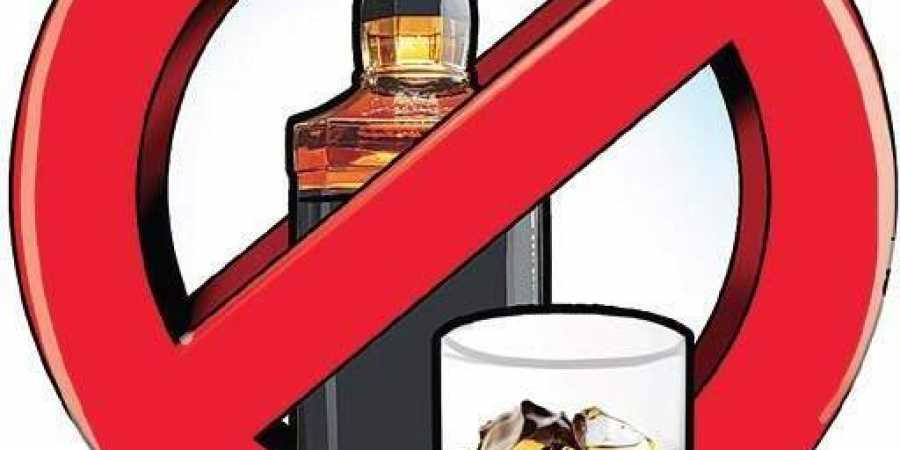
The issue of an alcohol ban in Jammu and Kashmir has resurfaced time and again, sparking heated debate for a while and then quietly fading away. Several bills advocating a ban on the sale and consumption of alcohol—particularly in a Muslim-majority region—have been introduced in the past, only to be shelved or forgotten with the passage of time. However, this is not merely a religious question; it is fundamentally a cultural, social, and public health issue, and one that deserves serious and sincere consideration.
Many Indian states—irrespective of religion—have declared themselves dry states. Gujarat, Bihar, and others did so not on religious grounds but to address social harm, health concerns, and public order. In the same spirit, the demand for a complete alcohol ban in Jammu and Kashmir should be viewed as an expression of people’s sentiment and cultural ethos, which must be respected in a democratic system.
Some have suggested a selective ban—prohibiting alcohol only for locals while allowing its sale to tourists. This argument is flawed. Tourists come to Kashmir for its unparalleled natural beauty, serene landscapes, and cultural richness—not for alcohol consumption. Alcohol is not an essential necessity without which people cannot survive. Visitors can consume alcohol after returning to their homes or in other places outside Kashmir. Allowing alcohol for tourists alone creates a dangerous double standard and undermines the very idea of a ban.
Moreover, several disturbing videos circulating on social media show both locals and non-locals indulging in alcohol and creating public nuisance, making certain areas unsafe. Alcohol consumption often leads to loss of self-control, endangering not only the consumer but society at large. Irrespective of culture, tradition, or religion, alcohol is harmful, and its social costs far outweigh any perceived benefits.
Protests by alcohol shop owners, particularly in parts of Jammu, have highlighted concerns over livelihood and revenue. These concerns are valid and cannot be ignored. However, the solution lies not in continuing a harmful practice but in providing viable alternatives. The government must offer shopkeepers alternative businesses—selling healthy and socially beneficial products—so that their livelihoods are protected without compromising public welfare.
“Achieving a drug-free and alcohol-free Jammu and Kashmir is a realistic goal that hinges on collective action. By embracing our shared responsibility and working together, every citizen can help build a safer, healthier, and more dignified future for the region.”
If some districts of Jammu argue that alcohol consumption aligns with their cultural practices, a district-specific approach may be considered as a transitional step. However, districts such as Rajouri, Poonch, the Chenab Valley, and all districts of Kashmir should witness a complete and uncompromising ban. Ideally, Jammu and Kashmir should be declared a dry state, with strict enforcement not merely on paper but on the ground.
If the government’s hesitation stems from the revenue generated by alcohol, it is time for serious introspection. Revenue cannot be placed above human life, health, and social harmony. Jammu and Kashmir is rich in potential—tourism, horticulture, handicrafts, renewable energy, and other sustainable sectors can easily compensate for revenue loss. Ignoring public sentiment for the sake of alcohol revenue may cost the government far more—politically and morally—in the long run.
Alongside alcohol, the menace of drugs poses an even graver threat to society, especially to the youth of Kashmir. While some steps have been taken by the authorities, they remain insufficient. Awareness alone will not solve the problem. What is needed is a multi-faceted, long-term strategy involving the police, government, civil society, educational institutions, religious scholars, community leaders, parents, and the society at large.
Drug peddlers must face strict and exemplary punishment after proper investigation, ensuring that innocents are not falsely implicated. Models such as Singapore’s zero-tolerance approach may not be entirely applicable, but harsh penalties—including life imprisonment, seizure of property, and heavy fines—must be considered to break the backbone of drug networks.
At the same time, drug victims must be treated as patients, not criminals. They deserve compassion, rehabilitation, and support, not stigma and shame. Well-equipped rehabilitation centres with qualified doctors and counsellors should be established across the region. Honest and transparent data regarding addiction and recovery must be shared, because problems are not solved by hiding them, but by acknowledging and addressing them courageously.
A drug-free and alcohol-free Jammu and Kashmir is not a distant dream. It is achievable—but only if we act collectively. Every citizen has a role to play. It is a shared responsibility, and together, we can reclaim a safer, healthier, and more dignified future for our society.
(The author is a freelancer. The views, opinions and conclusions expressed in this article are those of the author and aren’t necessarily in accord with the views of “Kashmir Horizon”)





