
Saboor Ahmed Mir
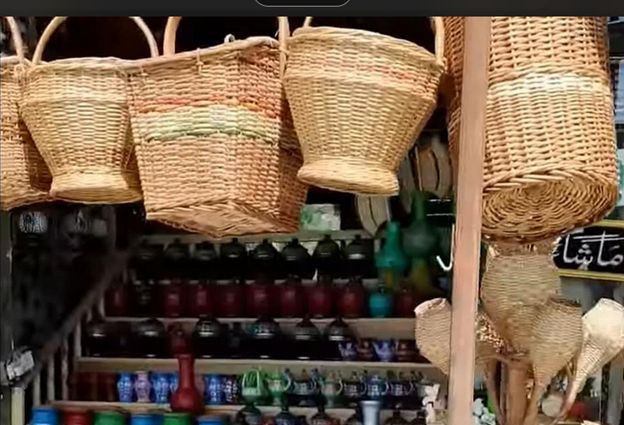
Anantnag: In a serene village located on the frame of Anantnag in southern Kashmir, piles of lately cut willow branches await outside a simple lodging. Within the home, Abdul Rashid, aged 55, adeptly twists and intertwines the flexible outgrowths, casting them into a robust agricultural handbasket appertained to as Zampa in the original dialect.
For multitudinous generations, Zampa — a handwrought willow handbasket has been a vital element of the pastoral life in the Kashmir Valley. It has been employed to transport vegetables, fruits, wood, and indeed gathered rice, with the craft thriving alongside the region’s husbandry economy.
“ formerly, every home demanded Zampas, ” Rashid reported. “ farmers, retailers, indeed fruit growers all reckoned on them. Now, the frequency of plastic holders has taken over. ”
The transition from traditional willow baskets to affordable, mass- produced plastic backups has severely impacted the craft. Artisans report that orders have drastically dropped over the last ten times, compelling multitudinous families to leave the trade entirely.
Casting Zampas is demanding and necessitates forbearance. Willow outgrowths are collected in wintertime, soaked to maintain their bendable nature, and also handwoven into baskets of different sizes. This process requires both strength and careful attention, capacities generally handed down from father to child.
In regions analogous as Srinagar, Baramulla, and Anantnag, entire neighborhoods were historically linked to willow weaving. Presently, only a numerous homes continue this traditional practice.
Artisans point to shy earnings as the main factor for the decline. “ It takes an entire day to make a large handbasket, yet the profit is truly low, ” mentioned another needleworker from the area. “ youthful generations are concluding for jobs that guarantee stable income. ”
The craft is also defied with difficulties concerning the vacuity of raw paraphernalia. Areas suitable for willow husbandry have lowered in certain locales because of communal growth and changing operation of land, adding further pressure on the sedulity.
Not withstanding these obstacles, specialists contend that Zampa making possesses considerable pledge in a time increasingly concerned with sustainability. As exchanges around plastic waste and ecological detriment expand, the willow baskets from Kashmir crop as biodegradable and environmentally friendly options.
officers in crafts report that enterprise are underway to promote willow particulars through shows and marketable events. Yet, crafters feel that resuscitation sweats may not succeed without ongoing request access and fair pricing systems.
Cultural experts advise that the loss of Zampa would signify not only the exposure of a product but also the decline of a life deeply bedded in simplicity and ecological balance.
In his plant, Rashid remains engaged in weaving, his hands moving with a seasoned flux. “ This is further than just a handbasket, ” he said still. “ It represents our heritage. ”
As plastic continues to dominate the business and contemporary societies alter pastoral husbandry, the fate of Kashmir’s Zampa craft teeters precariously — intricately woven between heritage and the struggle for actuality.