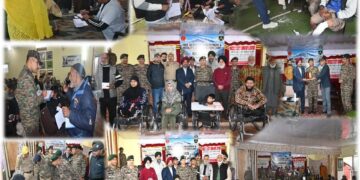
Awantipora: The Islamic University of Science and Technology (IUST) organized a population-based Health Awareness cum NCD Screening Camp at Doodmarg, Tral, a remote tribal village in Pulwama district, under its SSR Outreach Initiative supported by the DST-PURSE Programme.
The initiative focused on raising awareness about non-communicable diseases (NCDs) among the Gujjar and Bakerwal communities, emphasizing the risk factors, complications, prevention, and management of conditions such as diabetes, cancers, neurodegenerative disorders, hypertension, chronic respiratory diseases, dyslipidemia, and anemia. It highlighted the increasing incidence of these diseases both nationally and globally, particularly among tribal populations in Jammu & Kashmir, which is attributed to changing dietary patterns and lifestyles. The outreach team implemented door-to-door screenings, offering free diagnostic tests and recording essential anthropometric indices. Participants completed pre-designed questionnaires that gathered personal and family medical histories, as well as socio-economic information. This effort was part of a broader “Comprehensive Epidemiological Survey of Chronic Diseases,” organized under the SSR Outreach Initiative and supported by DST-PURSE, IUST, with Prof. Ayub Qadri as the lead investigator. The initiative underscored the significance of early detection and community-based screening in managing the rising burden of NCDs.