In societies burdened by political instability, economic strain, and recurring humanitarian crises, charitable institutions become lifelines. Kashmir is no exception. Over decades of uncertainty and hardship, countless organizations and individuals have stepped forward to support widows, orphans, students, the sick, and those displaced by violence or natural calamities. Their contributions are often sincere, sacrificial, and deeply appreciated. Yet sincerity alone does not guarantee justice. When charity is collected in the name of religion—particularly Zakat and Sadaqah—it carries not only social responsibility but divine accountability. It becomes an amānah (trust) before Allah and a public trust before society. And when transparency weakens, trust erodes. When trust erodes, the entire moral foundation of charitable work begins to tremble. This is not a personal accusation against any individual. It is a principled reflection rooted in Islamic teachings and shaped by long engagement with social service in Kashmir.
Charity In Islam | More Than Generosity: In Islam, charity is not merely an act of compassion; it is an act of worship. Zakat is one of the five pillars of Islam. It is obligatory, structured, and regulated. Allah states in the Qur’an:
“Indeed, Allah commands you to render trusts to whom they are due…” (Qur’an 4:58). This verse establishes a universal ethical command: every trust must be fulfilled. Zakat funds are not private assets. They are entrusted wealth belonging to specific categories defined in Qur’an 9:60—the poor, the needy, those in debt, and other designated recipients. The Prophet Muhammad(SAW) reinforced this culture of responsibility: “Each of you is a shepherd, and each of you is responsible for his flock” (Sahih al-Bukhari; Sahih Muslim). Anyone who administers charitable funds is a shepherd of public wealth. Accountability is therefore not optional—it is inherent in the role.
Documentation, Financial Integrity In The Qur’an: Islam does not separate spirituality from structure. The longest verse in the Qur’an (2:282) commands believers to document financial transactions: “O you who believe! When you contract a debt for a specified term, write it down…” If Islam requires written documentation for a private loan between two individuals, then how can public charitable funds involving millions of rupees be managed informally?
The Qur’an established a culture of record-keeping, witnesses, and clarity. Transparency is not a Western administrative import; it is Qur’anic. Classical scholars understood this well. Imam al-Māwardī, in al-Ahkām al-Sultāniyyah, emphasized administrative oversight of public funds. Financial management without supervision, he warned, invites corruption—even if unintended.
The Model Of Early Islamic Governance: The Rightly Guided Caliphs institutionalized accountability. Caliph ʿUmar ibn al-Khattab (RA) required financial declarations from his governors. If a governor’s wealth increased suspiciously, he investigated. His guiding principle was clear: “Take account of yourselves before you are taken to account.” This was not distrust—it was justice.
Islamic civilization historically developed auditing systems within the Bayt al-Māl (public treasury). Accountability was seen as protection of public trust, not an insult to leadership.
The Kashmir Context | Strengths, Structural Weaknesses: Kashmir’s charitable landscape is vast. Numerous organizations operate in education, healthcare, orphan care, emergency relief, and scholarship distribution. Many are driven by sincere volunteers who sacrifice time and personal resources. However, certain structural lapses are observable across segments of the social work network:
1. Absence Of Publicly Available Audits: Many institutions do not publish annual audited financial reports. Donors contribute generously, yet detailed breakdowns of income and expenditure remain inaccessible.
2. Centralization Of Authority: Some organizations revolve around a single charismatic figure. Boards or advisory councils may exist on paper but lack active oversight.
3. Cash-Based Distributions: Heavy reliance on cash transactions reduces traceability and increases vulnerability to mismanagement.
4. Resistance To Inquiry: Questions regarding financial transparency are sometimes interpreted as personal attacks rather than legitimate concerns.
These trends do not necessarily imply deliberate wrongdoing. But structural opacity creates suspicion—even where none may be deserved. Islam warns against injustice in subtle forms: “And do not deprive people of their due” (Qur’an 7:85). In charitable administration, “due” includes accurate record-keeping, responsible allocation, and transparent reporting.
“Kashmir’s charitable sector must integrate Islamic values with professional transparency to effectively serve its vulnerable populations. True moral leadership in the region requires a commitment to administrative excellence and honest reform, ensuring that faith-based work is protected by accountability rather than hindered by it.”
Dignity Of Beneficiaries: Islamic charity protects human dignity. The Qur’an cautions: “O you who believe! Do not nullify your charities with reminders of generosity or with injury…” (Qur’an 2:264). Publicly displaying beneficiaries, distributing aid in front of cameras, or using images of vulnerable families for promotional campaigns may conflict with this spirit. The poor must never become instruments of publicity. In this regard, institutions such as Shama Foundation Kashmir have demonstrated structured transparency by maintaining detailed financial records and transferring assistance directly into beneficiaries’ bank accounts. This approach preserves both accountability and dignity. Such models show that professional governance and Islamic ethics can coexist harmoniously.
Intention Versus System: It is often argued: “Our intentions are pure.” No doubt, sincerity (ikhlās) is central in Islam. The Prophet (SAW) said: “Actions are judged by intentions” (Sahih al-Bukhari). Yet scholars like Imam al-Ghazālī in Ihyā’ ʿUlūm al-Dīn emphasized that good intention does not excuse administrative negligence. A flawed system can harm even when intentions are sincere. Islam requires both pure hearts and sound systems.
The Crisis Of Trust: When transparency weakens, donors hesitate. When donors hesitate, funding declines. When funding declines, the poor suffer.
Kashmir cannot afford a crisis of trust in its charitable sector. Public confidence is fragile. It is built slowly but can collapse quickly. Once people begin to question where their Zakat is going, they may withdraw from institutional giving altogether—preferring informal distribution, which lacks scale and coordination.
The damage then becomes collective.
Scholarly Perspectives On Public Funds: Ibn Taymiyyah wrote in Majmūʿ al-Fatāwā that anyone entrusted with Muslim wealth must administer it with justice, and betrayal of such trust is a grave sin. Imam Abu Yusuf, in Kitāb al-Kharāj, advised rulers to maintain financial accountability because public funds belong to the community. Modern scholars such as Dr. Yusuf al-Qaradawi have argued that contemporary Zakat institutions must adopt professional auditing standards and transparent governance structures to preserve credibility. Across centuries, Islamic scholarship consistently affirms that accountability strengthens, not weakens, religious institutions.
Reform Agenda For Kashmir’s Social Sector : To align charitable work in Kashmir with both Islamic principles and modern governance standards, several reforms are essential:
Mandatory annual independent audits.
Public release of financial reports online.
Active, independent governing boards.
Digital financial management systems.
Clear beneficiary verification processes.
Ethical media policies protecting dignity.
Whistleblower protection mechanisms.
Periodic donor briefings and transparency forums.
Transparency should be institutionalized—not dependent on individual virtue alone.
A Personal Reflection: Years of engagement in charitable work have reinforced one truth: dedication is not enough without documentation. Hard work is not enough without accountability. Emotional commitment is not enough without institutional clarity. Leaving any organization after long association is never easy. But principles must outweigh personal attachment. Reform sometimes requires difficult decisions. This reflection is not about personalities. It is about principles.
Conclusion|Restoring Moral Confidence: Charity in Islam is purification. Zakat purifies wealth and soul. But purification requires honesty. If fear of Allah (taqwa) truly governs our institutions, transparency will follow naturally. If accountability in the Hereafter remains vivid in our consciousness, we will not hesitate to publish accounts. Kashmir deserves charitable institutions that embody compassion, professionalism, and Islamic integrity. The region’s vulnerable populations depend on it. Its donors expect it. Its faith demands it. Transparency is not a threat to religious work—it is its shield. May Allah grant us sincerity in intention, excellence in administration, and courage in reform. Only then can our charitable networks become not only instruments of relief—but symbols of moral leadership.
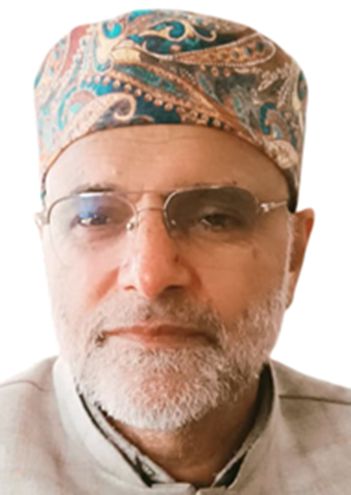
(The author a veteran academician is a former Professor and Head Department of Islamic Studies, Kashmir University. The views, opinions and conclusions expressed in this article are those of the author and aren’t necessarily in accord with the views of “Kashmir Horizon”)