J&K’s Second Best Republic Day Tableau Sparks Nation
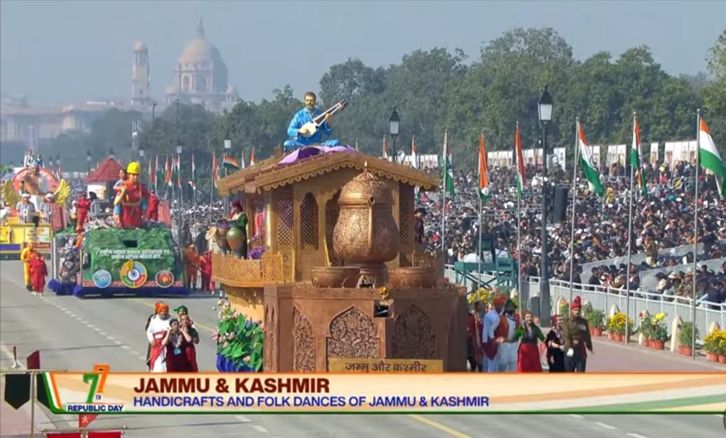
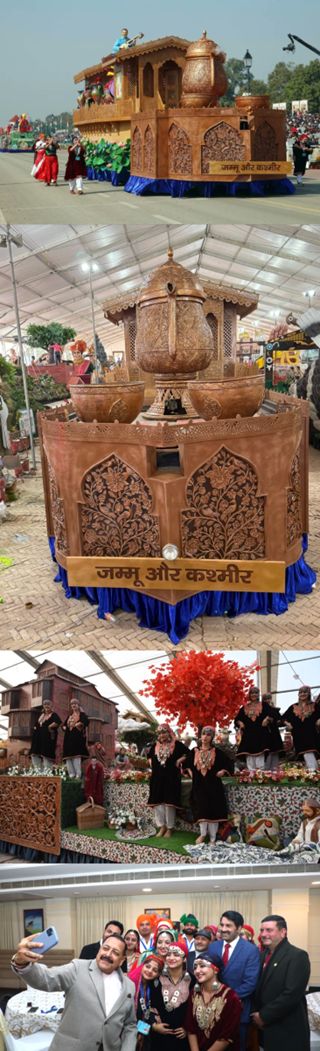 Srinagar: The Union Territory of Jammu & Kashmir has achieved a remarkable milestone by securing the second position in the Republic Day Tableau competition at the 77th Republic Day Parade 2026 in New Delhi. This recognition not only celebrates the artistic brilliance of the region but also underscores its cultural resilience, creative legacy, and renewed presence in India’s national narrative. The tableau’s acclaim highlights Jammu & Kashmir’s centuries-old heritage, rich craft traditions, and vibrant performing arts, marking a proud moment for the Union Territory and reaffirming its place on the country’s cultural map. Conceived as a “living canvas,” the Jammu & Kashmir tableau presented an immersive cultural narrative. It combined visual storytelling, craftsmanship, and dynamic performances to reflect the region’s artistic continuum. Every element of the tableau—ranging from handicrafts to folk dances—was meticulously designed to portray the diversity, continuity, and depth of Jammu & Kashmir’s heritage. The presentation went beyond mere aesthetics; it communicated identity, history, and shared memory, allowing audiences to experience the Union Territory as a living repository of culture and creativity.
Art, Craftsmanship, Symbolism: Central to the tableau was the display of Jammu & Kashmir’s iconic handicrafts, including Pashmina weaving, walnut wood carving, carpet weaving, papier-mâché, copperware, and Basohli miniature paintings. Each craft represented not only technical skill but also the generational transmission of cultural knowledge. These artistic forms, refined over centuries, are emblematic of the region’s civilizational depth and form an integral part of its social and economic fabric. By highlighting these crafts, the tableau showcased how tangible cultural heritage can serve as a bridge between history and contemporary national identity. The narrative opened with a grand engraved Samovar, symbolizing Kashmiri warmth and hospitality. It transitioned seamlessly into depictions of traditional wooden architecture and houseboats, evoking the serene landscapes of the Kashmir Valley. At the tableau’s center, a Dogra Chhajja performance on a traditional village Thadda captured the essence of village life, social harmony, and cultural continuity. This combination of static symbolism and live enactment offered a holistic understanding of Jammu & Kashmir’s cultural and social life.
Folk Performance, Cultural Diversity: One of the tableau’s distinguishing features was its integration of dynamic folk performances, which gave life to the visual narrative. Traditional dances such as Rouf, Kud, Jagarna, Pahari, Gojri, and Dumhal were performed with precision and vibrancy. These dances not only celebrated the region’s ethnic and cultural diversity but also served as a medium to sustain and communicate social cohesion and community identity. Through this kinetic dimension, the tableau transcended static representation and became a living, breathing cultural experience. Adding further layers of meaning, the tableau incorporated papier-mâché artifacts, Pahari miniature paintings, and Basohli-style motifs, symbolizing centuries of artistic refinement and spiritual expression. Artisans’ tools such as looms, chisels, and brushes were integrated to represent discipline, dedication, and the perseverance of craftspeople, emphasizing that culture is maintained not merely by tradition but through sustained human effort and creativity.
Symbolism, Poetic Imagery: Symbolism played a key role in the tableau’s narrative. Saffron blossoms rising gracefully within the presentation symbolized the cultural soul of Jammu & Kashmir in bloom, while musical accompaniment from instruments like the rabab and santoor enhanced the sensory experience. The performers’ attire and the choreography of folk dances created a visual and auditory harmony, reflecting the pluralistic ethos, resilience, and unity inherent in the region’s culture. Together, these elements formed a cultural symphony, presenting Jammu & Kashmir as a land where tradition, artistry, and community life coexist seamlessly.
Leadership, Conceptual Vision: The conceptualization and execution of the tableau were spearheaded by Padma Shri awardee and Sangeet Natak Akademi Award recipient Balwant Thakur, a veteran cultural leader and former Secretary of the Jammu & Kashmir Academy of Art, Culture, and Languages. Thakur brought decades of experience in cultural administration, including representing India internationally as Regional Director of the Indian Council for Cultural Relations (ICCR). His vision ensured that the tableau was not only aesthetically compelling but also culturally authentic and historically grounded. The administrative coordination, led by Chief Secretary Atal Dulloo, Principal Secretary, Culture, and Harvinder Kaur, Secretary of the J&K Academy, ensured meticulous planning, execution, and logistical precision. The collaborative effort between artistic leadership and administrative oversight was pivotal in achieving the high professional standard recognized at the national level. Union Minister of State for Defence, Sanjay Seth, presented the award to Brij Mohan Sharma, Principal Secretary, Culture, J&K, formally acknowledging the Union Territory’s exceptional performance.
A Cultural, National Milestone: The second-place recognition represents more than a competitive achievement; it signifies Jammu & Kashmir’s return to national prominence in cultural representation. The tableau conveys a message of resilience and continuity, demonstrating that despite challenges, the Union Territory remains a vibrant hub of artistic and cultural creativity. Its success highlights the importance of preserving intangible heritage while also presenting it on a platform of national and international significance. The tableau’s depiction of ancient craftsmanship alongside living performance traditions underscored Jammu & Kashmir’s civilizational depth. The interplay of visual artistry, music, and dance offered a holistic and immersive experience, emphasizing the region’s pluralistic culture. It also highlighted the interconnectedness of communities, craft, and environment, reinforcing the idea that cultural heritage is not isolated but interwoven with social life, history, and identity.
National Context, Recognition: The Jammu & Kashmir tableau was part of a larger celebration of India’s cultural diversity during the Republic Day Parade 2026. The Ministry of Culture’s tableau, “Vande Mataram – The Soul Cry of a Nation,” was recognized as the best among Central Ministries and Departments. Other notable acknowledgments included the Central Public Works Department and popular choice awards for Assam and Gujarat. Within this competitive environment, the recognition of Jammu & Kashmir’s tableau underscores its artistic competitiveness and cultural relevance, positioning the Union Territory alongside India’s most celebrated states and institutions. The achievement also carries symbolic significance, projecting Jammu & Kashmir’s culture as an essential component of the national mosaic. By presenting a tableau that is both authentic and aesthetically sophisticated, the Union Territory demonstrates its ability to contribute meaningfully to India’s cultural diplomacy and identity. The tableau communicates unity, resilience, and creativity, resonating strongly with both audiences and expert juries.
Educational, Inspirational Value: The tableau serves as a source of inspiration and education for audiences, particularly youth and students. By showcasing the intricate craftsmanship, folk performance, and musical traditions, it illustrates the discipline, dedication, and skill required to sustain living cultural practices. For younger generations, the tableau provides a window into heritage, encouraging participation, appreciation, and continuity. In this way, the Republic Day presentation is not only a celebration but also an educational and motivational platform for cultural engagement.
J&K’s Cultural Renaissance: The tableau is part of a broader cultural revival in Jammu & Kashmir, reflecting renewed efforts to nurture arts, music, dance, and literature in the region. Institutions like the J&K Academy of Art, Culture, and Languages have played a crucial role in identifying talent, promoting cultural exchange, and documenting traditional practices. The tableau exemplifies how these sustained efforts can be transformed into a nationally celebrated cultural statement, highlighting both creative innovation and the preservation of heritage. Renowned cultural leaders emphasize that platforms such as the Republic Day Parade allow regional identity to be presented on a national stage, demonstrating that heritage can be dynamic, inclusive, and relevant. By translating centuries-old traditions into a contemporary performance medium, the tableau bridges past and present, inspiring audiences while honoring history.