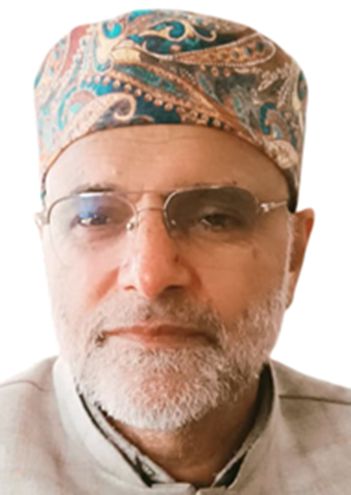
Prof. Hamid Naseem Rafiabadi
The contemporary discourse on women’s empowerment is largely dominated by Feminist Empowerment Theory, a framework that originated in the socio-historical conditions of the modern West and emerged as a response to entrenched patriarchy, ecclesiastical authority, and legal discrimination against women. Over time, feminism developed into multiple strands—liberal, radical, Marxist, socialist, and postmodern—each proposing distinct pathways toward women’s liberation. While these movements have contributed to the articulation of women’s rights and the critique of oppressive practices, feminist empowerment as a theoretical construct remains deeply rooted in secular humanism, materialism, and individualistic notions of freedom. As such, it suffers from serious philosophical, moral, and civilizational limitations when presented as a universal model applicable across cultures and religious traditions. Islam, by contrast, offers a comprehensive and coherent alternative paradigm of women’s empowerment, grounded not in gender conflict or social rebellion but in divine guidance, moral responsibility, spiritual equality, and social justice. This Islamic model neither negates women’s agency nor reduces empowerment to economic productivity or sexual autonomy; rather, it integrates the spiritual, ethical, intellectual, economic, and familial dimensions of human life into a balanced moral order. At the heart of Feminist Empowerment Theory lies a secular worldview that assumes human beings to be autonomous, self-defining agents whose liberation depends upon emancipation from religious authority, moral absolutes, and traditional social structures, particularly the family.
Empowerment in this framework is often measured through individual choice, bodily sovereignty, public visibility, and economic independence. Islam fundamentally departs from this epistemological and ontological position. The Qur’ān presents a vision of the human being as a created, purposeful, and morally accountable entity, endowed with inherent dignity by virtue of being human. Allah declares, “Indeed, We have honored the children of Adam” (Qur’ān 17:70), a statement that affirms human dignity without gender distinction. Men and women originate from a single soul, as the Qur’ān states: “O mankind, fear your Lord, who created you from a single soul and created from it its mate” (Qur’ān 4:1). Empowerment in Islam, therefore, is not conceived as liberation from divine authority but as liberation through submission to moral truth, justice, and responsibility. Freedom is not absolute autonomy; it is moral agency exercised within the bounds of divine guidance.
One of the most profound dimensions of Islamic empowerment is its unequivocal affirmation of spiritual and moral equality between men and women. Unlike many pre-modern religious and philosophical systems that viewed women as morally or spiritually deficient, Islam addresses women directly as independent moral agents responsible before God. The Qur’ān repeatedly emphasizes this equality in faith, accountability, and reward: “Indeed, the Muslim men and Muslim women, the believing men and believing women, the obedient men and obedient women… Allah has prepared for them forgiveness and a great reward” (Qur’ān 33:35). Moral excellence in Islam is measured solely by taqwā, or God-consciousness, as affirmed in the verse, “Indeed, the most honored of you in the sight of Allah is the most righteous of you” (Qur’ān 49:13). The Prophet Muhammad (SAW)reinforced this principle when he declared, “Women are the twin halves of men” (Sunan Abū Dāwūd), a statement that establishes ontological parity while allowing for functional distinctions. Empowerment, therefore, is rooted not in gender rivalry but in shared moral responsibility.
Islamic empowerment also places extraordinary emphasis on knowledge as a means of intellectual and moral elevation. The Prophet (SAW)stated unequivocally, “Seeking knowledge is obligatory upon every Muslim” (Ibn Mājah), a command that encompasses both men and women. Early Islamic history provides abundant evidence of women’s intellectual authority, most notably in the person of ‘Ā’ishah (RA), who was among the foremost scholars of Islamic law, Hadith, and Qur’ānic interpretation. Senior Companions frequently consulted her, and she transmitted more than two thousand Hadiths, shaping Islamic jurisprudence for generations. This intellectual empowerment stands in contrast to feminist paradigms that often instrumentalize education solely for economic mobility, whereas Islam situates knowledge within a framework of wisdom, ethical refinement, and social responsibility. Economically, Islam granted women full legal and financial autonomy centuries before the emergence of modern feminist movements. The Qur’ān affirms women’s independent economic agency by stating, “For men is a share of what they earn, and for women is a share of what they earn” (Qur’ān 4:32).
“Islamic empowerment is framed as a middle path that rejects both the imitation of men and the constraints of rigid tradition. It asserts that women are spiritually and intellectually equal “vicegerents of God,” offering a purpose-driven model of empowerment rooted in justice and moral autonomy rather than modern social uncertainty.”
Women possess the right to own property, conduct business, inherit wealth, and manage their finances independently, and their earnings remain exclusively theirs. Financial responsibility for the family is placed upon men, as the Qur’ān explains: “Men are caretakers of women because Allah has given one more responsibility than the other and because they spend from their wealth” (Qur’ān 4:34). This arrangement empowers women economically without commodifying them or forcing them into exploitative labor systems. By contrast, feminist empowerment often equates liberation with wage labor, overlooking the structural exploitation of women within capitalist economies and the moral costs of reducing human worth to market productivity. A central point of divergence between Islam and feminist empowerment theory lies in the valuation of family life and motherhood. Feminist discourse frequently portrays domestic roles as symbols of oppression and obstacles to self-realization. Islam, however, recognizes the family as the cornerstone of social stability and accords motherhood unparalleled honor and moral significance. The Prophet (SAW)declared, “Paradise lies beneath the feet of mothers” (Musnad Aḥmad), elevating maternal care to a spiritually exalted status. When asked who deserved the best companionship, he replied, “Your mother,” three times, before mentioning the father (Ṣaḥīḥ al-Bukhārī). Islamic empowerment does not confine women to domestic spaces, nor does it deny their participation in public life, but it refuses to devalue caregiving, emotional labor, and moral nurturing—forms of contribution that feminist economic frameworks struggle to recognize or reward.
In matters of sexuality and public morality, Islam adopts a dignity-centered approach that sharply contrasts with contemporary feminist notions of empowerment through sexual autonomy and public exposure. The Qur’ān commands both men and women to exercise moral restraint and modesty: “Tell the believing men to lower their gaze and guard their chastity, and tell the believing women to lower their gaze and guard their chastity” (Qur’ān 24:30–31). Moral responsibility is thus shared, not imposed selectively upon women. The Prophet (SAW)described modesty (ḥayā’) as an integral part of faith (Ṣaḥīḥ Muslim), indicating that empowerment lies in self-respect and moral discipline rather than in objectification. Modern consumer culture, despite feminist claims of liberation, has increasingly commodified the female body, exposing a contradiction at the heart of secular empowerment narratives. Feminist Empowerment Theory often conceptualizes society as a site of power struggle between men and women, framing gender relations in adversarial terms. Islam categorically rejects this conflict-based model and replaces it with a vision of cooperation, justice, and mutual support. The Qur’ān declares, “The believing men and believing women are allies of one another” (Qur’ān 9:71), emphasizing partnership rather than rivalry. The Prophet (SAW)repeatedly urged ethical conduct toward women, stating, “The best of you are the best to their wives” (Tirmidhī). Islamic empowerment thus seeks social reform through justice (‘adl), compassion (raḥmah), and moral accountability, not through the dismantling of family structures or religious values.
In conclusion, Islamic empowerment of women represents a distinct and comprehensive civilizational paradigm that transcends the limitations of Feminist Empowerment Theory. Rooted in divine guidance, moral responsibility, and social balance, it affirms women’s dignity without erasing gender distinctions, grants rights without dissolving duties, and promotes freedom without moral relativism. Rather than uncritically importing Western feminist models, Muslim societies must reclaim and articulate their own ethical and intellectual heritage. Islamic empowerment does not require women to imitate men, nor does it imprison them within rigid tradition. It enables them to flourish as spiritually equal, morally autonomous, intellectually capable, and socially honored human beings, fulfilling their role as vicegerents of God on earth. In an age marked by moral uncertainty and fragmented identities, the Islamic model offers not merely an alternative but a corrective vision of empowerment grounded in justice, dignity, and transcendent purpose.
(The author a veteran academician is a former Professor and Head Department of Islamic Studies, Kashmir University. The views, opinions and conclusions expressed in this article are those of the author and aren’t necessarily in accord with the views of “Kashmir Horizon”)